Western Herbalism
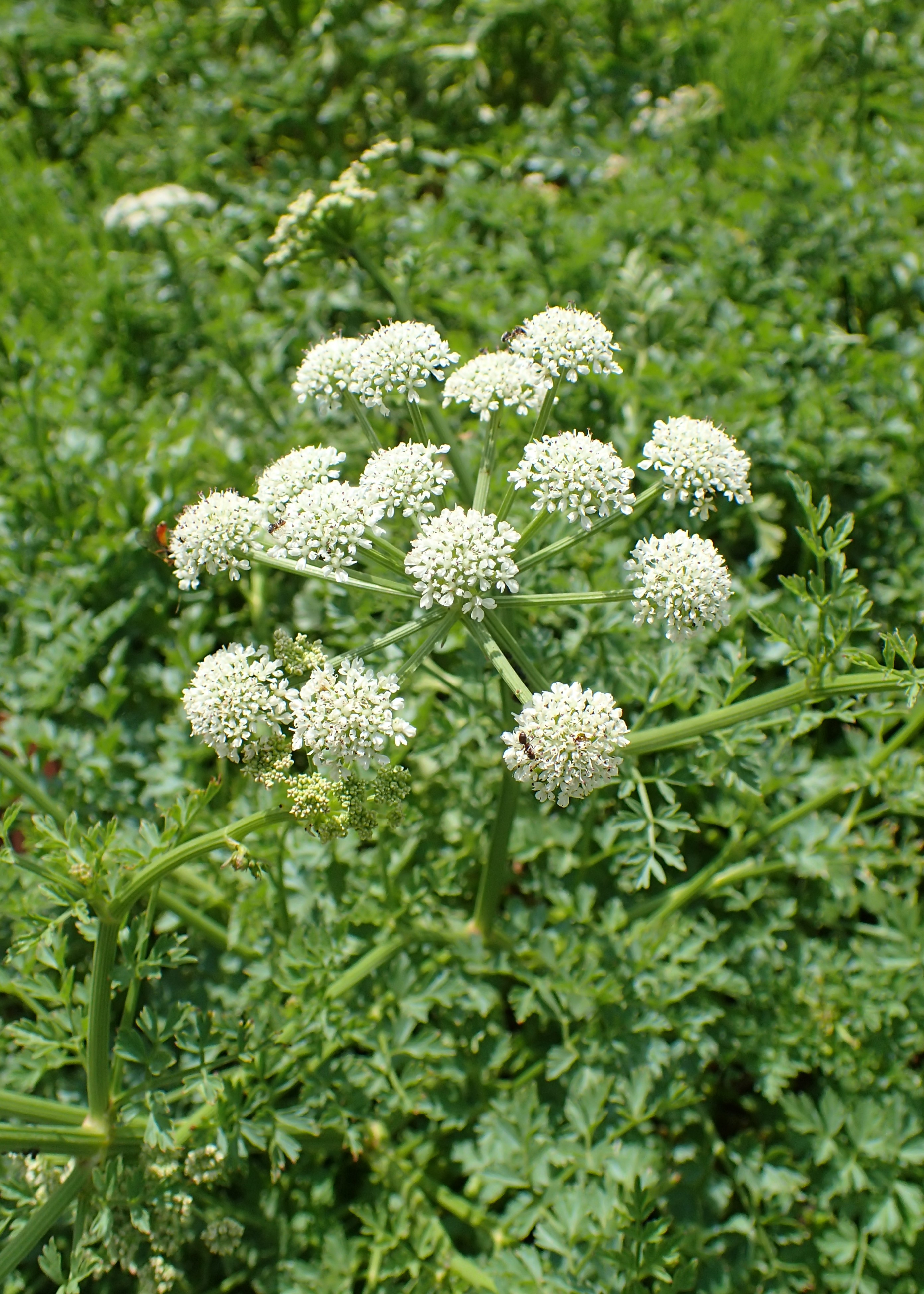
Hemlock water dropwort
Oenanthe crocata
Also known as Water dropwort, Dead man's fingers, Five-finger root, Water parsnip (folk, ambiguous), Oenanthe, Water Hemlock, Water Lovage.
Oenanthe crocata, hemlock water dropwort, is a robust umbellifer of wet ditches, riverbanks, and marshy ground across western Europe and the British Isles. Its tuberous, parsnip-like roots and celery-like foliage have made it one of the most dangerous plants for accidental poisoning in humans and grazing livestock. Nineteenth century eclectic physicians in America prepared a highly diluted specific medicine from the plant for certain nervous disorders, but they were emphatic that only minute drop doses could be used safely, and the plant otherwise has no place in modern herbal practice.

Ask Herbert about Hemlock water dropwort. Herbert is the master herbalist inside Bountiful Herbs: he answers from this plate and eleven hundred others, with dosing, pairing and cautions. Your first ten questions are free.
Ask HerbertActions
Indications what the tradition reached for it in
- Chorea (historical eclectic use)
- Epilepsy (historical eclectic use)
- Tetanus-like muscular spasm (historical)
- Whooping cough (historical folk use)
- Hysteria (historical)
- Nervous excitability with twitching (historical)
- Convulsive disorders generally (historical)
- Recognition and management of accidental poisoning
Specific indications
Violent convulsions with trismus, rolling of the eyeballs, and rigid jaw, historically approached only with the specific medicine in drop doses under close medical supervision.
Chorea with restless involuntary jerking movements, a use recorded by nineteenth century eclectic physicians who insisted on minute dilution because of the plant's narrow margin of safety.
Safety
Recognised toxicity. This plant carries a toxicity flag in the record; it is for trained practitioners only.
Low dose botanical. Used in drop doses in the classical practice; not a plant to dose freely.
Pregnancy: Avoid entirely: the plant is a documented lethal convulsant with no established safe dose in pregnancy.
Breastfeeding: Avoid entirely: there is no safety data, and the toxin has caused poisoning through milk in exposed livestock.
The record lists 6 contraindications; open the plate in the library to read them in full.
In practice
This plant essentially has no legitimate role in contemporary practice. The historical eclectic literature describes a specific medicine given in doses of a few drops in several ounces of water for chorea, epilepsy, and convulsive nervous conditions, with explicit warnings that fluid extracts or ordinary tinctures were too unpredictable in strength to use safely.
Dosing as the sources wrote it
| Preparation | As written | Metric |
|---|---|---|
| Historical specific medicine (eclectic, obsolete, extreme caution) | reported historically as 5 drops in 90-180 mL water; not advised for modern use | 0.1-180 mL |
| Fresh root or tuber | no safe modern dose established; use is not recommended | |
| Specific Oenanthe | Dose, one-twentieth to one-half minim. | 0-0.03 mL |
| Dose, 1/8 to 1/2 grain. | 8.1-32.4 mg | |
| Dose, 1/20 to 1/2 drop. | 0-0.01 mL | |
| Small doses of oenanthe (5 drops of the specific medicine) may cause violent headache, dizziness, delirium, and other unpleasant symptoms. |
Doses are reproduced from the sources for practitioners and are not a recommendation for any person.
From the sources
Overview. Oenanthe crocata, hemlock water dropwort, is a robust umbellifer of wet ditches, riverbanks, and marshy ground across western Europe and the British Isles. Its tuberous, parsnip-like roots and celery-like foliage have made it one of the most dangerous plants for accidental poisoning in humans and grazing livestock. Nineteenth century eclectic physicians in America prepared a highly diluted specific medicine from the plant for certain nervous disorders, but they were emphatic that only minute drop doses could be used safely, and the plant otherwise has no place in modern herbal practice.
Clinical Notes. This plant essentially has no legitimate role in contemporary practice. The historical eclectic literature describes a specific medicine given in doses of a few drops in several ounces of water for chorea, epilepsy, and convulsive nervous conditions, with explicit warnings that fluid extracts or ordinary tinctures were too unpredictable in strength to use safely.
Action and Therapy. Small doses of oenanthe (5 drops of the specific medicine) may cause violent headache, dizziness, delirium, and other unpleasant symptoms. The fresh plant produces gastro-enteritis and convulsions, often with fatal results. It has been advocated for use in epilepsy, but its exact symptomatology has never been satisfactorily determined. It must be used in fractional doses, never to exceed 1/2 minim. It probably acts best when there is anemia of the brain, and has been suggested in maladies resulting from malnutrition and anemia of the cerebrum and cord.
Therapy. The agent acquired a reputation in the treatment of epilepsy. It has cured a few violent cases and very many cases of petit mal. Fisk reported five cases cured, and other trustworthy investigators have had similar results.
Drawn from Ellingwood's American Materia Medica, Therapeutics and Pharmacognosy; Felter's Eclectic Materia Medica, Pharmacology and Therapeutics, and the Bountiful Herbs editorial.
Nearby on the shelf
 HeatherCalluna vulgaris
 Hedge MustardSisymbrium
 Hedge-hyssopGratiola
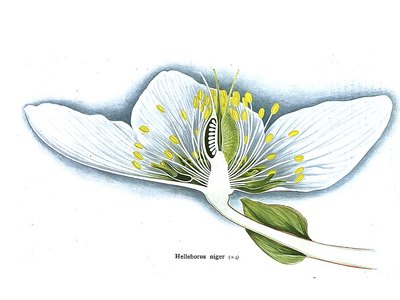 HelleborusHelleborus niger
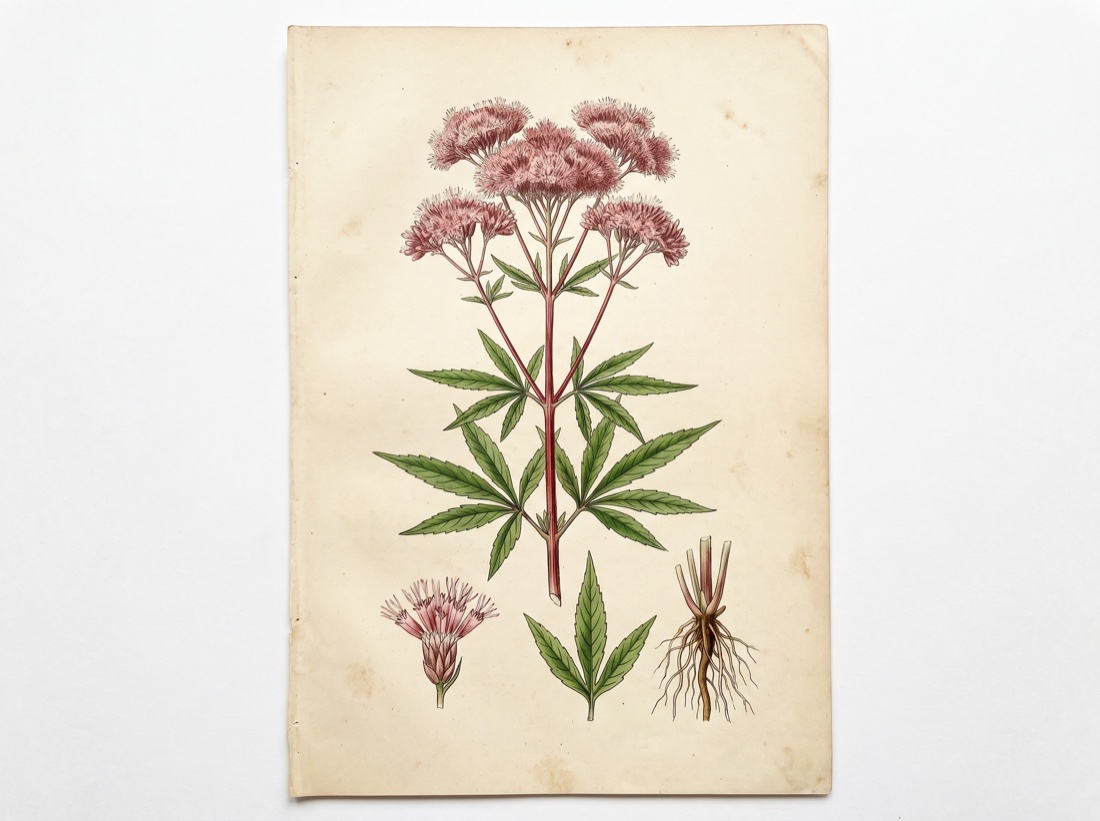 Hemp agrimonyEupatorium cannabinum
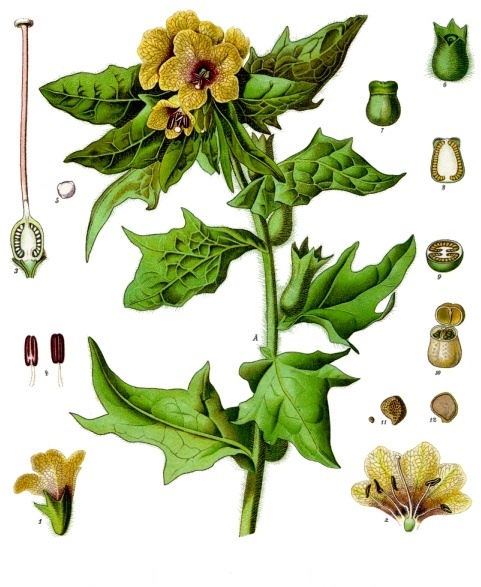 HenbaneHyoscyamus niger
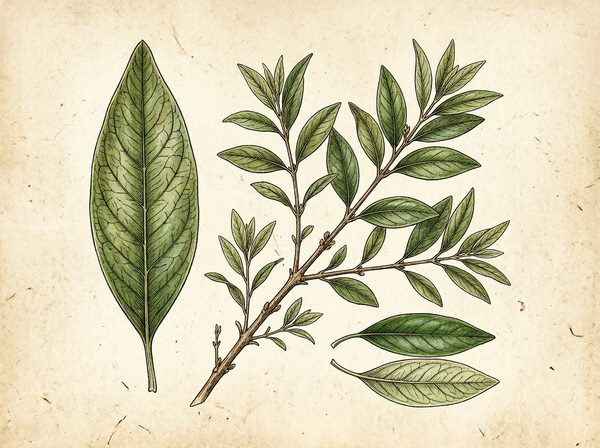 HennaLawsonia inermis
 Herb RobertGeranium robertianum
The whole plate is in the library. The compass, Compare, the Sky of eleven hundred plants and the formulary open with an email address and a password, free, with the formula builder and its safety engine. Herbert without limit, his formulating, clients, the handouts and the labels are the paid room.
Open the library, free