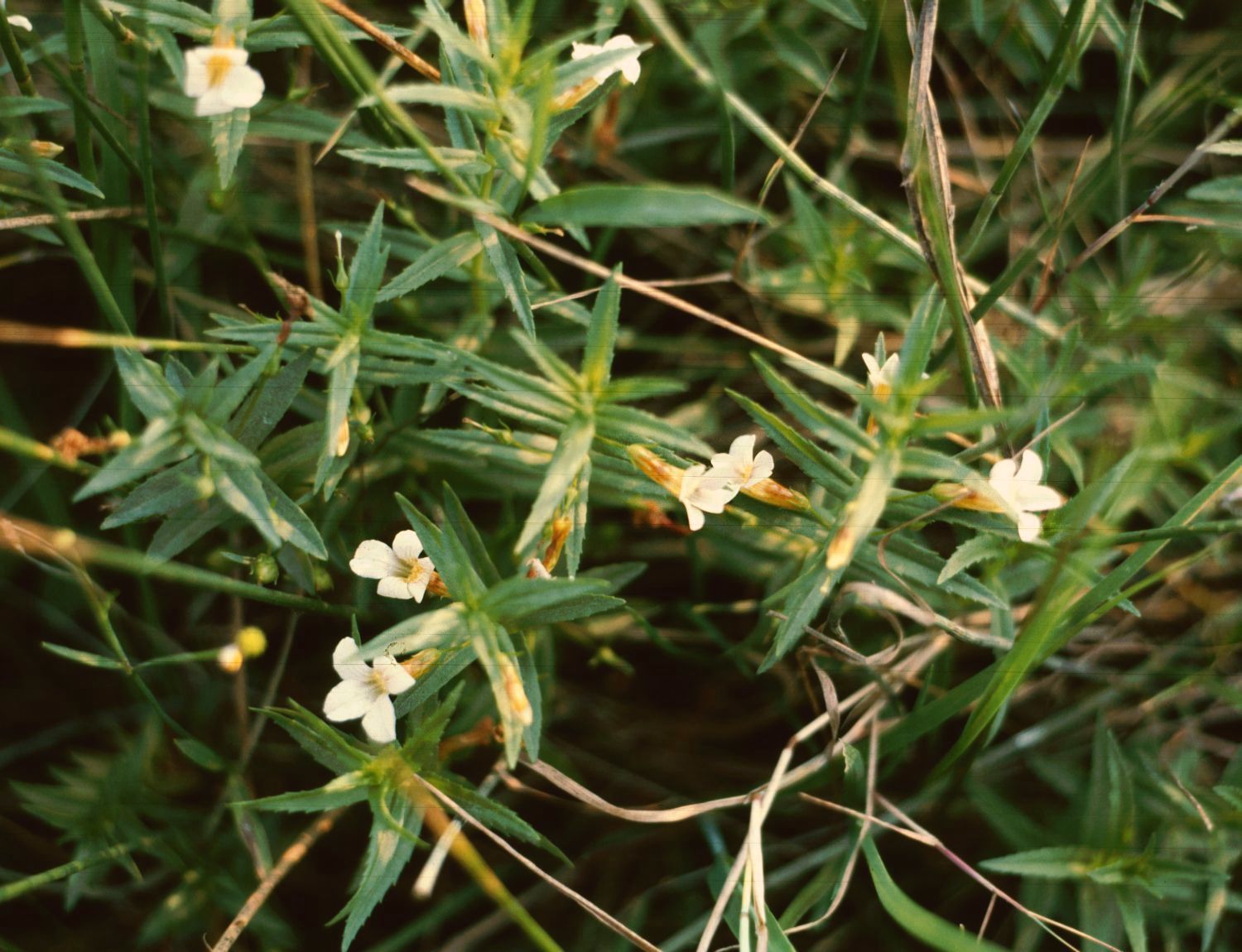
Western Herbalism
Hedge-hyssop
Gratiola
Also known as Gratiola, Herb of Grace.
Gratiola officinalis, hedge-hyssop, is a low perennial herb of damp meadows and ditch banks across central and southern Europe and western Asia, unrelated botanically to true hyssop despite the common name. The dried aerial parts were used in older European and eclectic medicine as a powerful hydragogue cathartic and emetic, given in very small doses for dropsy and hepatic congestion. It fell out of use through the twentieth century as its narrow margin of safety became better appreciated and gentler diuretics and cathartics took its place.

Ask Herbert about Hedge-hyssop. Herbert is the master herbalist inside Bountiful Herbs: he answers from this plate and eleven hundred others, with dosing, pairing and cautions. Your first ten questions are free.
Ask HerbertActions
Indications what the tradition reached for it in
- Chronic dropsy (fluid retention) associated with hepatic or cardiac congestion
- Constipation with sluggish portal circulation
- Ascites
- Intestinal worms
- Chronic hepatic congestion
- Gout with fluid retention
- Amenorrhea (traditional emmenagogue use)
- Skin eruptions attributed to blood impurity in old herbals
Specific indications
Obstinate dropsy with hepatic congestion that has not responded to milder diuretics or cathartics
Sluggish bowel with visceral congestion in a plethoric constitution, historically dosed with extreme caution
Safety
Recognised toxicity. This plant carries a toxicity flag in the record; it is for trained practitioners only.
Low dose botanical. Used in drop doses in the classical practice; not a plant to dose freely.
Pregnancy: Avoid entirely: the plant is a drastic irritant cathartic and abortifacient risk with no established safe dose in pregnancy.
Breastfeeding: Avoid entirely: no safety data exist and the constituents are strong gastrointestinal irritants.
The record lists 8 contraindications; open the plate in the library to read them in full.
In practice
Hedge-hyssop belongs to the older materia medica of drastic purgatives, grouped historically alongside plants such as elaterium and gamboge for its violent action on the bowel when dosed beyond a fraction of a gram. Eclectic physicians reserved it for obstinate dropsy with hepatic congestion that had not responded to gentler measures, dosing it in minute, carefully titrated amounts and watching closely for gastrointestinal distress. It has essentially no place in contemporary practice. Safer, better-studied diuretics, hepatics, and laxatives now cover every indication for which hedge-hyssop was once reached for, and the plant's narrow therapeutic window together with the scarcity of modern quality control make it unsuitable for routine dispensing. Any historical use should be understood as a record of past practice rather than a current recommendation.
Dosing as the sources wrote it
| Preparation | As written | Metric |
|---|---|---|
| Historical powdered herb (obsolete, extreme caution) | 0.3-1 g dried herb, single dose, only under expert historical guidance | 300-1000 mg |
| Historical tincture (obsolete, extreme caution) | 0.1-0.5 mL 1:10 tincture, single dose, only under expert historical guidance | 0.1-0.5 mL |
| In Europe it has been employed as a hydragogue-cathartic in the treatment of dropsical affections, in doses of from 10 to 80 grains of the powdered root. | 648-5184 mg | |
| An infusion of | An infusion of 4 drachms to a pint of boiling water, may be given in ½ fluid-ounce doses. | 15552-15552 mg |
Doses are reproduced from the sources for practitioners and are not a recommendation for any person.
From the sources
Overview. Gratiola officinalis, hedge-hyssop, is a low perennial herb of damp meadows and ditch banks across central and southern Europe and western Asia, unrelated botanically to true hyssop despite the common name. The dried aerial parts were used in older European and eclectic medicine as a powerful hydragogue cathartic and emetic, given in very small doses for dropsy and hepatic congestion. It fell out of use through the twentieth century as its narrow margin of safety became better appreciated and gentler diuretics and cathartics took its place.
Clinical Notes. Hedge-hyssop belongs to the older materia medica of drastic purgatives, grouped historically alongside plants such as elaterium and gamboge for its violent action on the bowel when dosed beyond a fraction of a gram.
Drawn from King's American Dispensatory, 18th edition (Felter and Lloyd), and the Bountiful Herbs editorial.
Nearby on the shelf
 HawthorneCrataegus oxycantha
 HeartseaseViola tricolor
 HeatherCalluna vulgaris
 Hedge MustardSisymbrium
 HelleborusHelleborus niger
 Hemlock water dropwortOenanthe crocata
 Hemp agrimonyEupatorium cannabinum
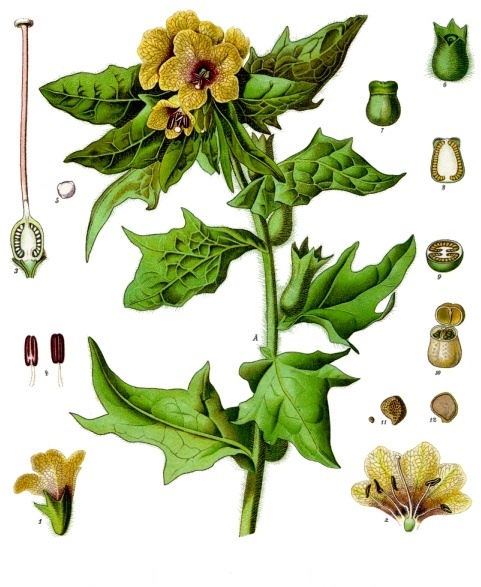 HenbaneHyoscyamus niger
The whole plate is in the library. The compass, Compare, the Sky of eleven hundred plants and the formulary open with an email address and a password, free, with the formula builder and its safety engine. Herbert without limit, his formulating, clients, the handouts and the labels are the paid room.
Open the library, free