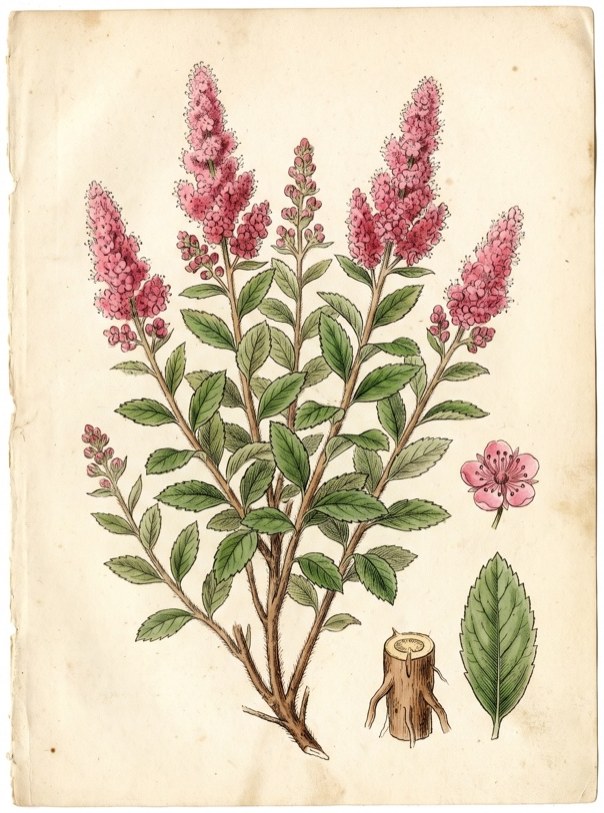
Western Herbalism
Hardhack
Spirea tomentosa
Also known as Hardback, Steeplebush, American meadowsweet, Meadow sweet, Steeple bush.
Spiraea tomentosa is a small North American shrub of the rose family, common in wet meadows and low ground from New England southward, recognizable by its woolly gray undersides of leaf and dense pink-purple flower spikes. The root and leaf were used by nineteenth century American Physiomedicalist and Eclectic practitioners as a gentle astringent tonic for the digestive tract. It held a modest but steady place in the home and eclectic dispensary as a pleasant tasting remedy for chronic looseness of the bowel, valued for being well tolerated even by weak stomachs.

Ask Herbert about Hardhack. Herbert is the master herbalist inside Bountiful Herbs: he answers from this plate and eleven hundred others, with dosing, pairing and cautions. Your first ten questions are free.
Ask HerbertActions
Indications what the tradition reached for it in
- Sub-acute and chronic diarrhea
- Dysentery
- Diarrhea of debilitated or scrofulous constitution
- Cholera infantum (historical use)
- Gastrointestinal hemorrhage
- Leucorrhea
- Uterine hemorrhage
- General digestive weakness with loose stool
- Convalescent debility following bowel complaints
Specific indications
Chronic, low-grade diarrhea in a pale, debilitated child with weak assimilation and a history of scrofulous complaints
Loose, relaxed stool in a person whose gut tone is atonic rather than acutely inflamed, calling for a gentle toning astringent rather than a harsh binder
Safety
Pregnancy: No dedicated safety data exist; avoid or use only under experienced supervision given the general lack of study in pregnancy.
Breastfeeding: No dedicated safety data exist; avoid or use only under experienced supervision during breastfeeding.
The record lists 3 contraindications; open the plate in the library to read them in full.
In practice
Physiomedical writers such as Cook placed steeplebush among the astringent tonics, agents that both firm relaxed tissue and support digestive function rather than simply checking flux by brute astringency.
Dosing as the sources wrote it
| Preparation | As written | Metric |
|---|---|---|
| Infusion (leaf or root) | 2-4 g dried herb per cup, 3-6 times daily | 2000-4000 mg |
| Tincture (1:5, 40-45%) | 2-4 mL three times daily | 2-4 mL |
Doses are reproduced from the sources for practitioners and are not a recommendation for any person.
From the sources
Overview. Spiraea tomentosa is a small North American shrub of the rose family, common in wet meadows and low ground from New England southward, recognizable by its woolly gray undersides of leaf and dense pink-purple flower spikes. The root and leaf were used by nineteenth century American Physiomedicalist and Eclectic practitioners as a gentle astringent tonic for the digestive tract. It held a modest but steady place in the home and eclectic dispensary as a pleasant tasting remedy for chronic looseness of the bowel, valued for being well tolerated even by weak stomachs.
Clinical Notes. Physiomedical writers such as Cook placed steeplebush among the astringent tonics, agents that both firm relaxed tissue and support digestive function rather than simply checking flux by brute astringency.
Properties and Uses. The root is a tonic and astringent, of rather strong powers, of a pleasant odor and taste, and usually well received by the stomach. It is used in sub-acute and chronic diarrhea, especially that of a scrofulous character where the assimilative organs are at fault; and may be used in hemorrhages and other cases to which astringent tonics are suited.
Description. Natural Order, Rosaceae. Small shrubs, several species of which are much cultivated, and assorted into numerous varieties, as pretty ornamental plants. Stems numerous, two to three feet high, slender, purplish, and downy. Leaves opposite, ovate-lanceolate, minutely serrate, dark-green above, gray and very woolly beneath. Flowers in dense, terminal spicate racemes, calyx and corolla five-parted, corolla light-red. Pods woolly, remaining throughout the winter, and the seeds eaten by snow-birds. July. Very common in low grounds through New England, and extending southward.
Drawn from Cook's Physio-Medical Dispensatory, and the Bountiful Herbs editorial.
Nearby on the shelf
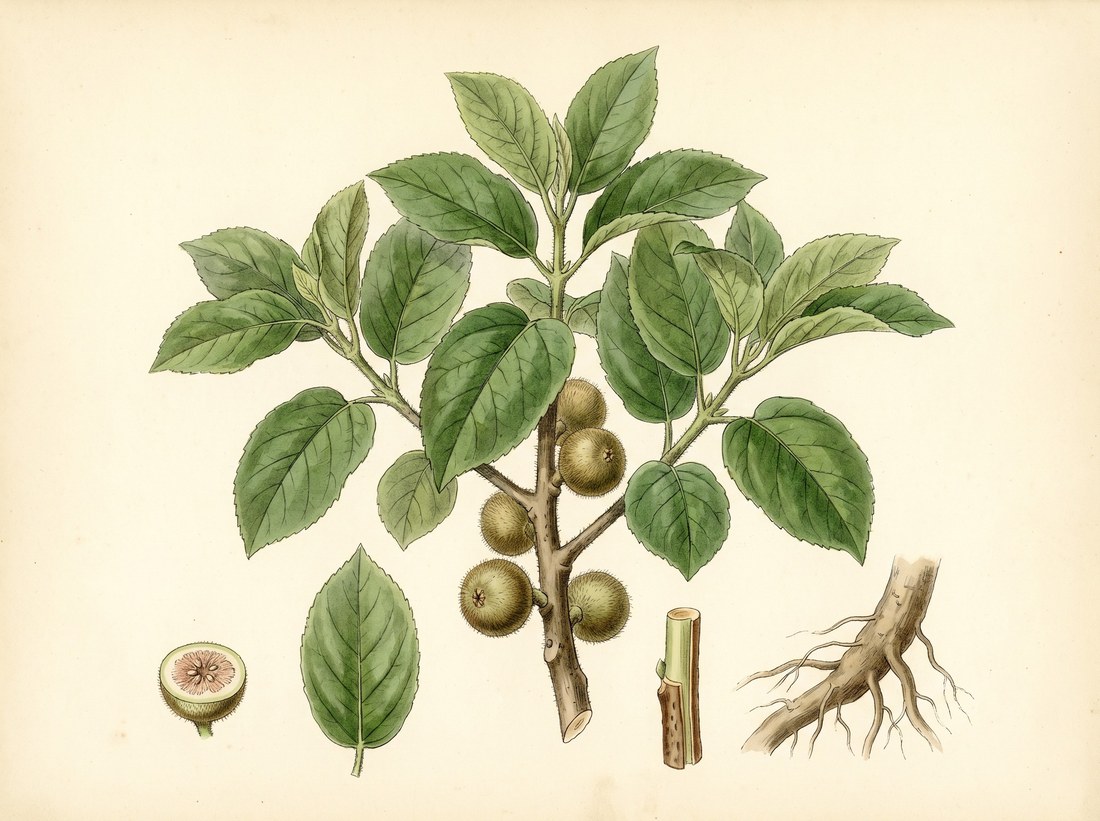 Hairy figFicus hispida
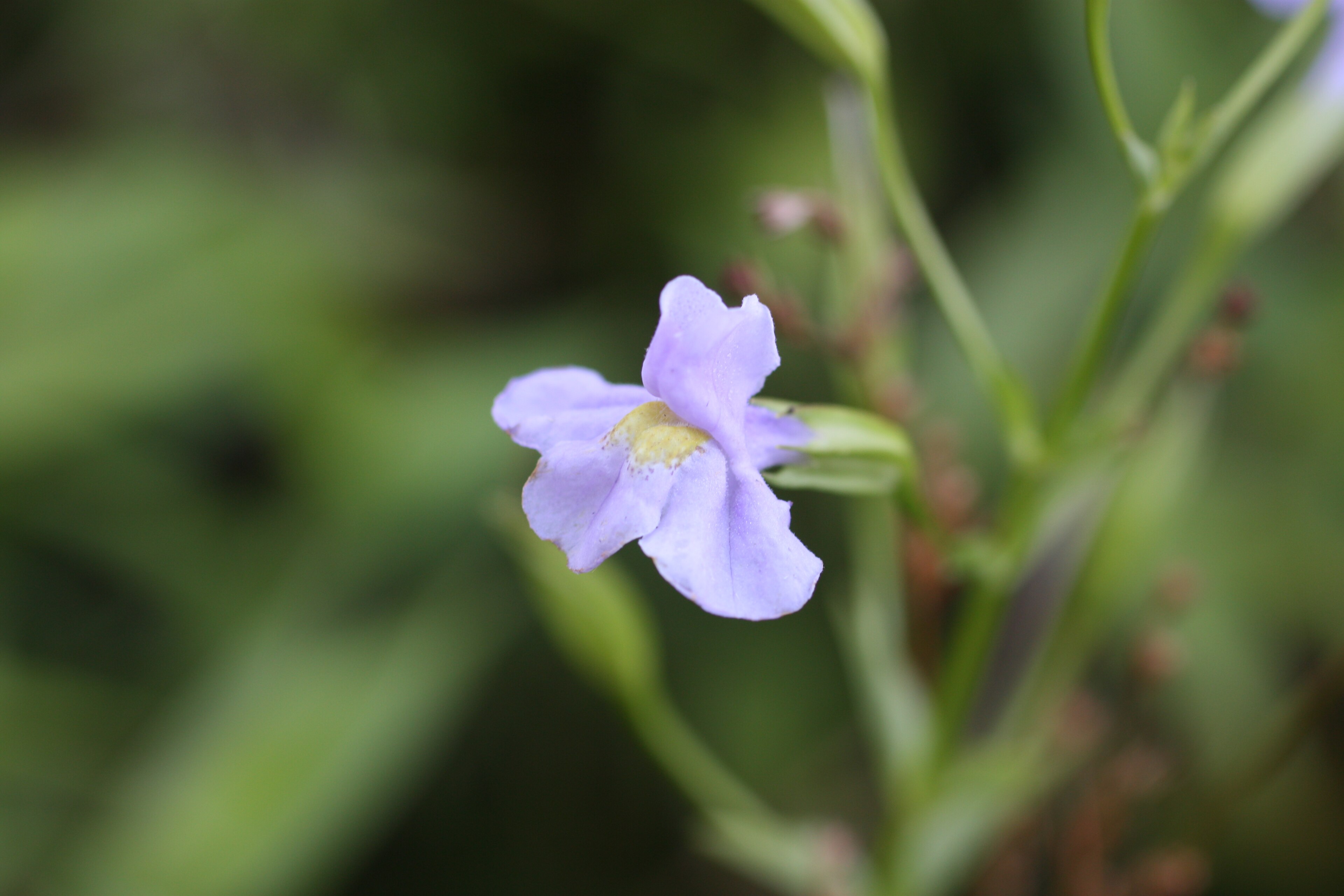 Hairy Monkey-FlowerMimulus
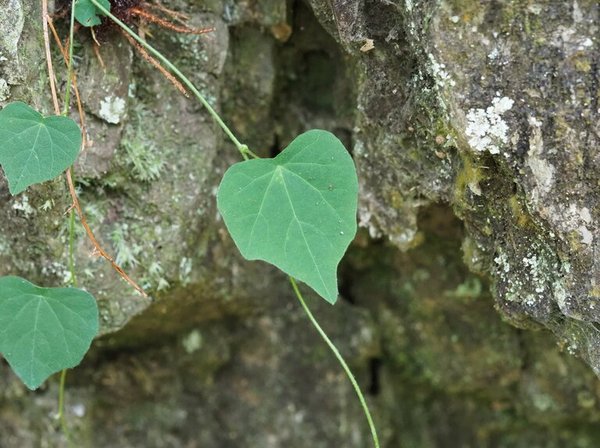 Han Fang JiStephania tetrandra
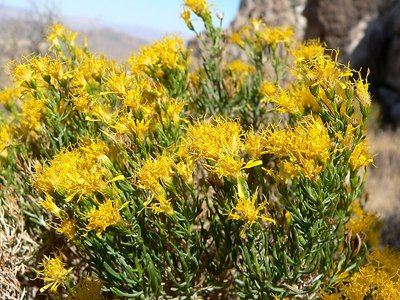 HaplopappusHaplopappus laricifolius
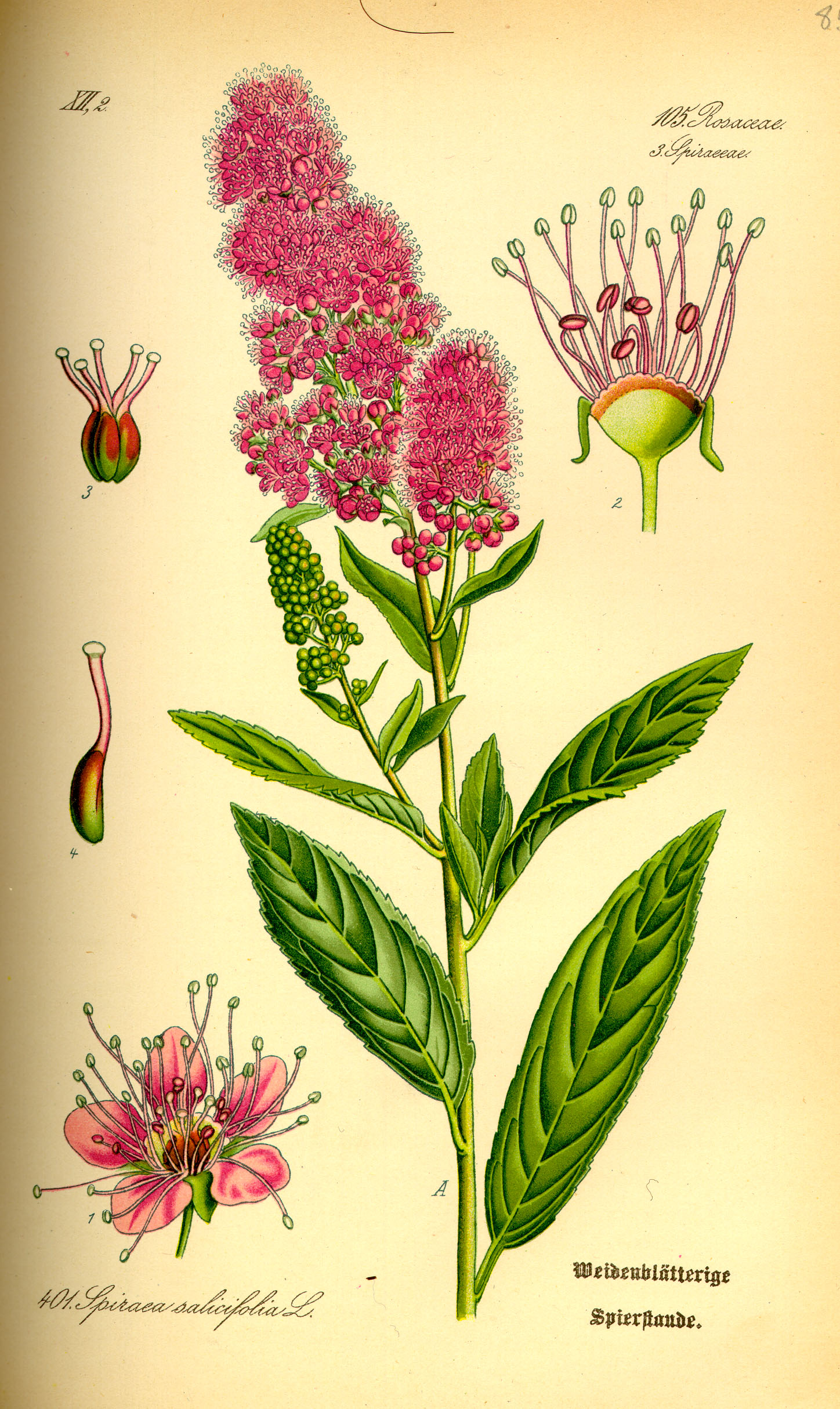 HardhackSpiraea
 HawkweedHieracium venosum
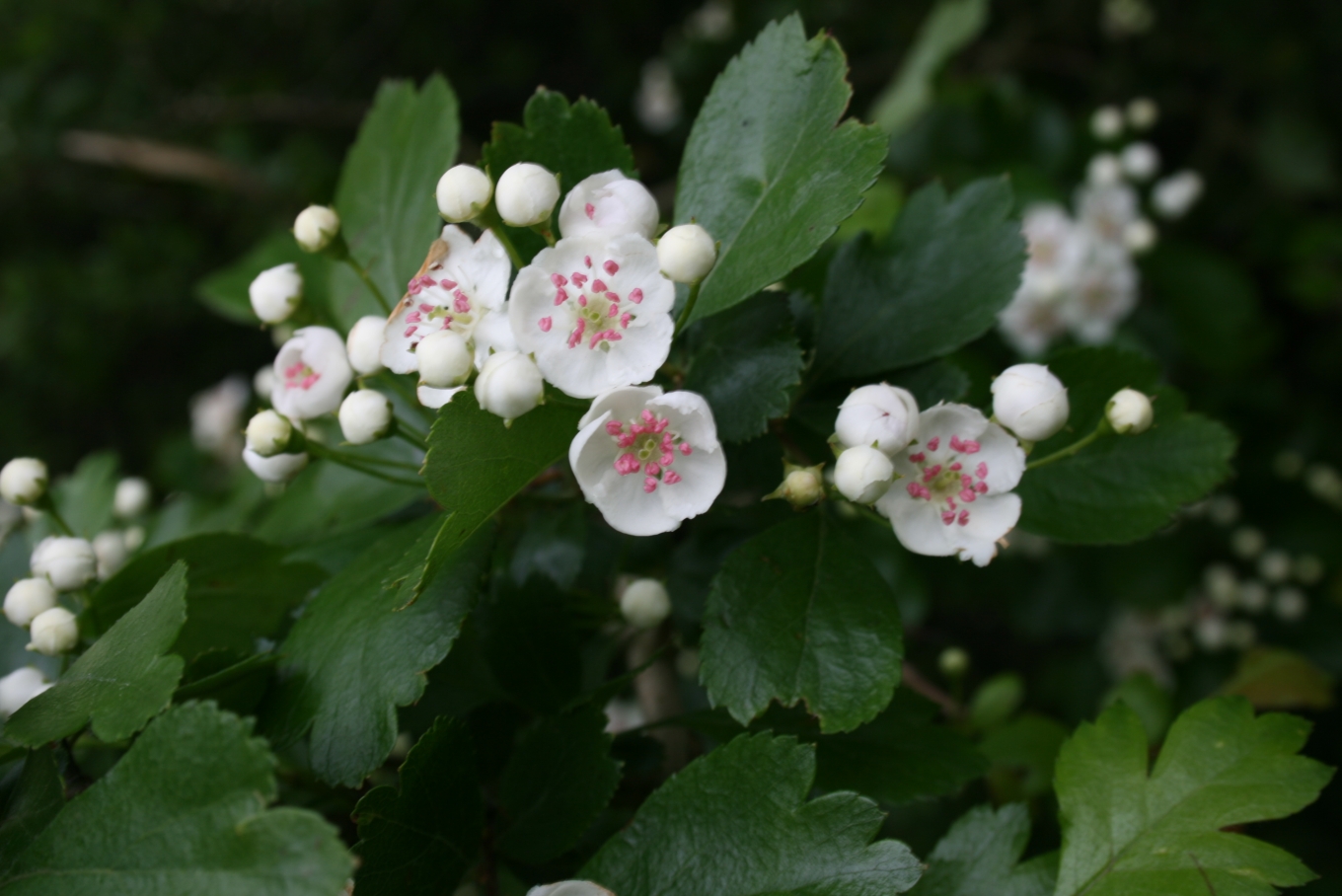 HawthornCrataegus oxyacantha
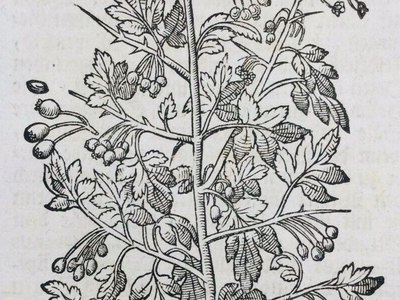 HawthorneCrataegus oxycantha
The whole plate is in the library. The compass, Compare, the Sky of eleven hundred plants and the formulary open with an email address and a password, free, with the formula builder and its safety engine. Herbert without limit, his formulating, clients, the handouts and the labels are the paid room.
Open the library, free