Western Herbalism
Hairy Monkey-Flower
Mimulus
Also known as Musk monkeyflower, Muskflower, Monkey musk.
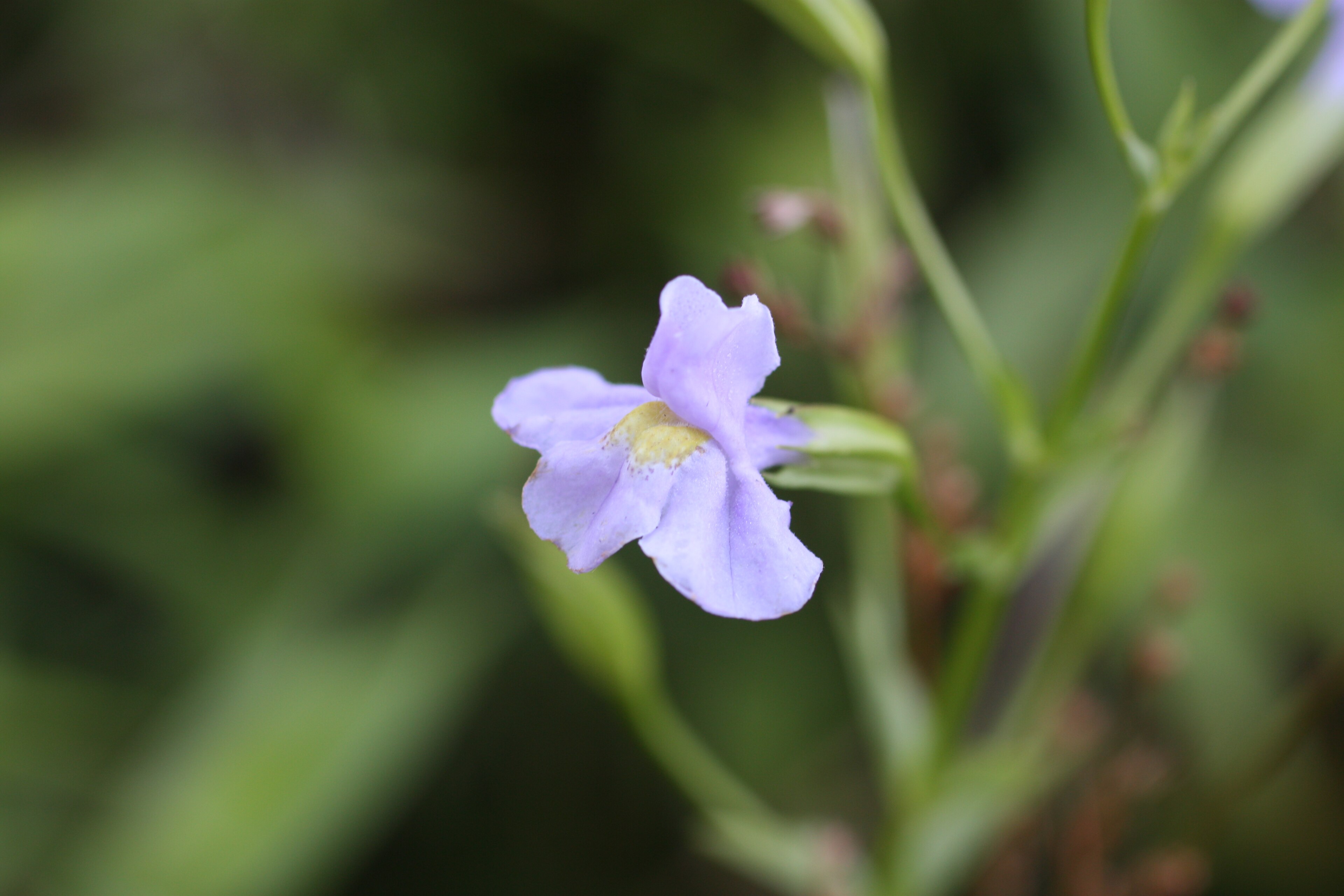
Mimulus moschatus, the musk monkeyflower, is a small, densely hairy, sticky and musk-scented perennial native to moist streambanks and seeps of western North America. The fresh flowering herb was used by nineteenth century Eclectic physicians as a gentle nervine and antispasmodic, while indigenous peoples of its native range applied the crushed leaves topically to burns and wounds. It has never held a large place in materia medica and is rarely used today, but the historical record is consistent enough to preserve.

Ask Herbert about Hairy Monkey-Flower. Herbert is the master herbalist inside Bountiful Herbs: he answers from this plate and eleven hundred others, with dosing, pairing and cautions. Your first ten questions are free.
Ask HerbertActions
Indications what the tradition reached for it in
- Hiccough
- Nervous dyspepsia
- Stomach cramps
- Nausea with nervous irritability
- Belching and abdominal distension
- Mild nervous insomnia
- Minor wounds
- Minor burns
- Nervous exhaustion with digestive upset
Specific indications
Persistent hiccough with an irritable, nervous stomach
Cramping stomach pain with belching and a generally jumpy nervous disposition
Safety
Pregnancy: Avoid internal use in pregnancy, as there is no meaningful modern safety data to guide dosing.
Breastfeeding: Avoid internal use during lactation for the same reason: the historical record is too thin to establish a safe margin.
The record lists 3 contraindications; open the plate in the library to read them in full.
In practice
Eclectic writers reached for the fresh musk plant mainly for hiccough and for a nervous, cramping stomach that would not settle, particularly where the picture included a generally jittery or easily startled temperament alongside the digestive complaint.
Dosing as the sources wrote it
| Preparation | As written | Metric |
|---|---|---|
| Fresh plant tincture (1:2, 65%) | 0.5-2 mL up to four times daily | 0.5-2 mL |
| Dried herb tincture (1:5, 45%) | 1-3 mL three times daily | 1-3 mL |
| Fresh leaf poultice | applied topically to minor burns and wounds as needed | |
| A tincture of the plant, in the dose of from 3 to 10 minims, repeated 3 or 4 times it day, will likewise be found beneficial in rheumatism, neuralgia and other painful disorders. | 0.18-0.62 mL |
Doses are reproduced from the sources for practitioners and are not a recommendation for any person.
From the sources
Overview. Mimulus moschatus, the musk monkeyflower, is a small, densely hairy, sticky and musk-scented perennial native to moist streambanks and seeps of western North America. The fresh flowering herb was used by nineteenth century Eclectic physicians as a gentle nervine and antispasmodic, while indigenous peoples of its native range applied the crushed leaves topically to burns and wounds. It has never held a large place in materia medica and is rarely used today, but the historical record is consistent enough to preserve.
Clinical Notes. Eclectic writers reached for the fresh musk plant mainly for hiccough and for a nervous, cramping stomach that would not settle, particularly where the picture included a generally jittery or easily startled temperament alongside the digestive complaint.
Drawn from King's American Dispensatory, 18th edition (Felter and Lloyd), and the Bountiful Herbs editorial.
Nearby on the shelf
 Gutta-PerchaGutta-Percha
 GymnemaGymnema sylvestre
 Hair-cap mossPolytrichum juniperum
 Hairy figFicus hispida
 Han Fang JiStephania tetrandra
 HaplopappusHaplopappus laricifolius
 HardhackSpirea tomentosa
 HardhackSpiraea
The whole plate is in the library. The compass, Compare, the Sky of eleven hundred plants and the formulary open with an email address and a password, free, with the formula builder and its safety engine. Herbert without limit, his formulating, clients, the handouts and the labels are the paid room.
Open the library, free