Western Herbalism
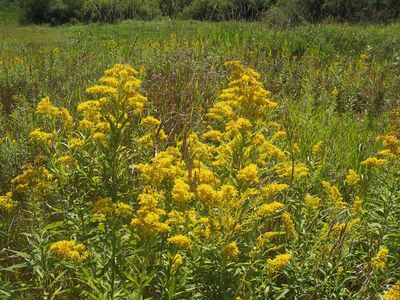
Goldenrod
Solidago spp.
Also known as blue mountain tea, sweet goldenrod, woundwort, Aaron’s rod, Sweet-Scented Goldenrod, Fragrant-leaved goldenrod.
Sweet-scented goldenrod is gently stimulant and carminative, and, in warm infusion, diaphoretic. It may be given in infusion in flatulent colic, amenorrhoea, sickness at the stomach, and as a pleasant drink in convalescence from severe dysentery, diarrhoea, cholera morbus, etc.; and may also be added to nauseating medicines to render them more agreeable to the taste.

Ask Herbert about Goldenrod. Herbert is the master herbalist inside Bountiful Herbs: he answers from this plate and eleven hundred others, with dosing, pairing and cautions. Your first ten questions are free.
Ask HerbertActions
Indications what the tradition reached for it in
- Sinusitis
- Nephritis
- Musculoskeletal injury
- Allergic rhinitis
- Post nasal drip
- Muscle spasms
- Upper respiratory infection
- Urinary gravel
- Rheumatism
- Arthritis
- Cystitis
- Urinary tract inflammation
- Bronchitis
- Prostatitis
- Urethritis
- Bleeding
- Colic
- Cramps
- Diarrhea
- Edema
- Fluid retention
- Inflammation
- Rhinitis
- Urinary disorders
- Infection
- Respiratory complaints
- Urinary complaints
- Excessive discharge
- Inflammation of the nasopharynx with catarrh
Safety
Pregnancy: Limited data. No increase in harm from limited human use; animal studies lacking (Mills & Bone B2)
Pregnancy, our record's flag: Limited data. Limited safety data in pregnancy (our record's flag)
Pregnancy, a modern clinical reference: From limited use in pregnant women, it appears that no increase in frequency of malformation or other harmful effects have been reported although animal studies are lacking
Breastfeeding: No concern. Compatible with breastfeeding (Mills & Bone C)
Breastfeeding, our record's flag: No concern while breastfeeding (our record's flag)
The record lists 3 contraindications; open the plate in the library to read them in full.
Dosing as the sources wrote it
| Preparation | As written | Metric |
|---|---|---|
| Tincture (1:2-1:3) | 3-5 ml TID | 3-5 mL |
| Infusion | 1Tbs/c TID | |
| · Infusion of dried herb: 0.5-2 g in 150 mL of boiled water for at least 10 minutes | ||
| · Fluid extract (1:1) (g/mL): 0.5-2 mL taken 2-4 times daily between meals. | ||
| The flowers are said to be aperient, tonic, astringent, and diuretic, and have been found beneficial in gravel, urinary obstructions, ulceration of the bladder, and in the early stage of dropsy; taken in infusion (herb ℥i to water Oj) in doses of 1 or 2 fluid ounces; the oil, from 1 to 3 drops. |
Doses are reproduced from the sources for practitioners and are not a recommendation for any person.
From the sources
Action, Medical Uses, and Dosage. Sweet-scented goldenrod is gently stimulant and carminative, and, in warm infusion, diaphoretic. It may be given in infusion in flatulent colic, amenorrhoea, sickness at the stomach, and as a pleasant drink in convalescence from severe dysentery, diarrhoea, cholera morbus, etc.; and may also be added to nauseating medicines to render them more agreeable to the taste.
History, and Chemical Composition. This plant is common to the United States, growing in dry, fertile woodlands and sunny bills, and flowering from July to October. There are many species of this genus growing throughout the country, and which differ from each other in their degree of astringency and fragrance.
indications. Goldenrod is traditionally indicated for: Sinusitis, Nephritis, Musculoskeletal injury, Allergic rhinitis, Post nasal drip, Muscle spasms, Upper respiratory infection, Urinary gravel, Rheumatism, Arthritis, Cystitis, Urinary tract inflammation, Bronchitis, Prostatitis, Urethritis, and 13 further conditions.
The tops and leaves of Solidago odora, Aiton. Nat. Ord: Compositae. COMMON NAMES: Sweet goldenrod, Sweet-scented goldenrod, Fragrant-leaved goldenrod, Blue mountain tea.
Drawn from King's American Dispensatory, 18th edition (Felter and Lloyd), and the Bountiful Herbs editorial.
Nearby on the shelf
 Goji berryLycium barbarum
 GojihvaOnosma bracteatum
 Golden RagwortSenecio aureus
 Golden shower treeCassia fistula
 GoldensealHydrastis canadensis
 GoldthreadCoptis trifolia
 Gotu kolaCentella asiatica
 Gou tengUncaria rhynchophylla
The whole plate is in the library. The compass, Compare, the Sky of eleven hundred plants and the formulary open with an email address and a password, free, with the formula builder and its safety engine. Herbert in full, his formulating, clients, the handouts and the labels are the paid room.
Open the library, free