Western Herbalism
Fig
Ficus
Also known as Common fig, Fructus caricae, Figs; Fructus caricae, Ficus passa, Caricae, Fici.
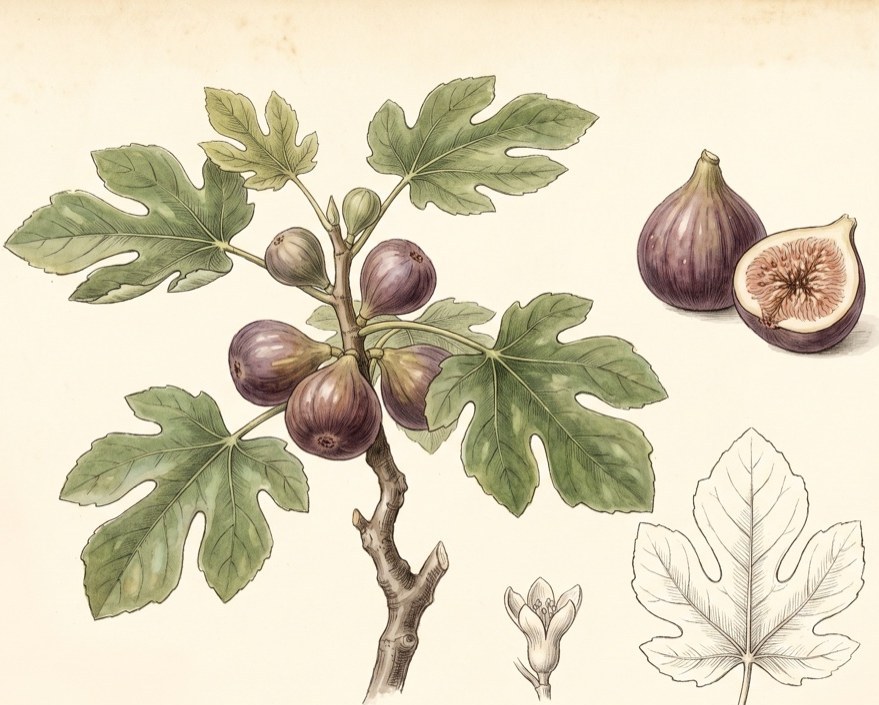
Fig is the fleshy receptacle of Ficus carica, a small deciduous tree native to the eastern Mediterranean and Asia Minor and now cultivated widely in warm climates. The ripe fruit, eaten fresh or dried, has long been used in Western herbal and eclectic practice as a gentle nutritive laxative and demulcent, and applied externally as a poultice to hasten the maturation of boils and abscesses. It sits at the border of food and medicine, valued for its mild, dependable action and pleasant taste.

Ask Herbert about Fig. Herbert is the master herbalist inside Bountiful Herbs: he answers from this plate and eleven hundred others, with dosing, pairing and cautions. Your first ten questions are free.
Ask HerbertActions
Indications what the tradition reached for it in
- Constipation, especially in the elderly or during convalescence
- Dry, irritated throat and mild cough
- General debility and poor appetite in convalescence
- Chronic sluggish bowel where harsh purgatives are unwanted
- Boils, gum boils, and early-stage abscesses (external poultice)
- Malodorous or slow-healing ulcers (historical external poultice use)
- Hemorrhoids associated with constipation
- Nutritional support during recovery from illness
Specific indications
Constipation in a person who needs a gentle, food-based laxative rather than a stimulant purgative
A ripe or stewed fig applied warm as a poultice to draw a stubborn boil or gum abscess to a head
Safety
The record lists 4 contraindications; open the plate in the library to read them in full.
In practice
Dried figs are a practical, food-grade laxative for patients who want to avoid stimulant herbs, particularly the elderly, those recovering from surgery or illness, and anyone with a chronically sluggish bowel who needs a gentle daily habit rather than an acute purge.
Dosing as the sources wrote it
| Preparation | As written | Metric |
|---|---|---|
| Dried fruit | 3-6 dried figs (about 30-60 g) daily, eaten whole or stewed | 3000-60000 mg |
| Fig and fruit laxative confection | 15-30 g of a paste made from equal parts fig, date, raisin, and prune, with a small proportion of senna leaf, taken as needed | 15000-30000 mg |
| External poultice | Split ripe fig or softened dried fig applied warm to the affected area, renewed every few hours | |
| expressed juice | Dose of expressed juice, ʒiv in a day. |
Doses are reproduced from the sources for practitioners and are not a recommendation for any person.
From the sources
Overview. Fig is the fleshy receptacle of Ficus carica, a small deciduous tree native to the eastern Mediterranean and Asia Minor and now cultivated widely in warm climates. The ripe fruit, eaten fresh or dried, has long been used in Western herbal and eclectic practice as a gentle nutritive laxative and demulcent, and applied externally as a poultice to hasten the maturation of boils and abscesses. It sits at the border of food and medicine, valued for its mild, dependable action and pleasant taste.
Clinical Notes. Dried figs are a practical, food-grade laxative for patients who want to avoid stimulant herbs, particularly the elderly, those recovering from surgery or illness, and anyone with a chronically sluggish bowel who needs a gentle daily habit rather than an acute purge.
Action and Therapy. External. Emollient. A roasted, boiled, or raw fig is exceedingly efficient to hasten suppuration in gum boil, boils in the nose or ears and elsewhere, and in buboes and carbuncles. The great surgeon, Billroth, employed a poultice of dried figs and milk to overcome the stench of cancerous and fetid ulcers.
Drawn from King's American Dispensatory, 18th edition (Felter and Lloyd); Felter's Eclectic Materia Medica, Pharmacology and Therapeutics, and the Bountiful Herbs editorial.
Nearby on the shelf
 FenugreekTrigonella foenum-graecum
 Fever-rootTriosteum
 FeverfewTanacetum parthenium
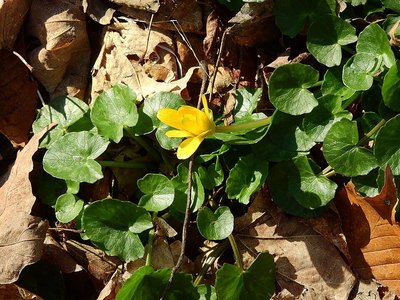 FicariaRanunculus ficaria
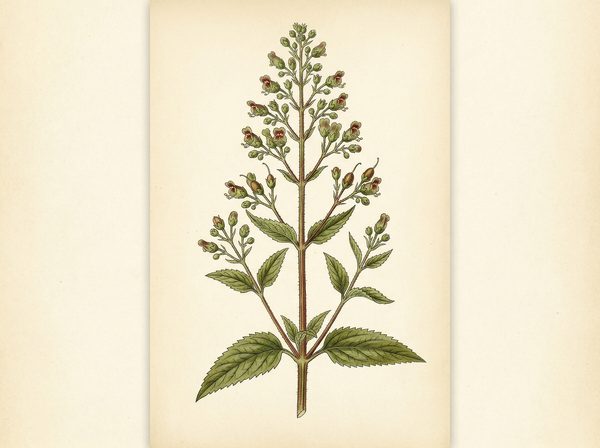 FigwortScrophularia nodosa
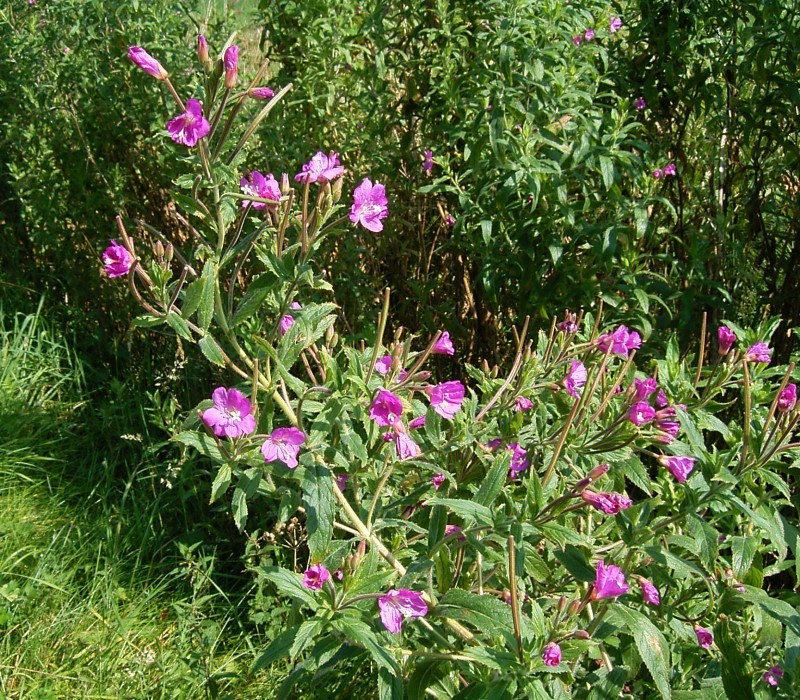 FireweedEpilobium angustifolium
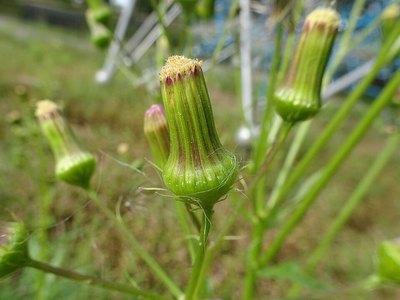 FireweedErechtites hieracifolius
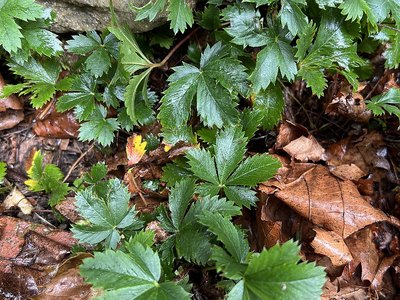 Five-fingerPotentilla canadensis
The whole plate is in the library. The compass, Compare, the Sky of eleven hundred plants and the formulary open with an email address and a password, free, with the formula builder and its safety engine. Herbert without limit, his formulating, clients, the handouts and the labels are the paid room.
Open the library, free