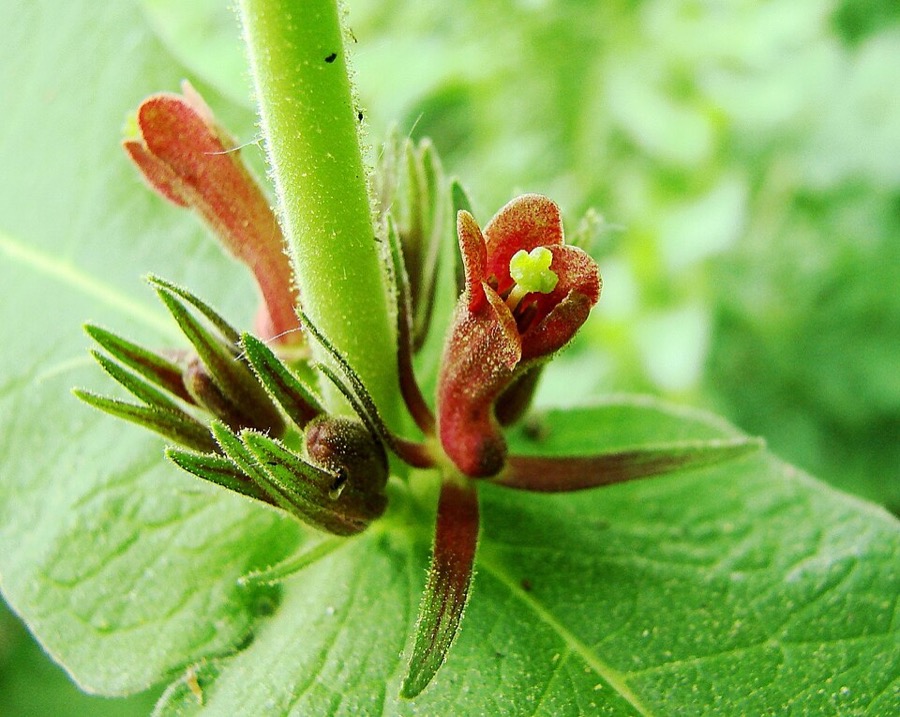
Western Herbalism
Fever-root
Triosteum
Also known as Feverwort, Wild ipecac, Bastard ipecac, Horse-gentian, Wild coffee, Dr. Tinker's weed, Fever-wort.
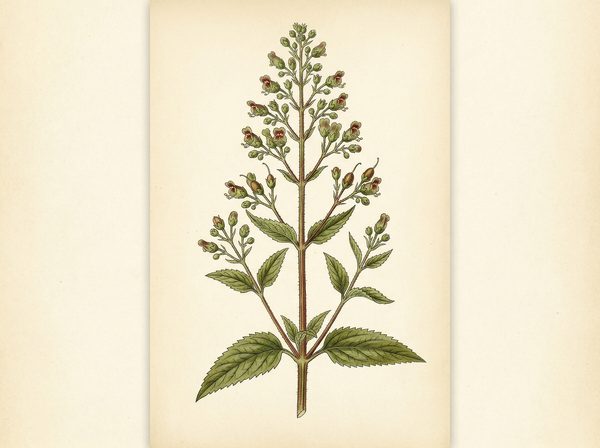
Triosteum perfoliatum, commonly called feverwort or wild ipecac, is a perennial herb of the honeysuckle family native to woodland edges and rich soils across eastern North America. The dried root was the part used, valued by nineteenth century eclectic physicians as a milder domestic substitute for true ipecac, employed to promote sweating, gentle vomiting, and bowel movement in low fevers and torpid digestive states. It has largely fallen out of professional use but remains documented in the eclectic materia medica.

Ask Herbert about Fever-root. Herbert is the master herbalist inside Bountiful Herbs: he answers from this plate and eleven hundred others, with dosing, pairing and cautions. Your first ten questions are free.
Ask HerbertActions
Indications what the tradition reached for it in
- Low-grade or intermittent fever
- Constipation with sluggish portal circulation
- Torpid liver with dyspepsia
- Rheumatic pains
- Chronic skin eruptions attributed to poor elimination
- Sluggish digestion with coated tongue
- Nausea requiring a gentle emetic
- General debility following febrile illness
Specific indications
Low fever with a furred tongue, sluggish bowels, and general torpor, where a mild emetic-cathartic action is wanted rather than a harsh purge
Chronic constipation with evidence of hepatic sluggishness, used as a gentler alternative to stronger resinous cathartics
Safety
Low dose botanical. Used in drop doses in the classical practice; not a plant to dose freely.
Pregnancy: Avoid in pregnancy: emetic and cathartic actions, uterine stimulation cannot be excluded, and safety data are absent.
Breastfeeding: Avoid in lactation due to lack of safety data and the plant's purgative and emetic potential.
The record lists 4 contraindications; open the plate in the library to read them in full.
In practice
Eclectic physicians reached for feverwort root chiefly in low, remittent fevers accompanied by a coated tongue and sluggish bowels, using it in small doses as a gentle emetic and cathartic to relieve congestion of the portal system, and in still smaller doses as a diaphoretic and alterative for chronic skin conditions and rheumatic complaints thought to stem from poor elimination.
Dosing as the sources wrote it
| Preparation | As written | Metric |
|---|---|---|
| Decoction (low dose, alterative/diaphoretic use) | 0.5-1 g dried root daily | 500-1000 mg |
| Decoction (cathartic/emetic use) | 1-2 g dried root as a single dose, not repeated same day | 1000-2000 mg |
| Tincture (1:5, 45%) | 0.5-2 mL up to three times daily | 0.5-2 mL |
| In doses of from | In doses of from 20 grains to 1 drachm, the powder is a mild, but slow, cathartic, with a tonic influence. | 1296-3888 mg |
| tincture | Dose of the tincture, from 1 to 4 fluid drachms; of a strong tincture of the recent root for its sedative effects, 1 to 10 drops; of the extract, which is one of the best forms of administration, from 5 to 15 grains. | 3.7-14.79 mL |
Doses are reproduced from the sources for practitioners and are not a recommendation for any person.
From the sources
Overview. Triosteum perfoliatum, commonly called feverwort or wild ipecac, is a perennial herb of the honeysuckle family native to woodland edges and rich soils across eastern North America. The dried root was the part used, valued by nineteenth century eclectic physicians as a milder domestic substitute for true ipecac, employed to promote sweating, gentle vomiting, and bowel movement in low fevers and torpid digestive states. It has largely fallen out of professional use but remains documented in the eclectic materia medica.
Clinical Notes. Eclectic physicians reached for feverwort root chiefly in low, remittent fevers accompanied by a coated tongue and sluggish bowels, using it in small doses as a gentle emetic and cathartic to relieve congestion of the portal system, and in still smaller doses as a diaphoretic and alterative for chronic skin conditions and rheumatic complaints thought to stem from poor elimination.
Drawn from King's American Dispensatory, 18th edition (Felter and Lloyd), and the Bountiful Herbs editorial.
Nearby on the shelf
 False unicornChamaelirium luteum
 Fang FengSaposhnikovia divaricata
 FennelFoeniculum vulgare
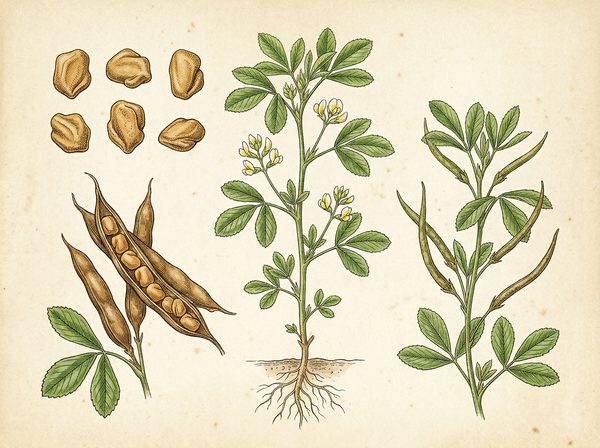 FenugreekTrigonella foenum-graecum
 FeverfewTanacetum parthenium
 FicariaRanunculus ficaria
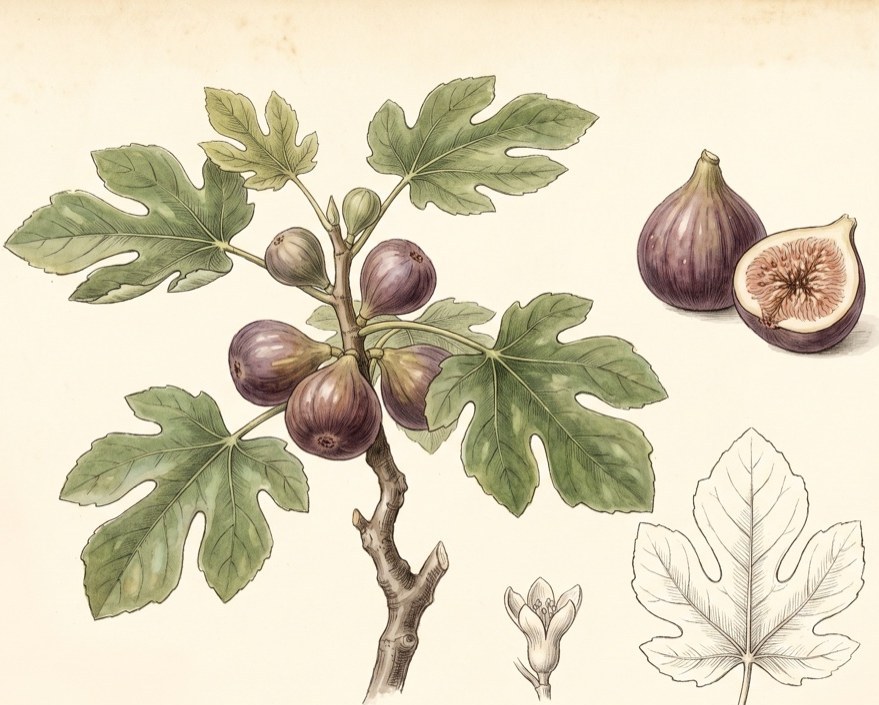 FigFicus
 FigwortScrophularia nodosa
The whole plate is in the library. The compass, Compare, the Sky of eleven hundred plants and the formulary open with an email address and a password, free, with the formula builder and its safety engine. Herbert without limit, his formulating, clients, the handouts and the labels are the paid room.
Open the library, free