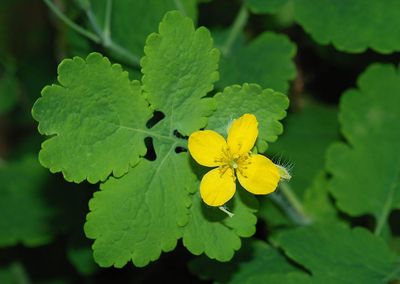
Western Herbalism
Celandine
Chelidonium majus
Also known as Greater celandine, Common celandine, garden celandine, swallow wort, Chelidonium, Great Celandine, Tetterwort, Chelandine.
External. The fresh juice of chelidonium applied to the skin produces rubefaction, inflammation and vesication. It will destroy verrucous growths. Internal. Internally, in full doses chelidonium is a drastic hydragogue purgative, operating much like gamboge.

Ask Herbert about Celandine. Herbert is the master herbalist inside Bountiful Herbs: he answers from this plate and eleven hundred others, with dosing, pairing and cautions. Your first ten questions are free.
Ask HerbertActions
Indications what the tradition reached for it in
- Constipation
- Gallstone (non-obstructive)
- Congestion (liver)
- Congestion (spleen)
- Enlarged liver
- Cholelithiasis
- Stool discoloration (clay-colored)
- Gall bladder colic
- Corns
- Warts
- Colic
- Cramps
- Gallbladder disorders
- Muscle spasms
- Dyspepsia
- Sluggish bile production
- Gallbladder dysfunction
- Poor bile flow
- Spastic discomfort of the bile ducts
- Gastrointestinal tract
- Piles
Safety
Recognised toxicity. This plant carries a toxicity flag in the record; it is for trained practitioners only.
Low dose botanical. Used in drop doses in the classical practice; not a plant to dose freely.
Pregnancy: Not safe. Brinker speculates that Chelidonium be avoided in pregnancy due to uterine stimulant activity in animal studies.
Pregnancy, our record's flag: Caution. Use with care in pregnancy (our record's flag)
Pregnancy, our record's flag: Not safe. Not for use in pregnancy (our record's flag)
Pregnancy, a modern clinical reference: The safety of C; majus has not been established; In view of the lack of information on the use of C
Pregnancy, published rating: Not safe. AHPA Botanical Safety Handbook class 2b, c, d (not recommended in pregnancy except under qualified supervision, not recommended in lactation except under qualified supervision); Mills & Bone rate it C (has caused, or may cause, harmful effects on the fetus or newborn other than malformation)
Breastfeeding: Not safe. Strongly discouraged while breastfeeding (Mills & Bone SD); AHPA Botanical Safety Handbook class 2b, c, d (not recommended in pregnancy except under qualified supervision, not recommended in lactation except under qualified supervision)
Breastfeeding, our record: Caution. Lactation (topical use considered safe
Breastfeeding, our record's flag: Not safe. Not for use while breastfeeding (our record's flag)
The record lists 7 contraindications; open the plate in the library to read them in full.
Dosing as the sources wrote it
| Preparation | As written |
|---|---|
| Tincture (1:2) | 10-20 gtts BID-QID |
| Infusion | 1 tsp/c BID-TID (alkaloids not well extracted in tea |
| Spastic discomfort of the bile ducts and gastrointestinal tract Aerial parts Daily dosage 2 -5 g, equivalent to 12 -30 mg total alkaloids, calculated as chelidonine | |
| Gall stones, gall bladder and biliary diseases Aerial parts 1-2 g dried herb three times daily | |
| Liver and gall bladder disorders, cramp-like pain of the gall ducts and gastrointestinal tract Liquid extract 1 -2 mL of a 1 : 2 preparation daily or 1 -2m L of a 1 : 1 preparation three times d | |
| Tincture 2-4 mL of a 1 : 5 preparation daily or 2-4m L o f a 1 : 10 preparation three times daily |
Doses are reproduced from the sources for practitioners and are not a recommendation for any person.
From the sources
Action and Therapy. External. The fresh juice of chelidonium applied to the skin produces rubefaction, inflammation and vesication. It will destroy verrucous growths. Internal. Internally, in full doses chelidonium is a drastic hydragogue purgative, operating much like gamboge.
Therapy. Sluggishness of the portal circulation. Defective liver circulation is the cause of a long train of remote manifestations, among which are slow pulse, frequent palpitations, a feeling of weight, stiffness and swellings of the hands, feet and limbs, cold extremities, pallid and doughy skin, local and general, edema, dull pain or constant aching in the limbs and muscles, aching in the front head and occiput, vertigo, weariness, irritability, inactivity, irregularity of the bowels-constipation, followed by diarrhea, erratic colicky pains, sallowness, jaundice and other disorders.
Action, Medical Uses, and Dosage. Stimulant, acrid, alterative, diuretic, diaphoretic, purgative, and vulnerary. As a drastic hydragogue it is fully equal to gamboge. The juice, when applied to the skin, produces inflammation, and even vesication, and has long been known as a caustic for the removal of warts; also applied to indolent ulcers, fungous growths, etc., and is useful in removing specks and opacities of the cornea, and in curing ringworms.
Specific Indications and Uses. "Full, pale, sallow tongue and mucous membranes; skin pale and sallow, sometimes greenish;" hepatic congestion; jaundice, due to swollen bile ducts; sluggish hepatic action; cough, with hepatic pain; fullness, with tensive or throbbing pain in the right hypochondrium, and pain extending to right shoulder; melancholia, headaches, and gastric disorders, dependent upon faulty action of the liver.
Drawn from Scudder's Specific Medication and Specific Medicines; King's American Dispensatory, 18th edition (Felter and Lloyd); Ellingwood's American Materia Medica, Therapeutics and Pharmacognosy; Felter's Eclectic Materia Medica, Pharmacology and Therapeutics, and the Bountiful Herbs editorial.
Nearby on the shelf
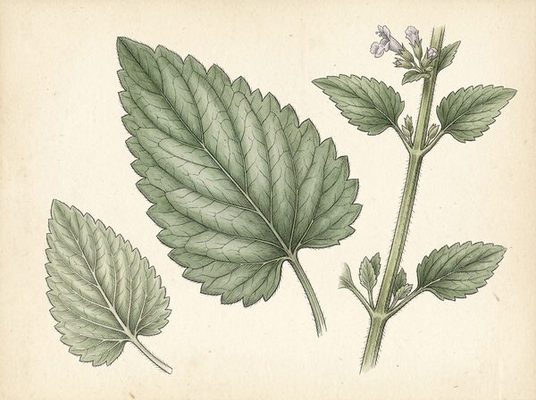 CatnipNepeta cataria
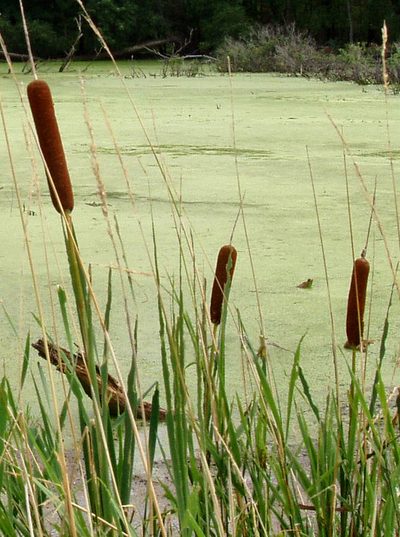 Cattail FlagTypha
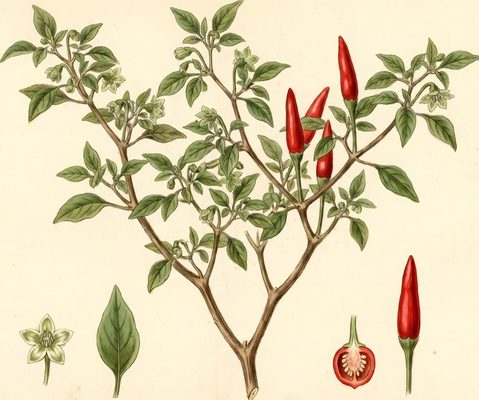 CayenneCapsicum frutescens
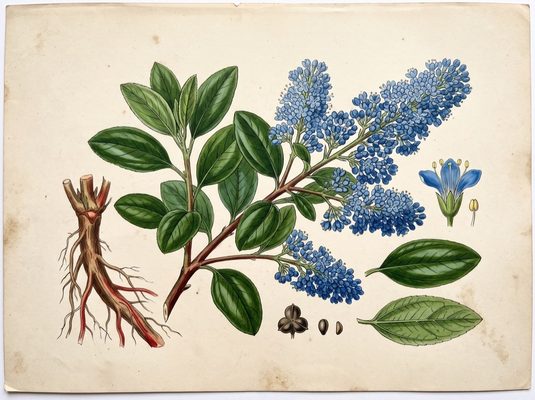 CeanothusCeanothus thrysiflorus
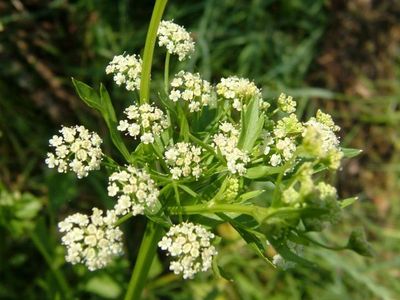 CeleryApium graveolens
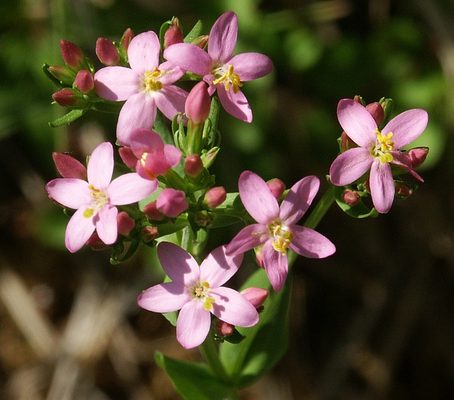 CentauryCentaurium erythraea
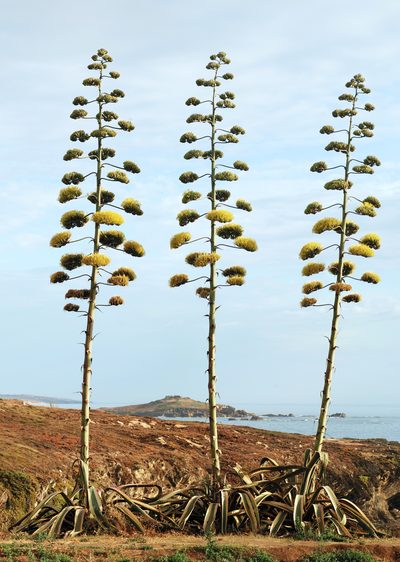 Century PlantAgave americana
 CevadillaSchoenocaulon officinale
The whole plate is in the library. The compass, Compare, the Sky of eleven hundred plants and the formulary open with an email address and a password, free, with the formula builder and its safety engine. Herbert in full, his formulating, clients, the handouts and the labels are the paid room.
Open the library, free