Ayurvedic Herbalism
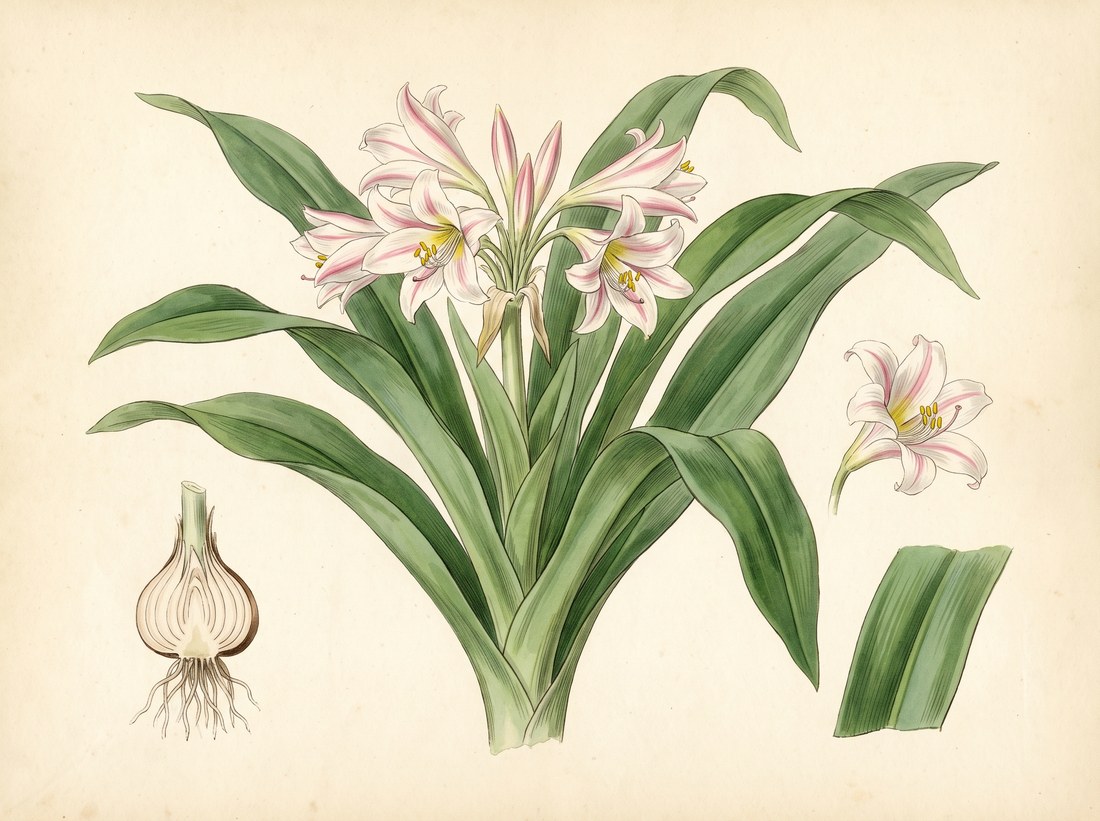
Wide-leaved crinum lily
Crinum latifolium
Also known as Sudarshan lily, poison bulb (for Crinum asiaticum), spider lily, Sudarshana, Sukhadarshana, Nagadamani.
Crinum latifolium is a large bulbous lily with broad strap-shaped leaves and fragrant white, pink-striped flowers that grows in moist, shaded places across the Indian plains, the Deccan and the northeast, and from Sri Lanka through Southeast Asia and southern China. Ayurveda calls it Sudarshana or Nagadamani and uses the leaves and bulb as an external medicine for swellings, joint pain, abscesses and earache, treating the bulb as an emetic poison if swallowed. In Vietnam the leaves have a separate reputation as a prostate remedy, which has brought the plant into modern research.

Ask Herbert about Wide-leaved crinum lily. Herbert is the master herbalist inside Bountiful Herbs: he answers from this plate and eleven hundred others, with dosing, pairing and cautions. Your first ten questions are free.
Ask HerbertActions
Indications what the tradition reached for it in
- Osteoarthritic and rheumatic joint swelling (topical fomentation)
- Sprains, bruises and soft tissue injuries (topical)
- Abscesses, boils and whitlow (poultice)
- Earache and otitis externa (warm leaf juice)
- Hemorrhoids with pain and swelling (topical)
- Insect, scorpion and snake bites as a local first aid (topical, traditional)
- Benign prostatic hyperplasia (leaf extract, Southeast Asian use)
- Prostate cancer as a supportive adjunct (Southeast Asian use, unproven)
- Chronic skin ulcers and fistulae (topical, traditional)
- Lumbago and sciatica (topical fomentation)
Specific indications
A cold, swollen, stiff knee or ankle in a kapha-vata patient that eases with heat, where a warmed oiled leaf bound on overnight brings relief by morning
A hot, throbbing boil or abscess that needs drawing to a head before it can drain
The child with earache and a cold, damp head where a few drops of warm leaf juice are a traditional first resort
An older man with nocturia and a slow stream who has been given the leaf tea in the Vietnamese manner and wants to know whether it has any standing
Safety
Low dose botanical. Used in drop doses in the classical practice; not a plant to dose freely.
Pregnancy: Avoid internal use in pregnancy: no published safety class is known to us, the bulb is an emetic and Amaryllidaceae alkaloids are uterine and gut stimulants; topical use on a joint is acceptable.
Breastfeeding: Avoid internal use while nursing for lack of data; topical use is acceptable away from the breast.
The record lists 9 contraindications; open the plate in the library to read them in full.
In practice
The Ayurvedic practitioner reaches for Sudarshana leaves as a warming, drawing external application, much as a Western herbalist reaches for a mustard plaster. A fresh leaf is passed over a flame until it wilts, smeared with warm sesame or castor oil, and bound over an arthritic joint, a sprain, a swollen abscess or the lower back, usually overnight and for several nights running.
In Ayurveda
Rasa: tikta (bitter), katu (pungent). Virya: ushna (heating). Vipaka: katu (pungent). Guna: laghu (light), ruksha (dry), tikshna (sharp). Dosha: pacifies kapha and vata; aggravates pitta in excess. Karma: shothahara (reduces swelling); vedanasthapana (relieves pain); vishaghna (counters poisons and bites); vranashodhana (cleanses wounds); krimighna (anthelmintic); kushthaghna (clears skin disease); karnashulahara (relieves earache); vamaka (emetic in larger doses); kaphavatahara (pacifies kapha and vata). Classical indications: shotha (inflammatory swelling); sandhishula (joint pain); vidradhi (abscess); karnashula (earache); vrana (wounds and ulcers); arsha (hemorrhoids, topical); sarpavisha and vrischikavisha (snake and scorpion bite, topical); kushtha (skin diseases); mutrakrichhra (painful urination, folk use); gulma (abdominal mass, as an emetic and in small doses). The leaves and bulbs are used almost entirely externally: leaves warmed over a flame and smeared with sesame or castor oil are bound over swollen joints and abscesses, the roasted bulb is pounded into a poultice, and the warm leaf juice is dropped into the ear. Internally the bulb is an emetic and is given only in small doses in a few regional traditions. Classical formulations: Sudarshana patra svedana (heated leaf fomentation), Sudarshana kanda lepa (bulb poultice), Sudarshana patra svarasa (ear drops), Nagadamani taila (regional oil for joint pain). Described in: Bhavaprakasha Nighantu, Raja Nighantu, Kaiyadeva Nighantu, Dhanvantari Nighantu.
Dosing as the sources wrote it
| Preparation | As written | Metric |
|---|---|---|
| Patra svedana, topical | 20-40 g warmed oiled fresh leaf bound over the joint or swelling overnight | 20000-40000 mg |
| Kalka (bulb poultice), topical | 10-20 g roasted bulb paste applied to an abscess once or twice daily | 10000-20000 mg |
| Svarasa, ear drops | 2-4 drops warm leaf juice into the ear once or twice daily | 0.04-0.08 mL |
| Leaf infusion (Southeast Asian use) | 3-5 g dried leaf daily as an infusion in divided doses | 3000-5000 mg |
Doses are reproduced from the sources for practitioners and are not a recommendation for any person.
From the sources
Overview. Crinum latifolium is a large bulbous lily with broad strap-shaped leaves and fragrant white, pink-striped flowers that grows in moist, shaded places across the Indian plains, the Deccan and the northeast, and from Sri Lanka through Southeast Asia and southern China. Ayurveda calls it Sudarshana or Nagadamani and uses the leaves and bulb as an external medicine for swellings, joint pain, abscesses and earache, treating the bulb as an emetic poison if swallowed. In Vietnam the leaves have a separate reputation as a prostate remedy, which has brought the plant into modern research.
Clinical Notes. The Ayurvedic practitioner reaches for Sudarshana leaves as a warming, drawing external application, much as a Western herbalist reaches for a mustard plaster. A fresh leaf is passed over a flame until it wilts, smeared with warm sesame or castor oil, and bound over an arthritic joint, a sprain, a swollen abscess or the lower back, usually overnight and for several nights running.
Ayurvedic Profile. Rasa: tikta (bitter), katu (pungent). Virya: ushna (heating). Vipaka: katu (pungent). Guna: laghu (light), ruksha (dry), tikshna (sharp). Dosha: pacifies kapha and vata; aggravates pitta in excess. Karma: shothahara (reduces swelling); vedanasthapana (relieves pain); vishaghna (counters poisons and bites); vranashodhana (cleanses wounds); krimighna (anthelmintic); kushthaghna (clears skin disease); karnashulahara (relieves earache); vamaka (emetic in larger doses); kaphavatahara (pacifies kapha and vata).
Nearby on the shelf
 White quebrachoAspidosperma quebracho-blanco
 White SageSalvia apiana
 White snakerootEupatorium ageratoides
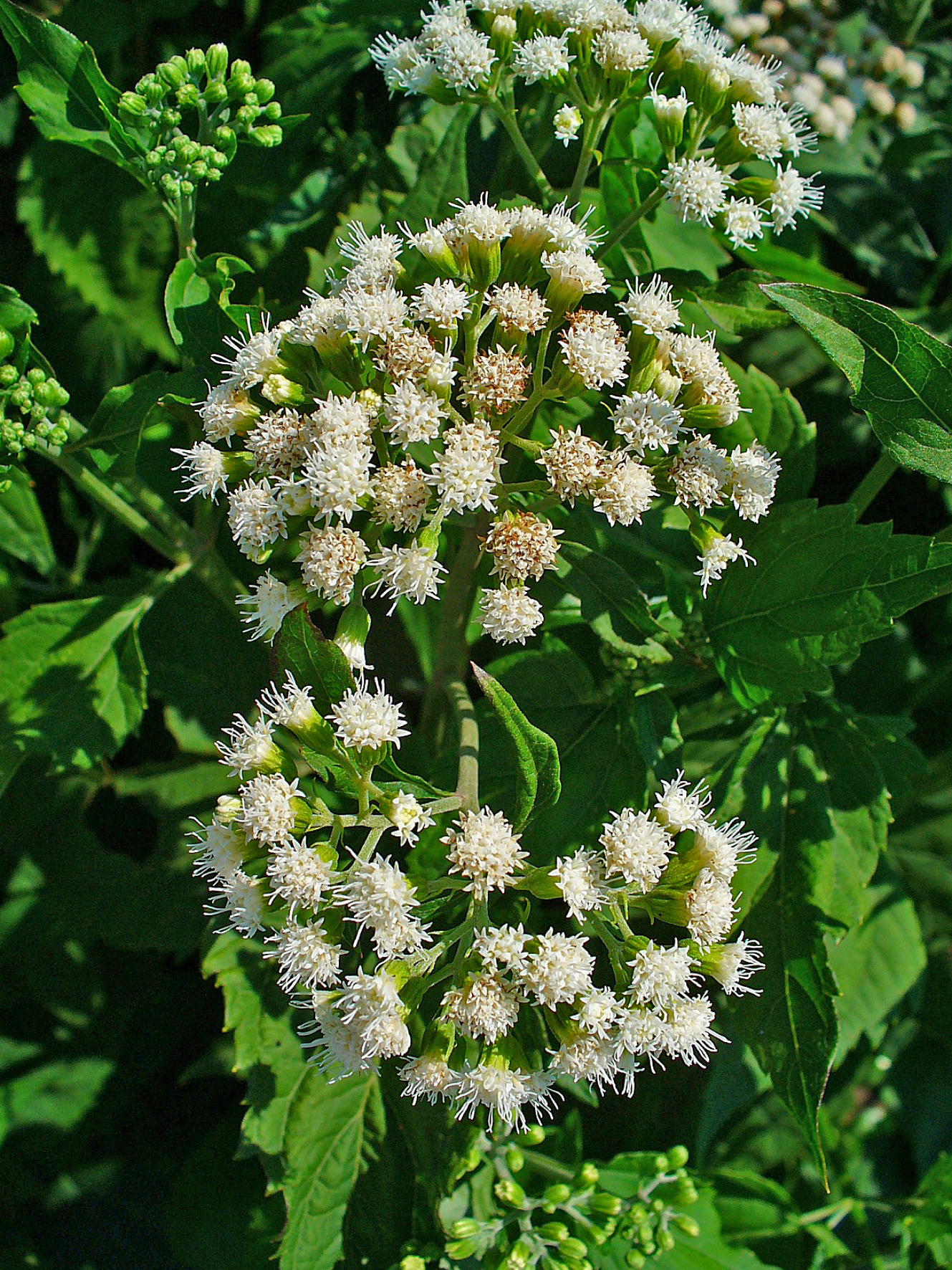 White snakerootEupatorium Aromaticum
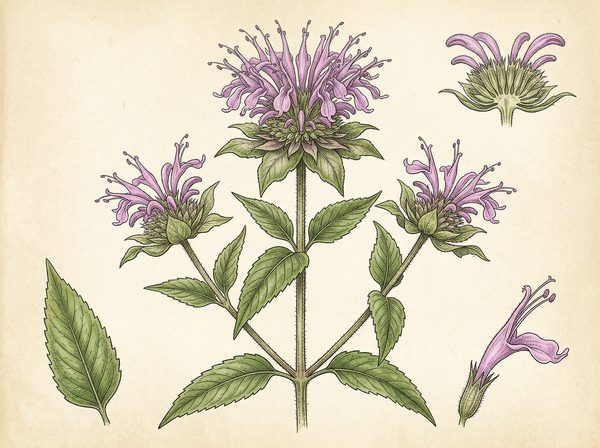 Wild BergamotMonarda fistulosa
 Wild cherryPrunus serotina
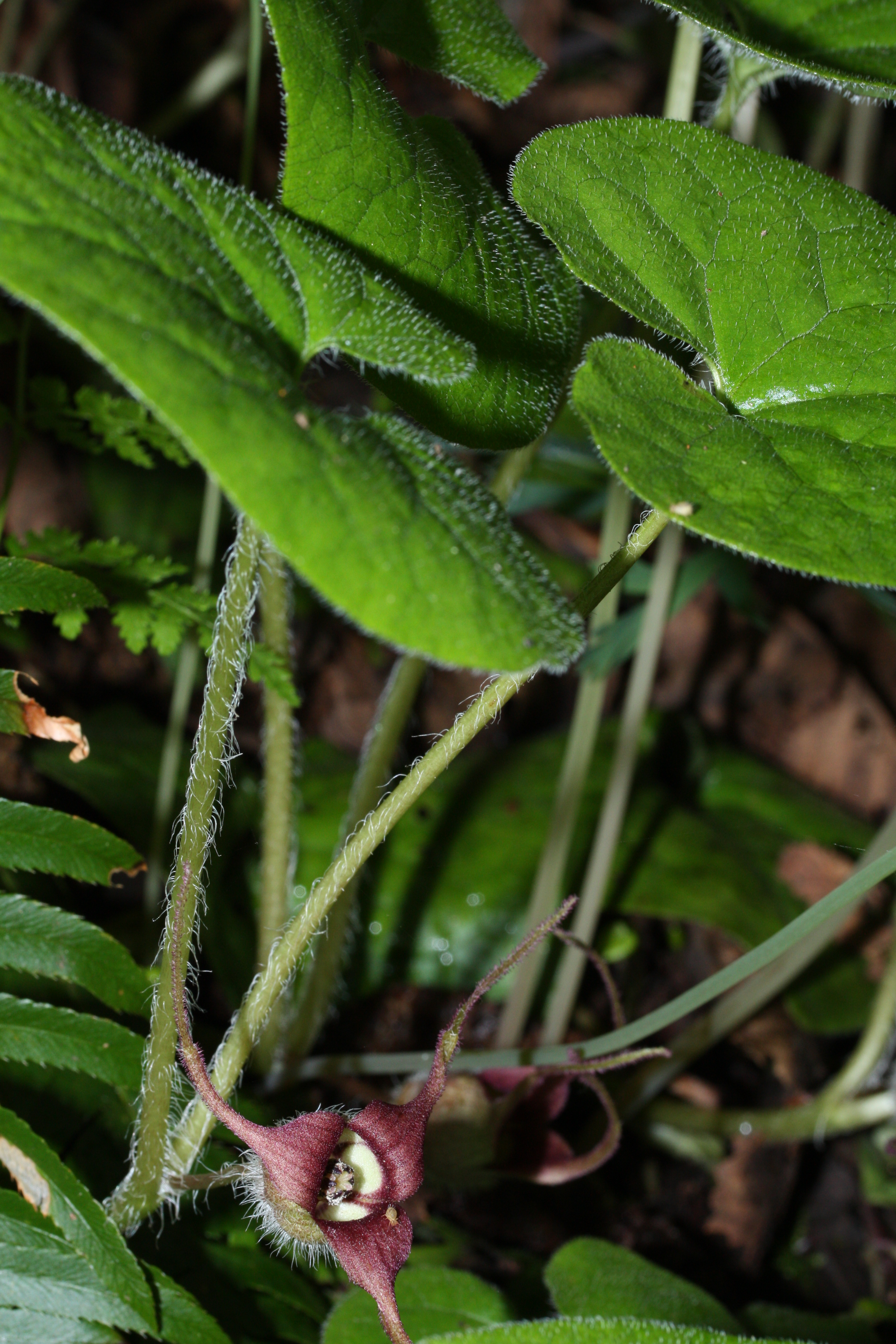 Wild GingerAsarum Candense
 Wild guavaCareya arborea
The whole plate is in the library. The compass, Compare, the Sky of eleven hundred plants and the formulary open with an email address and a password, free, with the formula builder and its safety engine. Herbert without limit, his formulating, clients, the handouts and the labels are the paid room.
Open the library, free