Western Herbalism
White snakeroot
Eupatorium ageratoides
Also known as Pool root, Richweed, White sanicle.
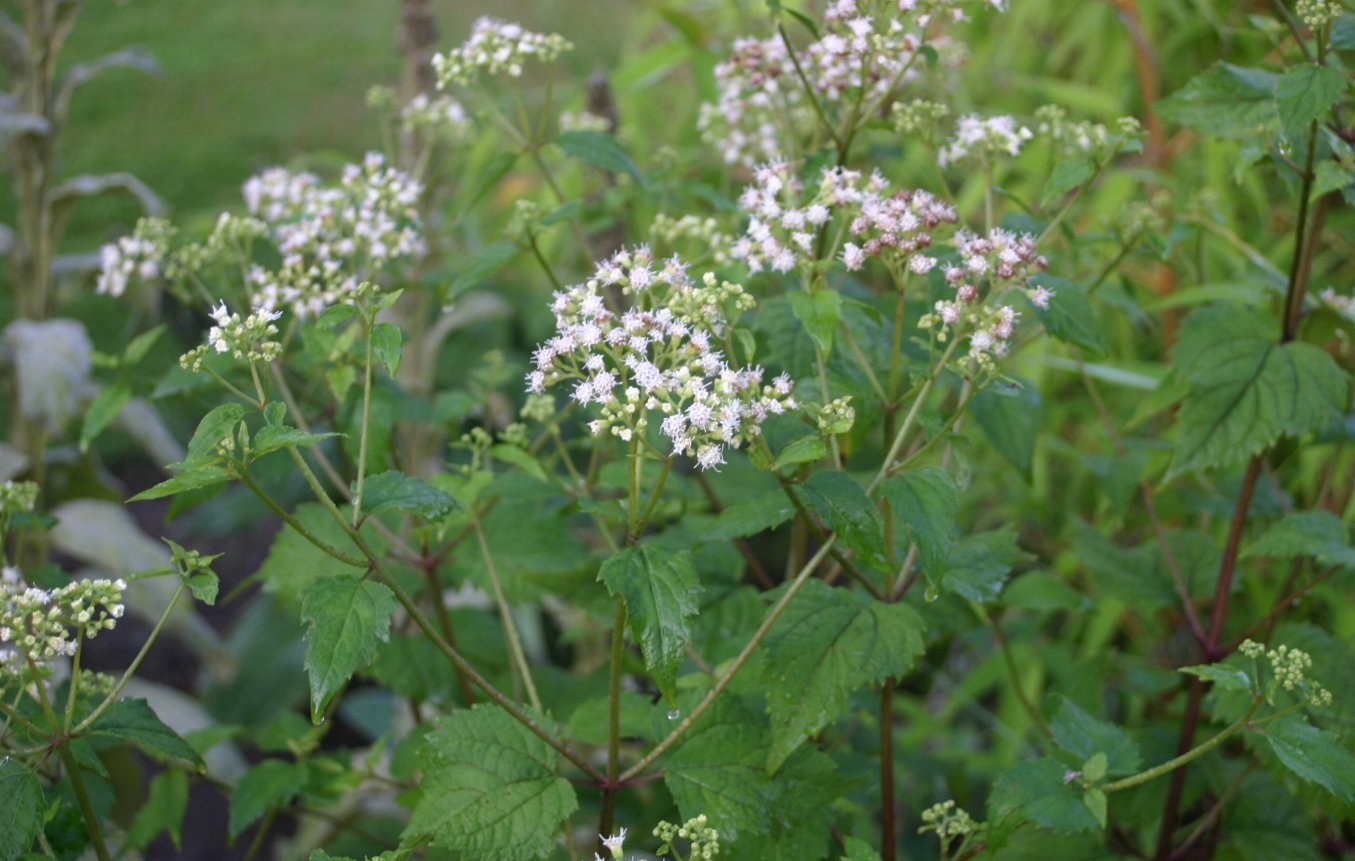
White snakeroot is a tall, smooth-stemmed perennial of the boneset family, common along fences and in open woods of eastern North America, bearing flat corymbs of small white flower heads in late summer. The root and whole herb were used by nineteenth century physiomedicalist and Eclectic practitioners as a diuretic and mild stimulant tonic for the kidneys and bowel. The plant is now known chiefly as the source of tremetol, the toxin responsible for historical outbreaks of milk sickness in humans who consumed dairy or meat from cattle that had grazed on it, a cause of significant mortality in early American settlements.

Ask Herbert about White snakeroot. Herbert is the master herbalist inside Bountiful Herbs: he answers from this plate and eleven hundred others, with dosing, pairing and cautions. Your first ten questions are free.
Ask HerbertActions
Indications what the tradition reached for it in
- Renal calculi
- Dysuria with scanty urine
- Chronic diarrhea in atonic constitutions
- Dysentery
- Debility and poor tissue tone
- Intermittent fever
- Snakebite (folk external wash)
- Indolent skin ulcers
- General tonic support in convalescence
Specific indications
Dull aching low back pain with scanty, gravelly urine in a person of relaxed, atonic constitution
Chronic, feeble diarrhea with a pale, weak-looking patient and little pain
Safety
Recognised toxicity. This plant carries a toxicity flag in the record; it is for trained practitioners only.
Low dose botanical. Used in drop doses in the classical practice; not a plant to dose freely.
Breastfeeding: Avoid entirely: tremetol is fat-soluble and historically responsible for poisoning transmitted through contaminated milk, so any exposure during lactation is inappropriate.
The record lists 4 contraindications; open the plate in the library to read them in full.
In practice
In the physiomedicalist framework, Cook and his contemporaries placed white snakeroot among the stimulating diuretics, reaching for it in cases of atonic, relaxed tissue with sluggish urinary output or low back ache attributed to gravel, and occasionally in feeble, watery diarrhea where a mild astringent stimulant effect on the bowel wall was wanted.
Dosing as the sources wrote it
| Preparation | As written | Metric |
|---|---|---|
| Tincture (1:5, historical Eclectic dosing, not recommended in modern practice) | 0.5-1 mL up to three times daily | 0.5-1 mL |
| Decoction (historical use only, not recommended) | 1-2 g dried root as decoction | 1000-2000 mg |
Doses are reproduced from the sources for practitioners and are not a recommendation for any person.
From the sources
Overview. White snakeroot is a tall, smooth-stemmed perennial of the boneset family, common along fences and in open woods of eastern North America, bearing flat corymbs of small white flower heads in late summer. The root and whole herb were used by nineteenth century physiomedicalist and Eclectic practitioners as a diuretic and mild stimulant tonic for the kidneys and bowel. The plant is now known chiefly as the source of tremetol, the toxin responsible for historical outbreaks of milk sickness in humans who consumed dairy or meat from cattle that had grazed on it, a cause of significant mortality in early American settlements.
Clinical Notes. In the physiomedicalist framework, Cook and his contemporaries placed white snakeroot among the stimulating diuretics, reaching for it in cases of atonic, relaxed tissue with sluggish urinary output or low back ache attributed to gravel, and occasionally in feeble, watery diarrhea where a mild astringent stimulant effect on the bowel wall was wanted.
Properties and Uses. Dr. H. Howard first called attention to the roots of this plant, which were recommended in gravel, and were used by the Indians as a remedy in ague. In 1852, not then having seen Dr. Howard’s work, or known any thing of this article, its beauty attracted my attention; and I investigated its properties, and made reports upon them in different journals which reports were subsequently copied without giving credit.
Description. Natural Order, Compositae. A member of the boneset family, and a very common plant through open woods and along fences in all sections of the United States and Canada. Stem smooth, two feet or more in height, branching, slender-looking, and quite a pale green, (or greenish-yellow.) Leaves opposite, ovate, acuminate, subcordate at base, coarsely dentate, three-veined, smooth, thin, very pale green, three to five inches lung by one and a half to three inches broad, standing well out from the stem and brandies on smooth petioles two to three inches long.
Drawn from Cook's Physio-Medical Dispensatory, and the Bountiful Herbs editorial.
Nearby on the shelf
 White PeonyPaeonia lactiflora
 White Pond LilyNymphaea odorata
 White quebrachoAspidosperma quebracho-blanco
 White SageSalvia apiana
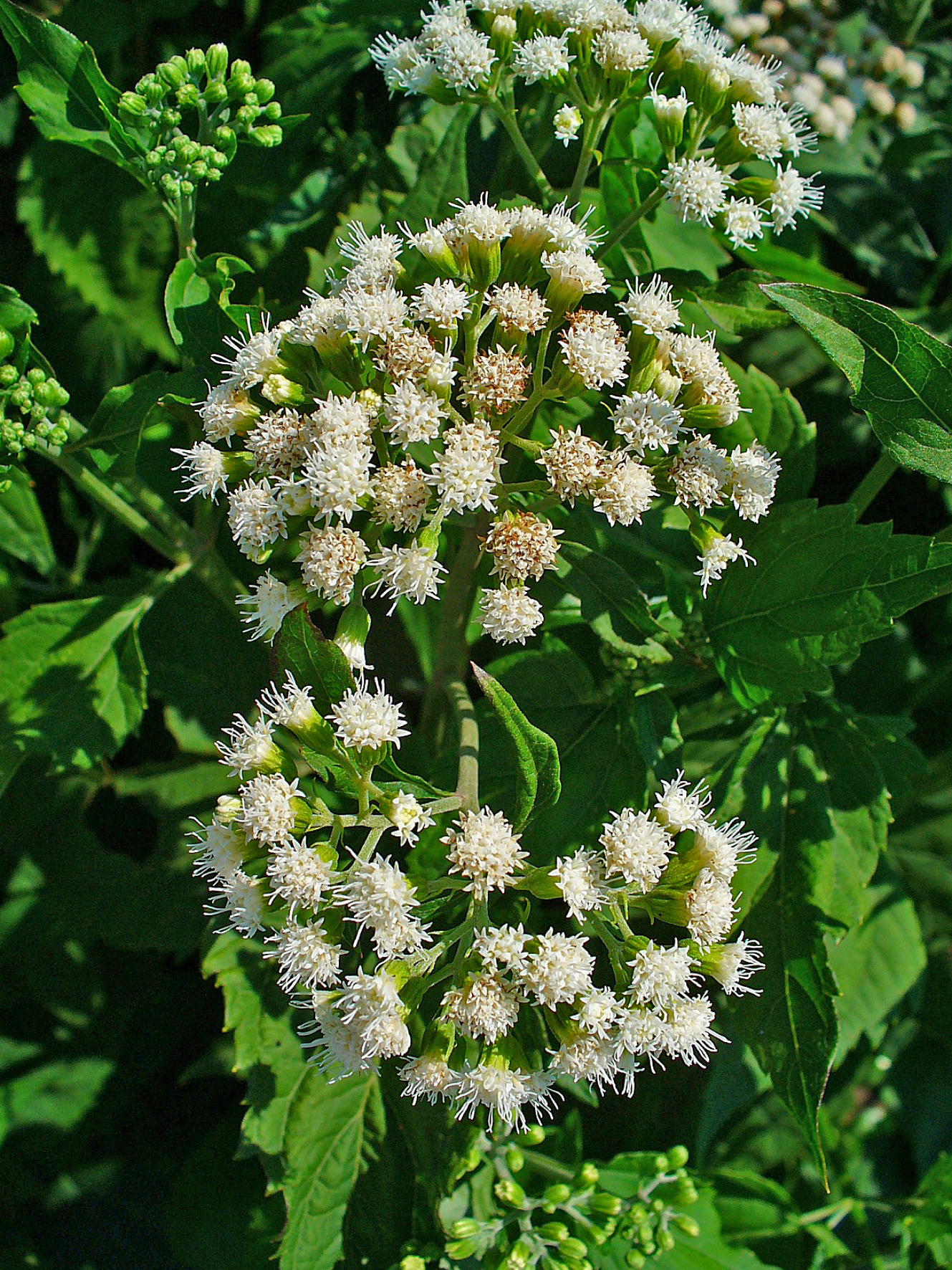 White snakerootEupatorium Aromaticum
 Wide-leaved crinum lilyCrinum latifolium
 Wild BergamotMonarda fistulosa
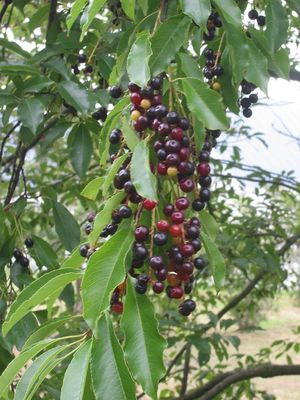 Wild cherryPrunus serotina
The whole plate is in the library. The compass, Compare, the Sky of eleven hundred plants and the formulary open with an email address and a password, free, with the formula builder and its safety engine. Herbert without limit, his formulating, clients, the handouts and the labels are the paid room.
Open the library, free