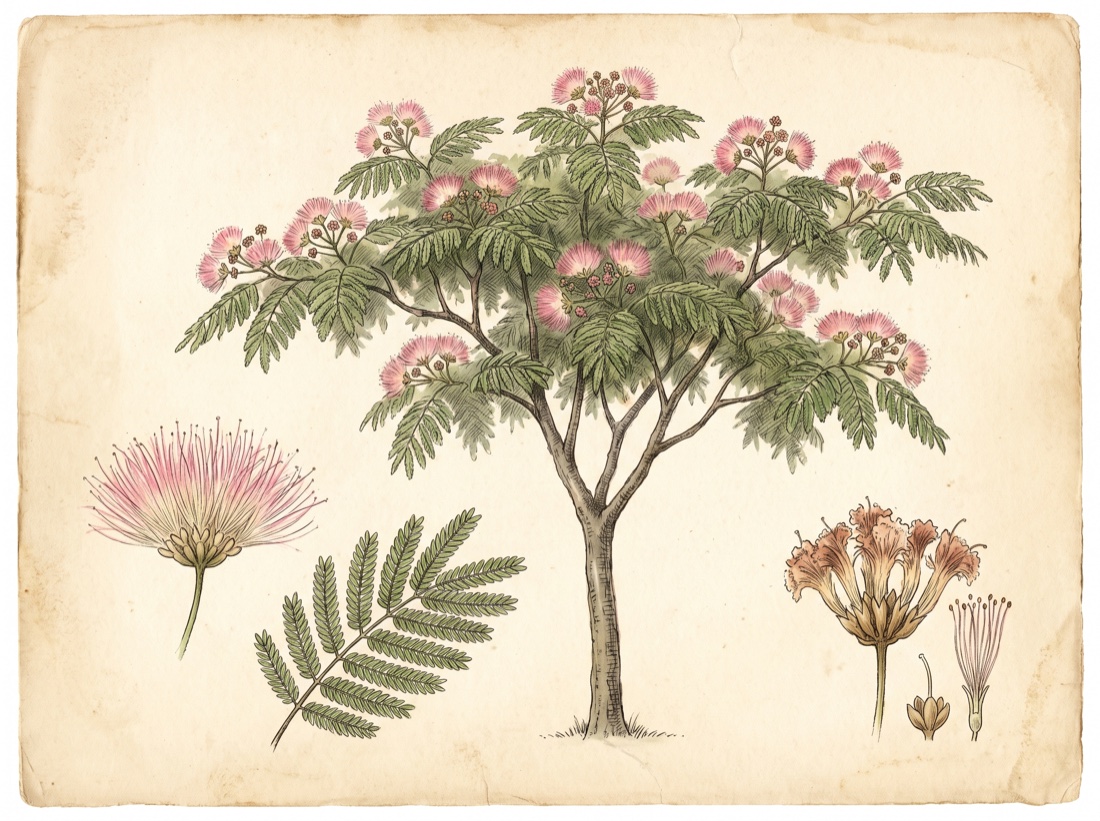
Chinese Herbalism
Silk tree
Albizia julibrissin
Also known as Persian silk tree, mimosa tree, pink siris, tree of happiness, hé huān huā, hé huān pí.
Albizia julibrissin, the silk tree, is a fast-growing deciduous legume native from Iran through the Caucasus and China to Korea and Japan, and widely planted, often invasively, in warm temperate regions. Its pink pompom flowers give it the name tree of happiness. Chinese medicine uses two parts: he huan hua, the flower or bud, harvested in early summer and dried, and he huan pi, the stem bark. Both are classed among the herbs that calm the spirit, and the flower is the gentler, more purely emotional remedy of the two.
Ask Herbert about Silk tree. Herbert is the master herbalist inside Bountiful Herbs: he answers from this plate and eleven hundred others, with dosing, pairing and cautions. Your first ten questions are free.
Ask HerbertActions
Indications what the tradition reached for it in
- Insomnia from worry or grief
- Anxiety with chest tightness and sighing
- Low mood with irritability
- Restlessness and palpitations from emotional strain
- Poor memory from Heart and Liver disharmony
- Chest oppression with sighing
- Traumatic injury with swelling and pain (bark)
- Fracture and sinew injury recovery (bark)
- Abscess of lung or skin (bark)
- Emotional eating and epigastric knots
Specific indications
The person who cannot sleep because the day replays, sighing often, with a tight chest and a heavy heart after loss or disappointment
Irritable low mood with a feeling that pleasure has drained out of life, without the heat or agitation that calls for stronger herbs
Bruising and swelling after a fall in a patient who is also shaken and sleeping badly (bark with flower)
Safety
The record lists 5 contraindications; open the plate in the library to read them in full.
In practice
He huan hua is the flower to reach for in grief, disappointment and quiet resentment that settle into the chest and disturb sleep. The picture is a patient who sighs, feels a knot or tightness under the sternum, is irritable but not hot, and cannot switch off at night.
In Chinese medicine
Temperature: neutral. Taste: sweet (flower); sweet, slightly bitter (bark). Channels: Heart, Liver. Actions: Calms the spirit and relieves constraint from emotional strain; Harmonizes the Heart and Liver and lifts a low, irritable mood; Bark also invigorates blood, reduces swelling and knits sinew and bone; Bark disperses abscesses and promotes healing of traumatic injury.
Dosing as the sources wrote it
| Preparation | As written | Metric |
|---|---|---|
| Infusion or decoction (flower) | 5-10 g dried flower daily | 5000-10000 mg |
| Decoction (bark) | 6-12 g dried bark daily | 6000-12000 mg |
| Tincture (1:5, 30%, flower) | 2-4 mL three times daily | 2-4 mL |
Doses are reproduced from the sources for practitioners and are not a recommendation for any person.
From the sources
Overview. Albizia julibrissin, the silk tree, is a fast-growing deciduous legume native from Iran through the Caucasus and China to Korea and Japan, and widely planted, often invasively, in warm temperate regions. Its pink pompom flowers give it the name tree of happiness. Chinese medicine uses two parts: he huan hua, the flower or bud, harvested in early summer and dried, and he huan pi, the stem bark. Both are classed among the herbs that calm the spirit, and the flower is the gentler, more purely emotional remedy of the two.
Clinical Notes. He huan hua is the flower to reach for in grief, disappointment and quiet resentment that settle into the chest and disturb sleep. The picture is a patient who sighs, feels a knot or tightness under the sternum, is irritable but not hot, and cannot switch off at night.
Chinese Medicine Profile. Temperature: neutral. Taste: sweet (flower); sweet, slightly bitter (bark). Channels: Heart, Liver. Actions: Calms the spirit and relieves constraint from emotional strain; Harmonizes the Heart and Liver and lifts a low, irritable mood; Bark also invigorates blood, reduces swelling and knits sinew and bone; Bark disperses abscesses and promotes healing of traumatic injury.
Nearby on the shelf
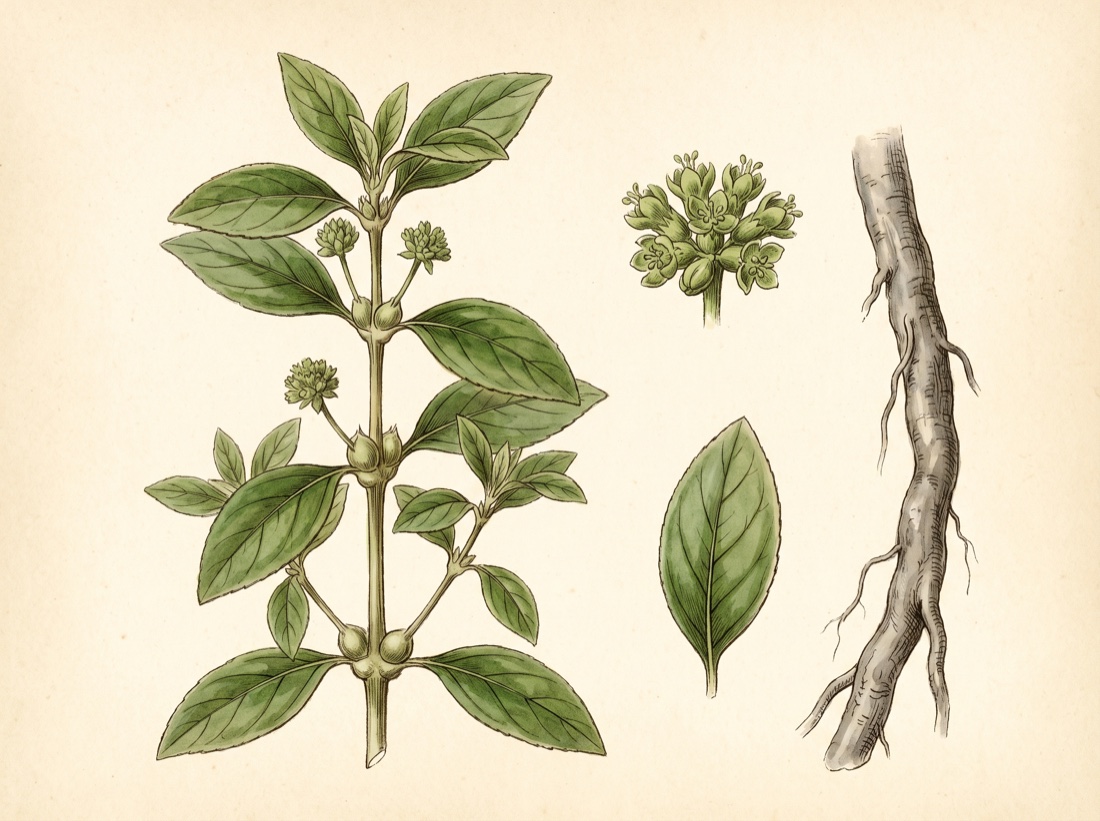 Sichuan ox kneeCyathula officinalis
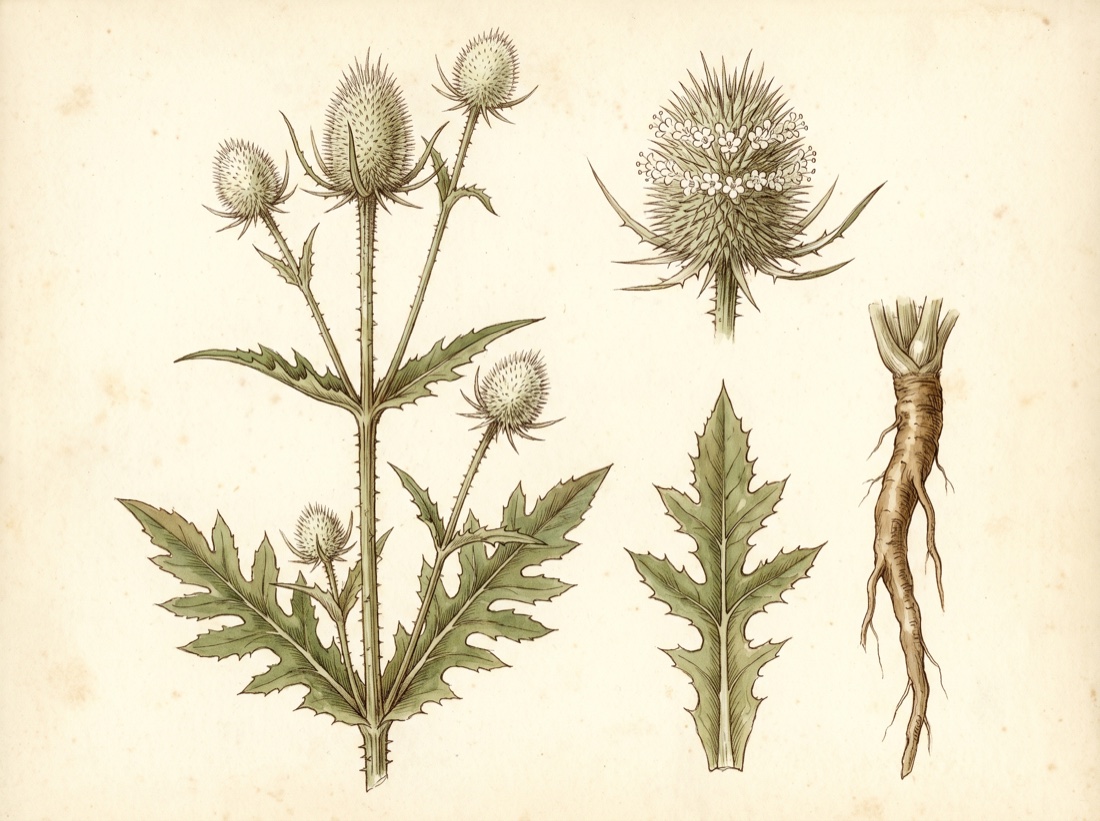 Sichuan teaselDipsacus asper
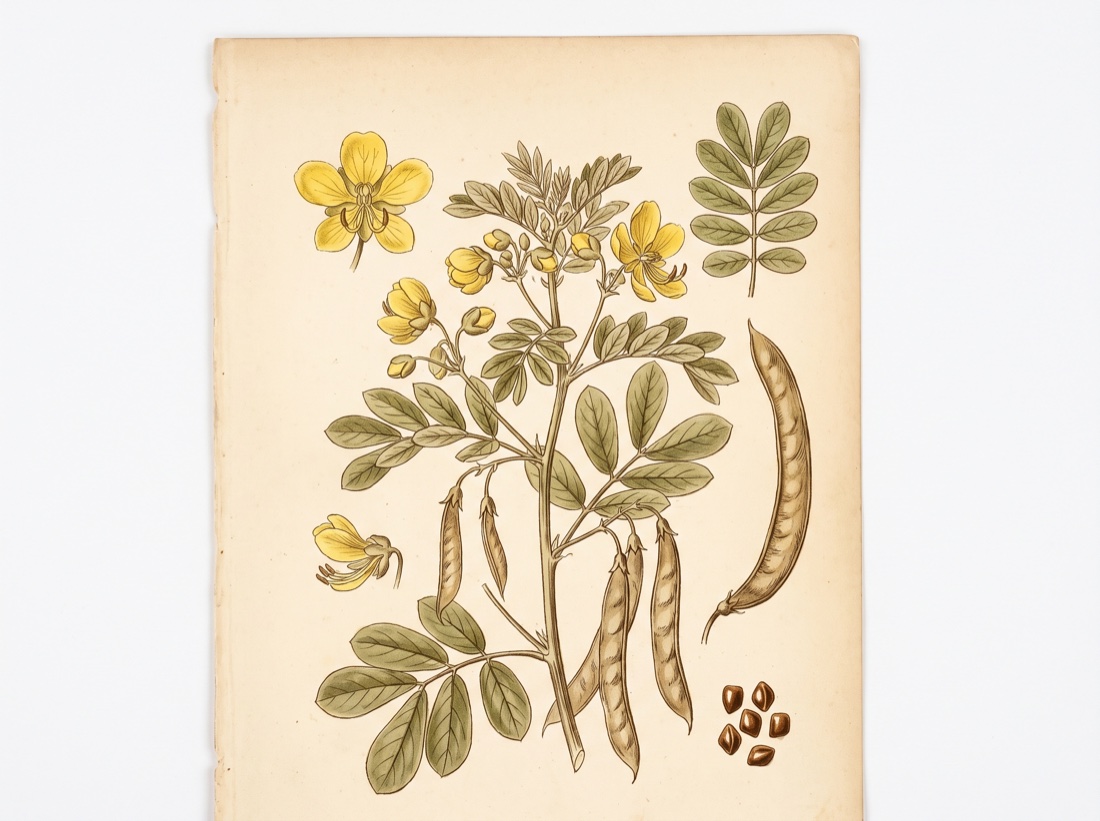 SicklepodSenna obtusifolia
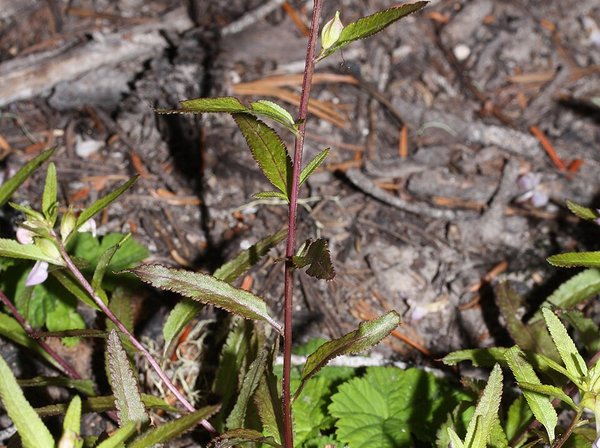 Sickletop LousewortPedicularis racemosa
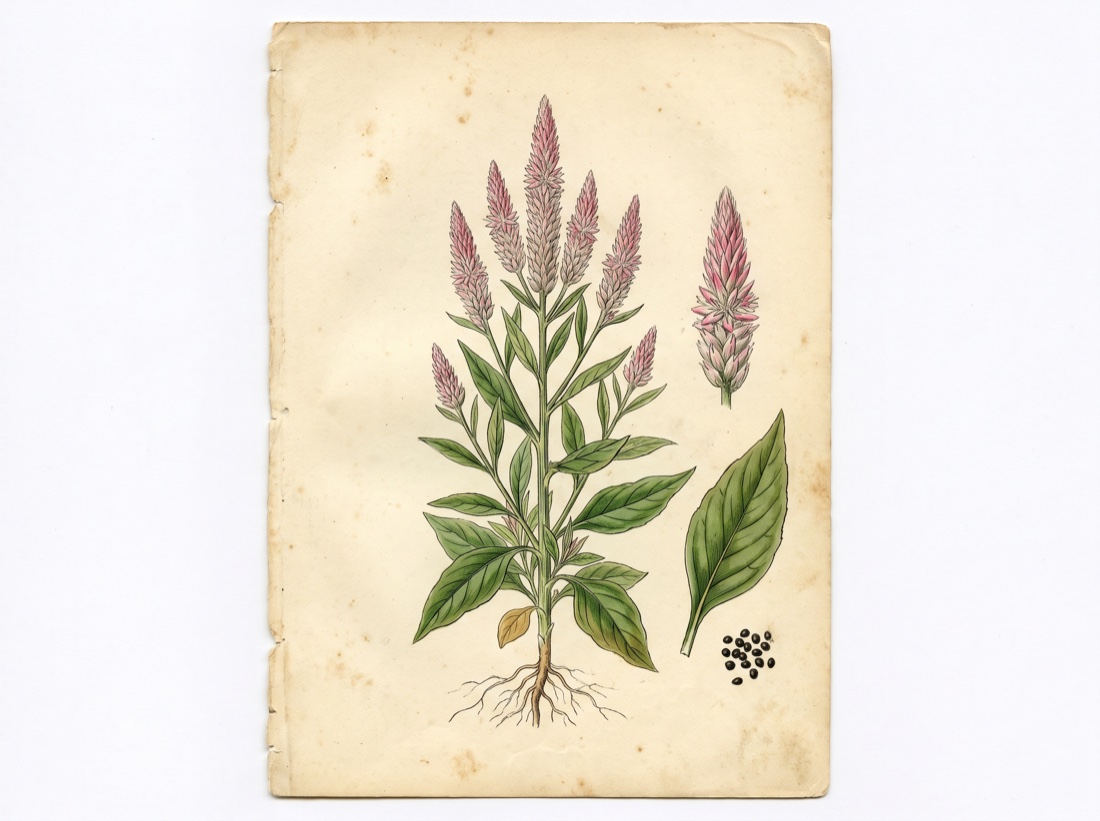 Silver cockscombCelosia argentea
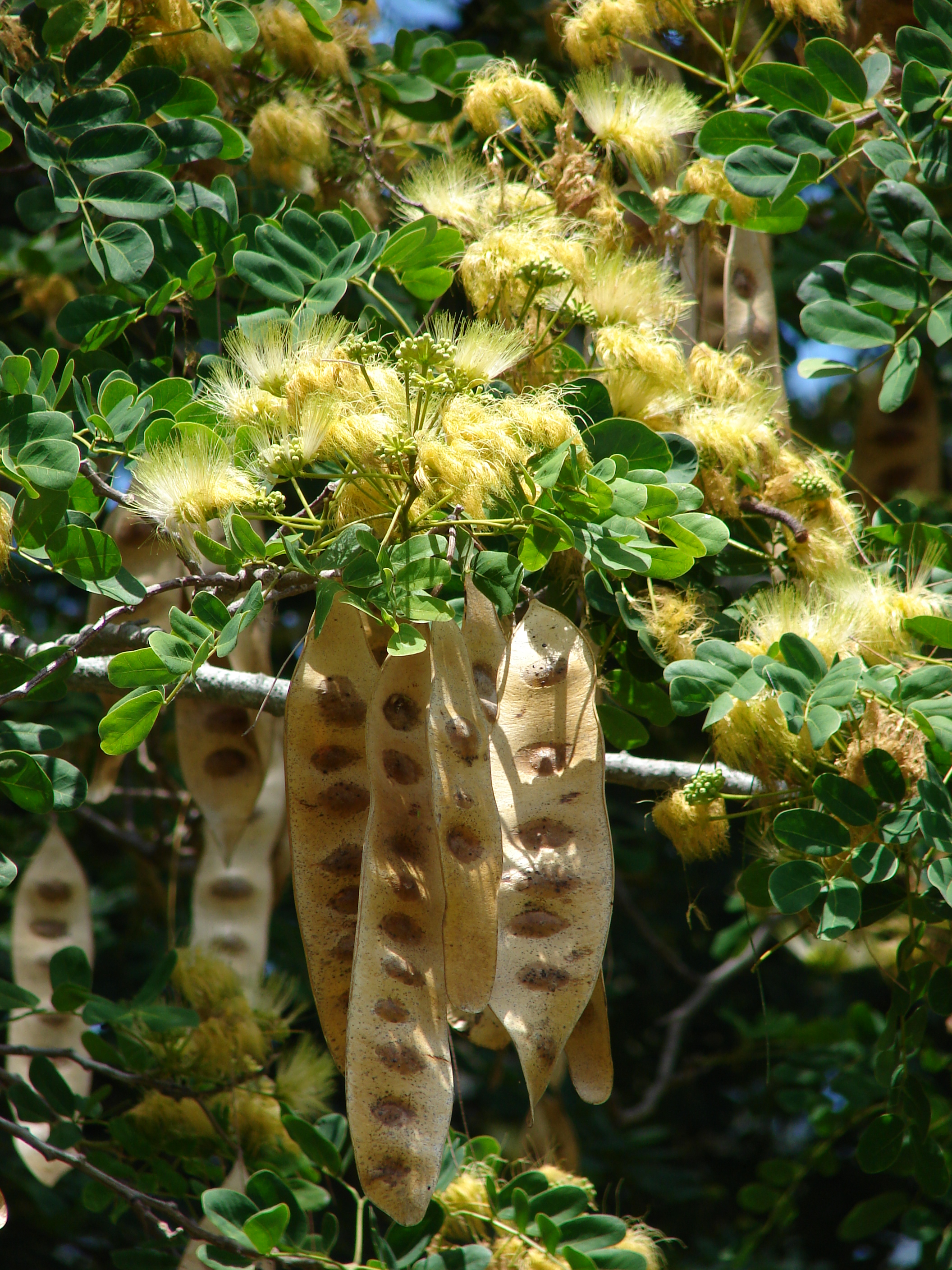 SirisAlbizia lebbeck
 Skunk CabbageSymplocarpus foetidus
 Slippery elmUlmus rubra
The whole plate is in the library. The compass, Compare, the Sky of eleven hundred plants and the formulary open with an email address and a password, free, with the formula builder and its safety engine. Herbert without limit, his formulating, clients, the handouts and the labels are the paid room.
Open the library, free