Western Herbalism
Monesia bark
Monesia
Also known as Monesia, Buranhem bark, Sweet bark.
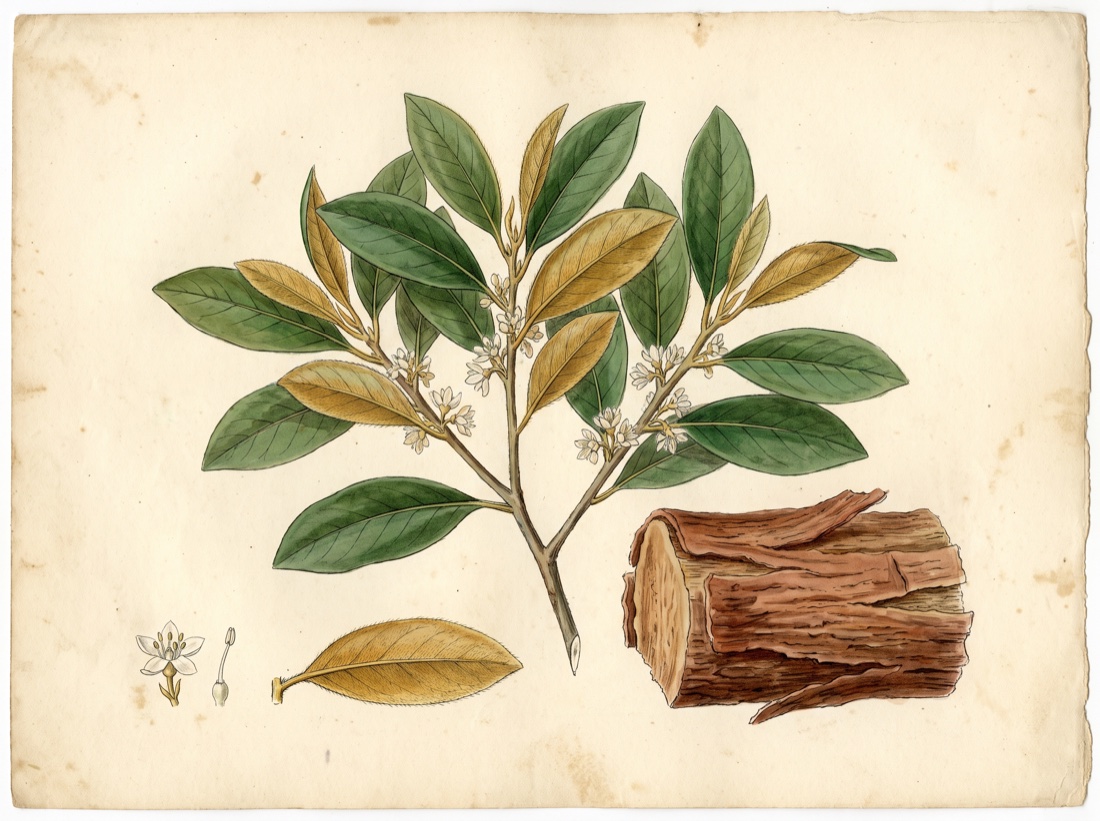
Monesia bark comes from Chrysophyllum glycyphloeum, a tree native to the forests of Brazil, where the bark was traditionally called buranhem and prized for its unusually sweet, astringent taste. Nineteenth century Eclectic physicians in North America imported the dried bark and its fluid extract as a mild astringent and tonic for relaxed mucous membranes, and it also found its way into early proprietary dentifrices and cough preparations because of its pleasant taste and mucosal-toning effect. It has largely fallen out of use in contemporary practice but remains documented in older materia medica as a gentle alternative to harsher astringents such as oak bark or tannic acid.

Ask Herbert about Monesia bark. Herbert is the master herbalist inside Bountiful Herbs: he answers from this plate and eleven hundred others, with dosing, pairing and cautions. Your first ten questions are free.
Ask HerbertActions
Indications what the tradition reached for it in
- Chronic diarrhea
- Atonic dyspepsia
- Chronic bronchitis with copious mucus
- Passive uterine hemorrhage
- Menorrhagia
- Leucorrhea
- Spongy, bleeding gums
- Sore throat
- Slow-healing wounds and ulcers
- Dental caries prevention (historical use in dentifrices)
Specific indications
Relaxed, boggy mucous membranes with free, thin catarrhal discharge, as seen in chronic bronchitis or atonic gastric catarrh
Passive, oozing uterine hemorrhage in a patient with generally lax, atonic tissue rather than acute congestive bleeding
Safety
Low dose botanical. Used in drop doses in the classical practice; not a plant to dose freely.
Pregnancy: Avoid in pregnancy, as there is no modern safety data and traditional use in uterine bleeding suggests physiological activity best avoided without supervision.
Breastfeeding: Avoid in lactation due to lack of safety data.
The record lists 4 contraindications; open the plate in the library to read them in full.
In practice
Monesia was reached for in the Eclectic tradition when a patient's tissues were described as relaxed, boggy, or atonic rather than acutely inflamed, particularly in chronic catarrhal states of the bronchi, stomach, or uterus.
Dosing as the sources wrote it
| Preparation | As written | Metric |
|---|---|---|
| Fluid extract (1:1) | 0.3-1 mL three times daily | 0.3-1 mL |
| Decoction | 2-4 g dried bark daily | 2000-4000 mg |
| Topical wash or gargle | Diluted decoction or fluid extract applied to gums, mouth, or ulcers as needed | |
| In doses of from | In doses of from 2 to 10 grains, repeated 2 or 3 times a day, it acts as a gentle excitant of the stomach, improving the appetite and the digestive functions. | 130-648 mg |
| monesia | The dose of monesia is from 2 to 10 or 15 grains | 130-972 mg |
| monesin | of monesin, from ¼ to ½ grain. These may be given in pill, or powder, and in some syrup or other convenient vehicle. The tincture may be made of any desirable strength, from 1 to 4 ounces of monesia extract to a pint of alcohol. The ointment may be made by triturating 1 drachm of the extract with 7 drachms of cerate, or purified lard. | 16.2-32.4 mg |
Doses are reproduced from the sources for practitioners and are not a recommendation for any person.
From the sources
Overview. Monesia bark comes from Chrysophyllum glycyphloeum, a tree native to the forests of Brazil, where the bark was traditionally called buranhem and prized for its unusually sweet, astringent taste. Nineteenth century Eclectic physicians in North America imported the dried bark and its fluid extract as a mild astringent and tonic for relaxed mucous membranes, and it also found its way into early proprietary dentifrices and cough preparations because of its pleasant taste and mucosal-toning effect. It has largely fallen out of use in contemporary practice but remains documented in older materia medica as a gentle alternative to harsher astringents such as oak bark or tannic acid.
Clinical Notes. Monesia was reached for in the Eclectic tradition when a patient's tissues were described as relaxed, boggy, or atonic rather than acutely inflamed, particularly in chronic catarrhal states of the bronchi, stomach, or uterus.
Drawn from King's American Dispensatory, 18th edition (Felter and Lloyd), and the Bountiful Herbs editorial.
Often paired with
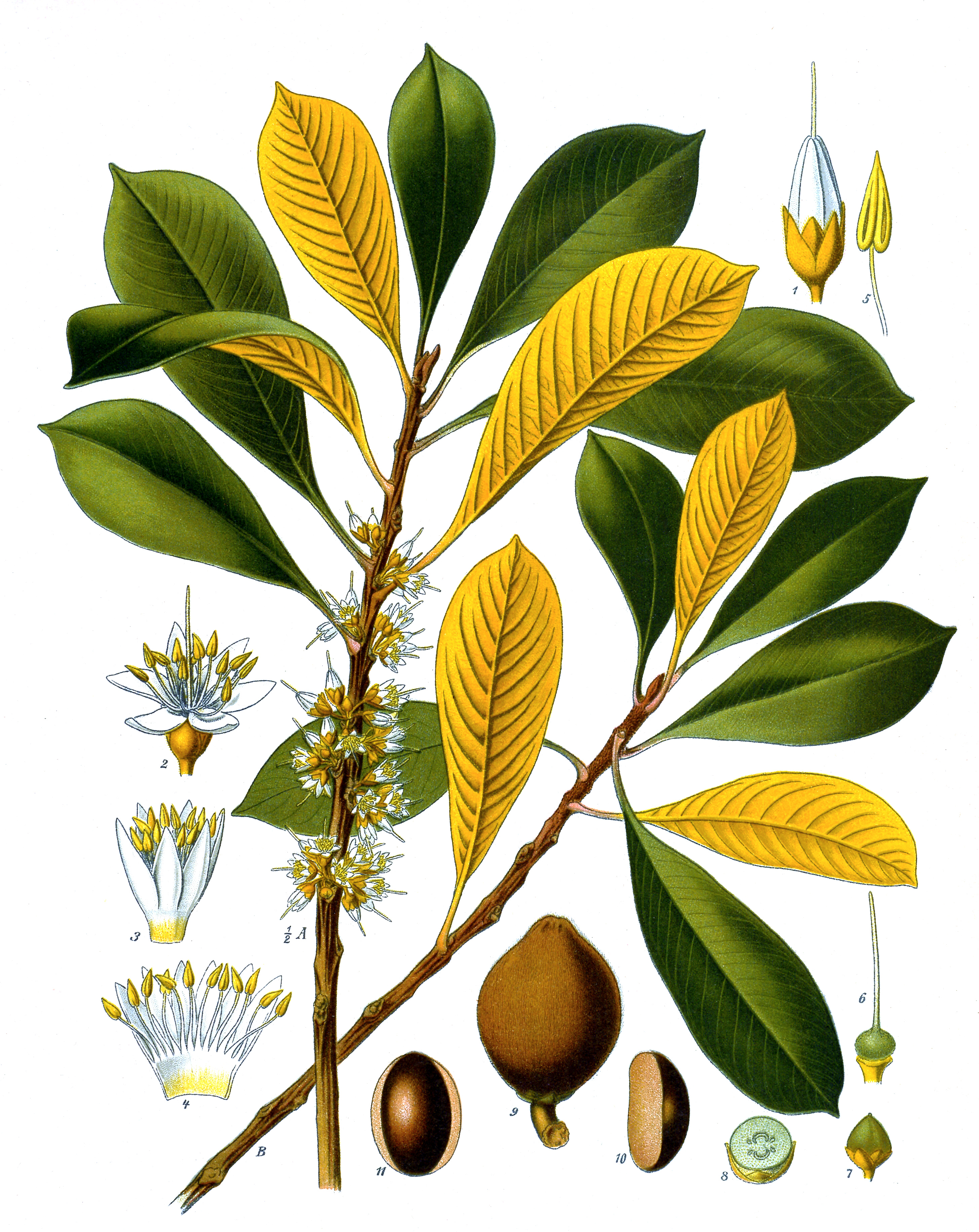 Gutta-PerchaGutta-Percha
Nearby on the shelf
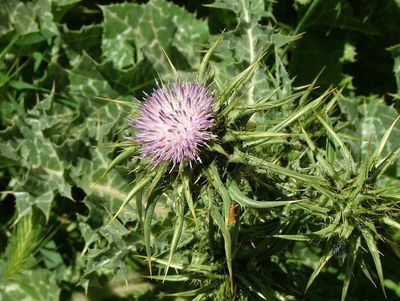 Milk thistleSilybum marianum
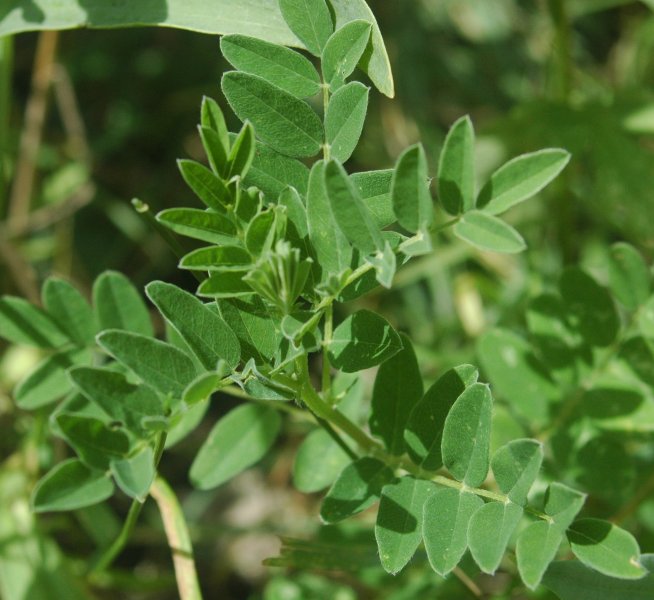 Milk Vetch RootAstragalus membranaceus
 MilkweedAsclepias Cornuti
 Mojave yuccaYucca schidigera
 Morinda rootMorinda officinalis
 MoringaMoringa oleifera
 MotherwortLeonurus cardiaca
The whole plate is in the library. The compass, Compare, the Sky of eleven hundred plants and the formulary open with an email address and a password, free, with the formula builder and its safety engine. Herbert without limit, his formulating, clients, the handouts and the labels are the paid room.
Open the library, free