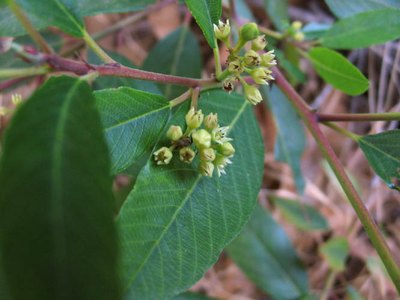
Western Herbalism
California buckthorn
Rhamnus Californica
Also known as California coffee tree, coffeeberry.
Rhamnus californica, now generally classified as Frangula californica, is a shrub or small tree native to the coastal ranges and Sierra foothills of California, extending into Arizona and northern Mexico. Its bark was gathered by nineteenth century American herb dealers and sometimes sold, deliberately or by confusion, as a thinner substitute for cascara sagrada bark. The Eclectic physicians took it up in its own right, valuing it less as a laxative than as a remedy for chronic rheumatic and muscular complaints, a use credited largely to the physician Webster.

Ask Herbert about California buckthorn. Herbert is the master herbalist inside Bountiful Herbs: he answers from this plate and eleven hundred others, with dosing, pairing and cautions. Your first ten questions are free.
Ask HerbertActions
Indications what the tradition reached for it in
- Constipation
- Sluggish bowel
- Chronic rheumatism
- Muscular rheumatic pain
- Longstanding dysmenorrhea
- Atonic dyspepsia
- Habitual costiveness in the elderly
- Torpid liver
Specific indications
Chronic muscular or rheumatoid pain with a sluggish, atonic constitution, dosed just short of a laxative effect
Obstinate, longstanding dysmenorrhea in a patient with no structural cause requiring correction
Safety
Low dose botanical. Used in drop doses in the classical practice; not a plant to dose freely.
Pregnancy: Avoid in pregnancy, as with other anthraquinone-containing barks, due to potential uterine stimulation and lack of safety data.
Breastfeeding: Avoid in lactation as a precaution, since related anthraquinone glycosides can pass into breast milk and cause infant looseness of stool.
The record lists 7 contraindications; open the plate in the library to read them in full.
In practice
The bark works much like its close relative cascara sagrada, containing anthraquinone glycosides that stimulate peristalsis, and like cascara it needs to be aged or dried for a year or more before use, since fresh bark is harshly griping.
Dosing as the sources wrote it
| Preparation | As written | Metric |
|---|---|---|
| Decoction of aged bark | 2-4 g dried, aged bark daily, short of a laxative dose | 2000-4000 mg |
| Tincture (1:5, aged bark) | 1-2 mL two to three times daily, titrated below bowel-loosening dose | 1-2 mL |
| Specific Medicine Rhamnus Californica | Dose, 10 to 30 drops. | 0.2-0.6 mL |
| Decoctum Rhamni Californici, Decoction of Rhamnus Californica (1/2 ounce to 16 fluidounces | Dose, 3 to 6 fluidrachms every 3 or 4 hours. | 11.09-22.18 mL |
Doses are reproduced from the sources for practitioners and are not a recommendation for any person.
From the sources
Overview. Rhamnus californica, now generally classified as Frangula californica, is a shrub or small tree native to the coastal ranges and Sierra foothills of California, extending into Arizona and northern Mexico. Its bark was gathered by nineteenth century American herb dealers and sometimes sold, deliberately or by confusion, as a thinner substitute for cascara sagrada bark. The Eclectic physicians took it up in its own right, valuing it less as a laxative than as a remedy for chronic rheumatic and muscular complaints, a use credited largely to the physician Webster.
Clinical Notes. The bark works much like its close relative cascara sagrada, containing anthraquinone glycosides that stimulate peristalsis, and like cascara it needs to be aged or dried for a year or more before use, since fresh bark is harshly griping.
Action and Therapy. Rhamnus californica is cathartic and antirheumatic. It sometimes is indiscriminately gathered with cascara sagrada (Rhamnus Purshiana) and is known to coast dealers as “thin cascara bark.” As a domestic medicine it has long been used in rheumatic disorders, and its introduction into Eclectic medicine for that purpose is due to Webster, who regards it as one of the best of antirheumatics.
The bark of Rhamnus californica, Eschscholtz ( Frangula californica, Gray), (Nat. Ord. Rhamnaceae). Sparingly in northern California and more abundant southerly in the Sierras, and easterly, especially in Mexico and Arizona.
Drawn from Felter's Eclectic Materia Medica, Pharmacology and Therapeutics, and the Bountiful Herbs editorial.
Often paired with
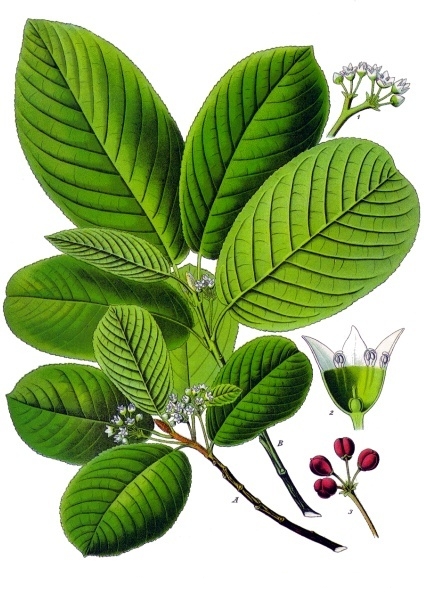 Cascara sagradaFrangula purshiana
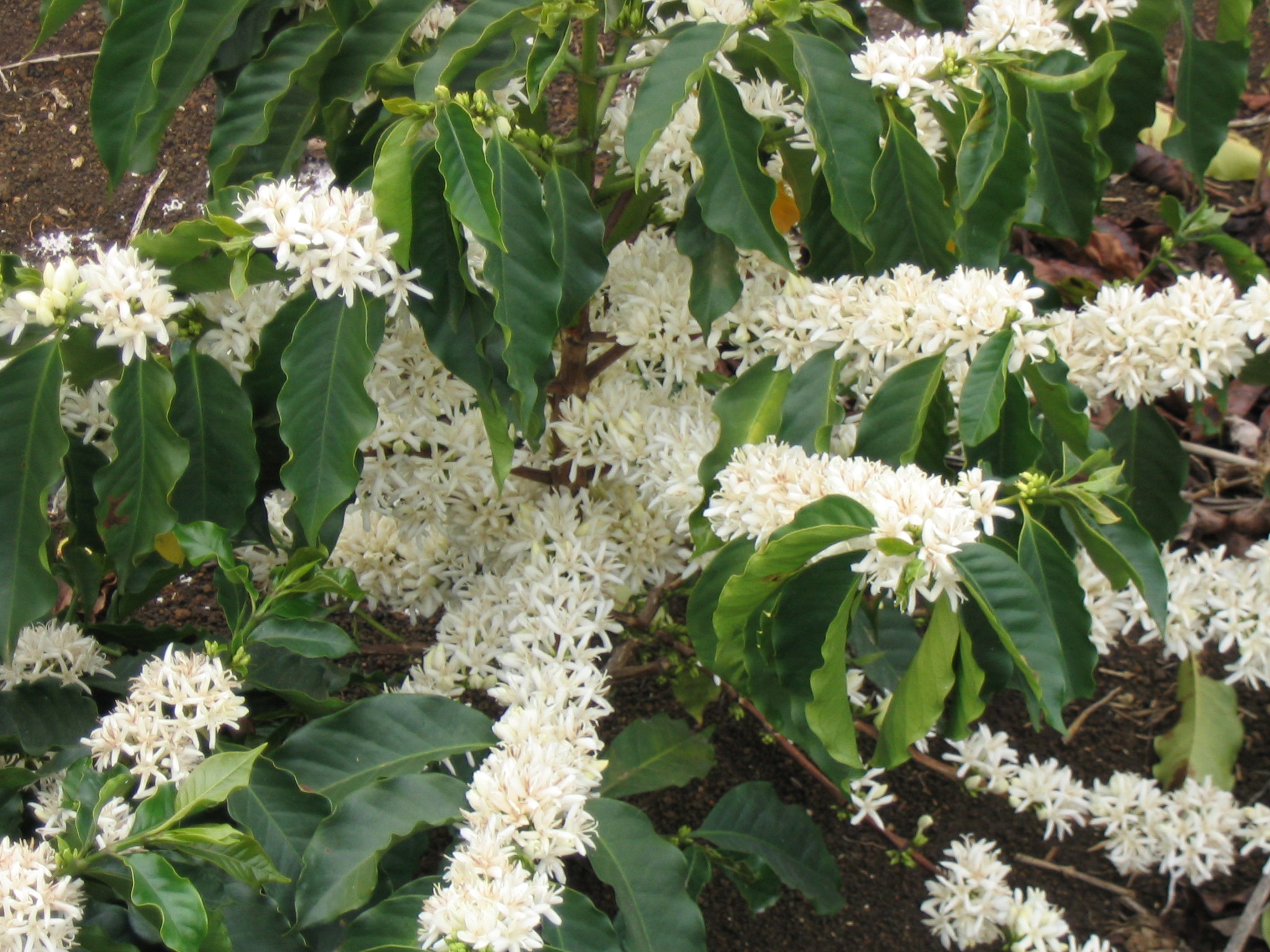 CoffeeCoffea arabica
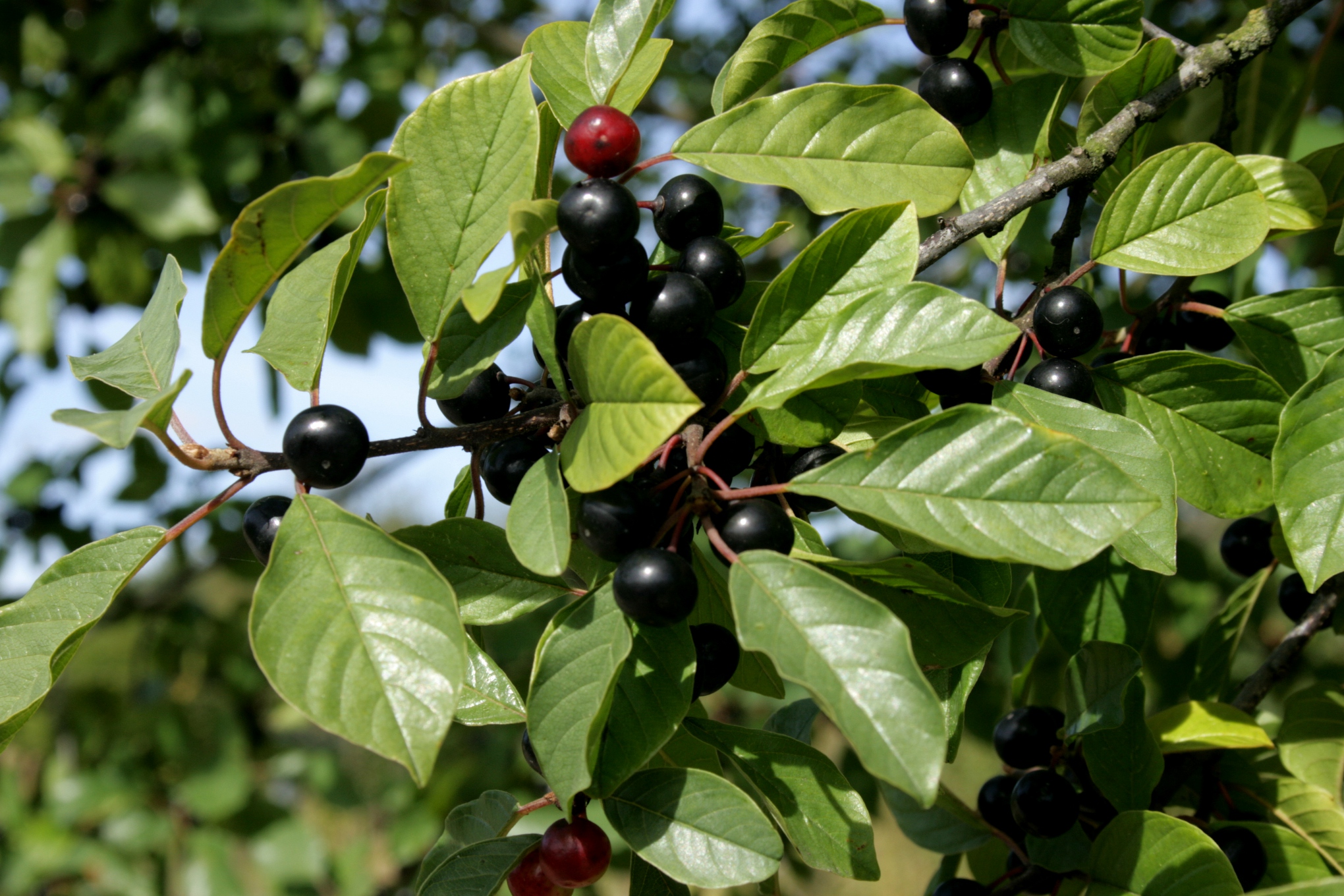 Alder BuckthornFrangula alnus
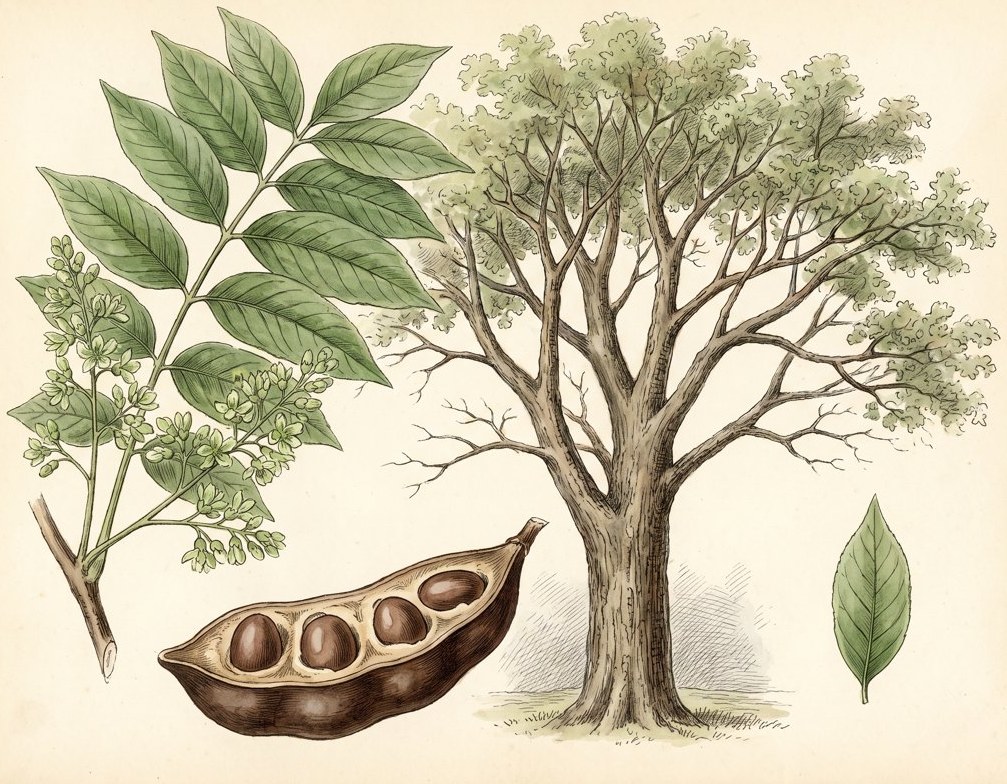 Kentucky coffee treeGymnocladus canadensis
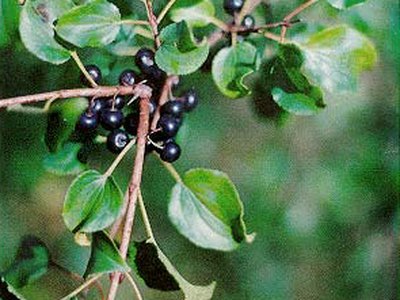 BuckthornRhamnus cathartica
Nearby on the shelf
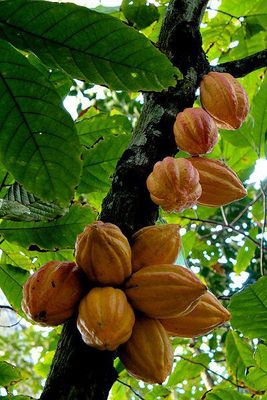 CacaoTheobroma cacao
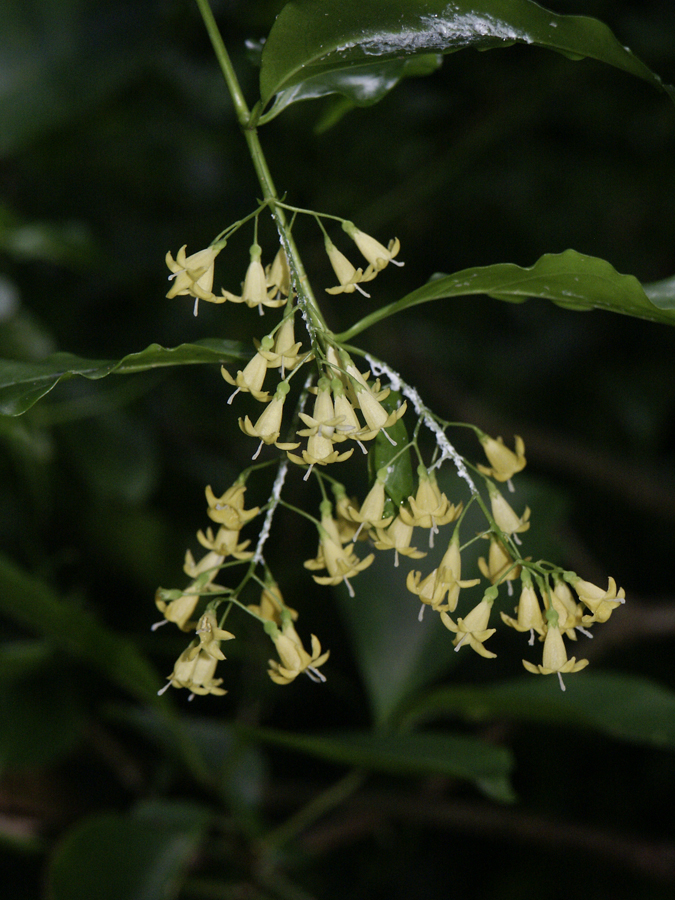 Cahinca rootCahinca
 CajeputMelaleuca cajuputi
 CalendulaCalendula officinalis
 California mugwortArtemisia douglasiana
 California poppyEschscholzia californica
 California SpikenardAralia californica
 CalumbaJateorrhiza palmata
The whole plate is in the library. The compass, Compare, the Sky of eleven hundred plants and the formulary open with an email address and a password, free, with the formula builder and its safety engine. Herbert without limit, his formulating, clients, the handouts and the labels are the paid room.
Open the library, free