Western Herbalism
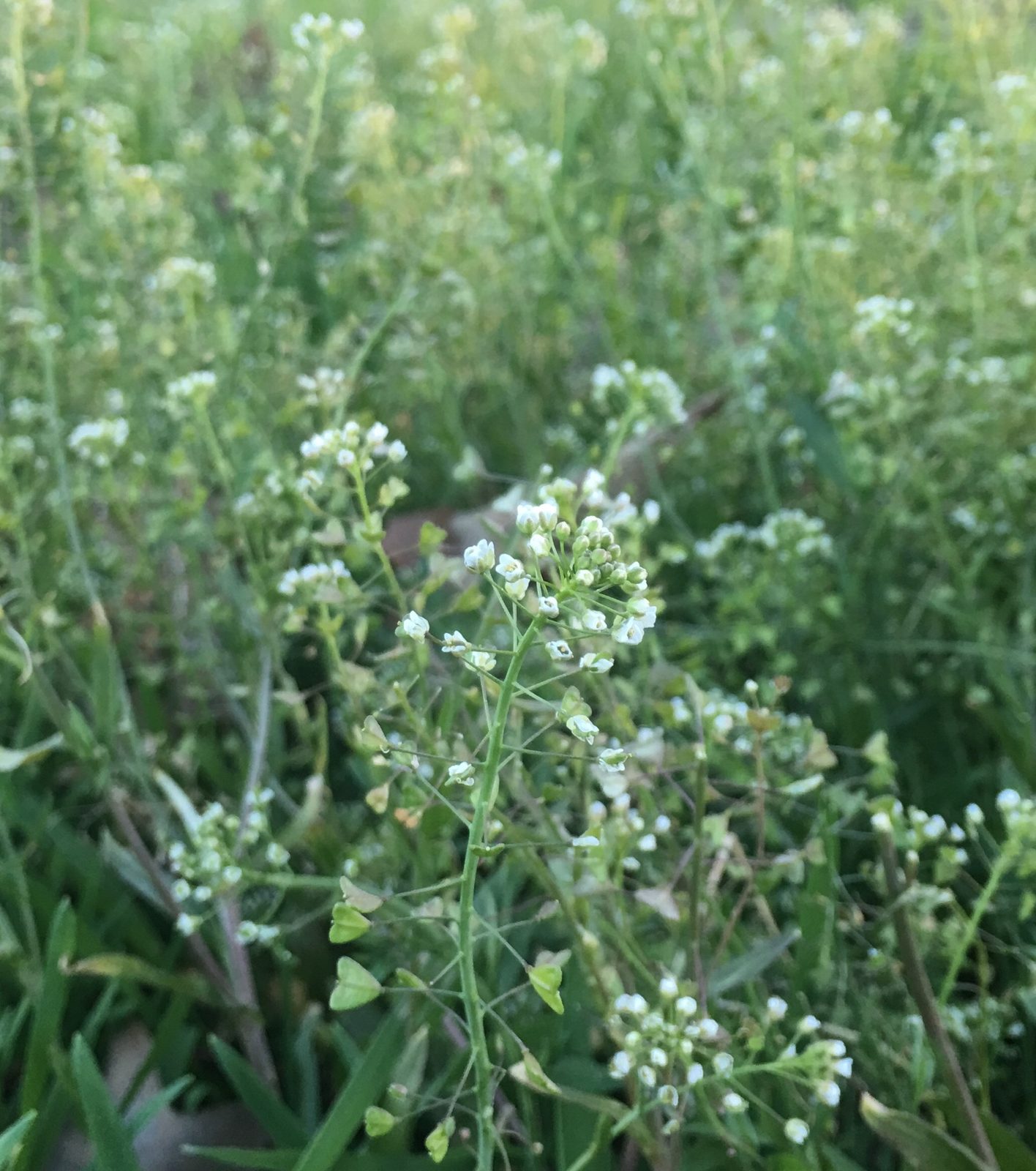
Shepherd's purse
Capsella bursa-pastoris
Also known as Capsella, Shepherd’s Sprout, cont'd.
Capsella acts chiefly upon the urinary tract, being a mild stimulating diuretic. The infusion, tincture and specific medicine are all efficient, but the green plant is most active. Owing to its mild astringency it has been employed in hematuria, diarrhoea, bleeding piles, and indigestion and dyspepsia of an atonic type.

Ask Herbert about Shepherd's purse. Herbert is the master herbalist inside Bountiful Herbs: he answers from this plate and eleven hundred others, with dosing, pairing and cautions. Your first ten questions are free.
Ask HerbertActions
Indications what the tradition reached for it in
- Uterine bleeding (dysfunctional)
- Cuts
- Uterine hemorrhage (mild)
- Skin abrasions
- Wounds (bleeding)
- Menorrhagia
- Urinary gravel
- Hemorrhoids
- Hematuria
- Amenorrhea
- Bleeding
- Diarrhea
- Edema
- Fluid retention
- Hemorrhage
- Menstrual irregularity
- Urinary disorders
- Wounds
- Excessive discharge
- Haematemesis
- Haematuria
- Diarrhoea
- Acute catarrhal cystitis
Safety
Pregnancy: Not safe. AHPA Botanical Safety Handbook class 2b (not recommended in pregnancy except under qualified supervision, no lactation information); Mills & Bone rate it B3 (no increase in harm from limited human use, but animal studies show fetal damage of uncertain relevance)
Pregnancy, our record's flag: Caution. Use with care in pregnancy (our record's flag)
Pregnancy, a modern clinical reference: Shepherd's purse is reputed to act as an abortifacient and to affect the menstrual cycle, and tyramine is documented as a utero-active constituent
Breastfeeding: Caution. Use with care while breastfeeding (our record's flag); compatible, but with caution.
Breastfeeding, published rating: Caution. Compatible with breastfeeding, with caution (Mills & Bone CC)
The record lists 3 contraindications; open the plate in the library to read them in full.
Dosing as the sources wrote it
| Preparation | As written | Metric |
|---|---|---|
| Tincture (1:3) | 3-5 ml TID | 3-5 mL |
| Infusion | 1 Tbs/c TID | |
| Dried herb 1-4 g as an infusion three times daily Liquid extract 1-4 mL (1 : 1 in 25% alcohol) three times daily. | ||
| Fluid Extract | Dose, from fifteen to sixty minims. | 0.924-3.7 mL |
| Tincture | Dose, from one to two drams. | |
| Specific Medicine Capsella | Dose, from five to thirty drops. |
Doses are reproduced from the sources for practitioners and are not a recommendation for any person.
From the sources
Action and Therapy. Capsella acts chiefly upon the urinary tract, being a mild stimulating diuretic. The infusion, tincture and specific medicine are all efficient, but the green plant is most active. Owing to its mild astringency it has been employed in hematuria, diarrhoea, bleeding piles, and indigestion and dyspepsia of an atonic type.
Therapy. The agent has been noted for its influence in haematuria and other mild forms of passive hemorrhage. It is of some benefit as a mild diuretic, soothing irritation of the renal or vesical organs. In cases of uncomplicated chronic menorrhagia it has accomplished permanent cures, especially if the discharge be persistent and devoid of much color.
Action, Medical Uses, and Dosage. Shepherd's purse appears to possess mild stimulating, astringent, and diuretic properties, and the fresh herb is decidedly more active than the dried. In urinary derangements of renal or cystic origin, and in hematuria, an infusion, and especially a tincture of the herb, will be found very efficient.
Specific Indications and Uses. Chronic hemorrhages; menorrhagia with too frequent and long continued, or constant, colorless discharge; indigestion from atony; chronic diarrhoea; constant desire to urinate, with deposits of phosphates.
Drawn from King's American Dispensatory, 18th edition (Felter and Lloyd); Ellingwood's American Materia Medica, Therapeutics and Pharmacognosy; Felter's Eclectic Materia Medica, Pharmacology and Therapeutics, and the Bountiful Herbs editorial.
Nearby on the shelf
 Sharp-leaf galangalAlpinia oxyphylla
 ShatavariAsparagus racemosus
 Sheep SorrelRumex acetosella
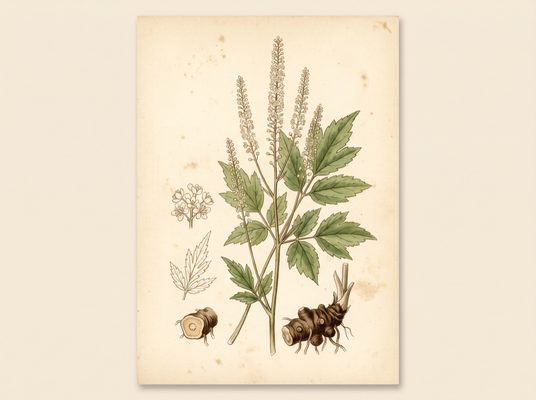 Sheng maActaea cimicifuga
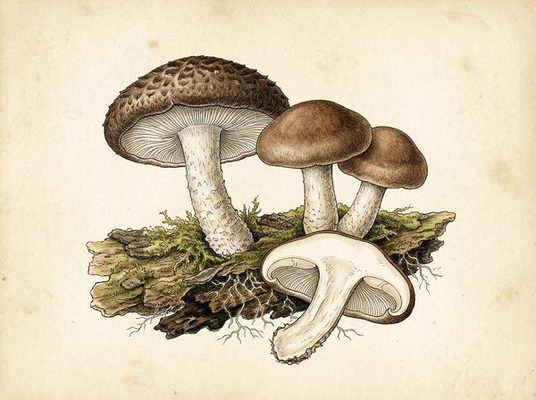 ShiitakeLentinula edodes
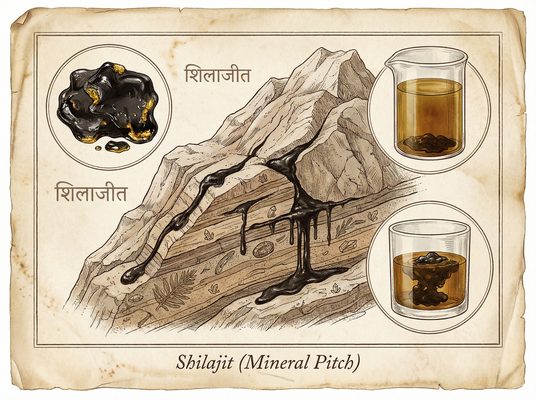 ShilajitAsphaltum punjabianum
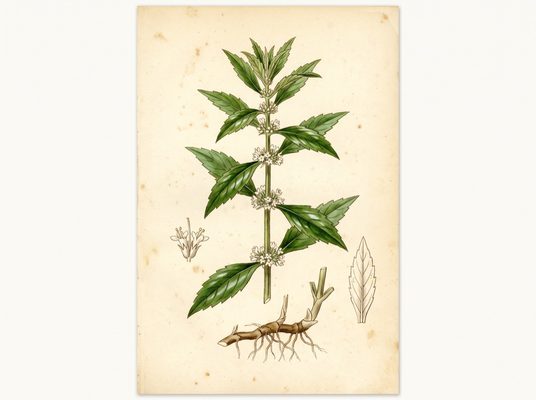 Shiny bugleweedLycopus lucidus
 Sichuan chinaberryMelia toosendan
The whole plate is in the library. The compass, Compare, the Sky of eleven hundred plants and the formulary open with an email address and a password, free, with the formula builder and its safety engine. Herbert in full, his formulating, clients, the handouts and the labels are the paid room.
Open the library, free