Chinese Herbalism
Drynaria rhizome
Drynaria roosii
Also known as Fortune's drynaria, gu sui bu, mender of shattered bones, gǔ suì bǔ, hóu jiāng, máo jiāng.
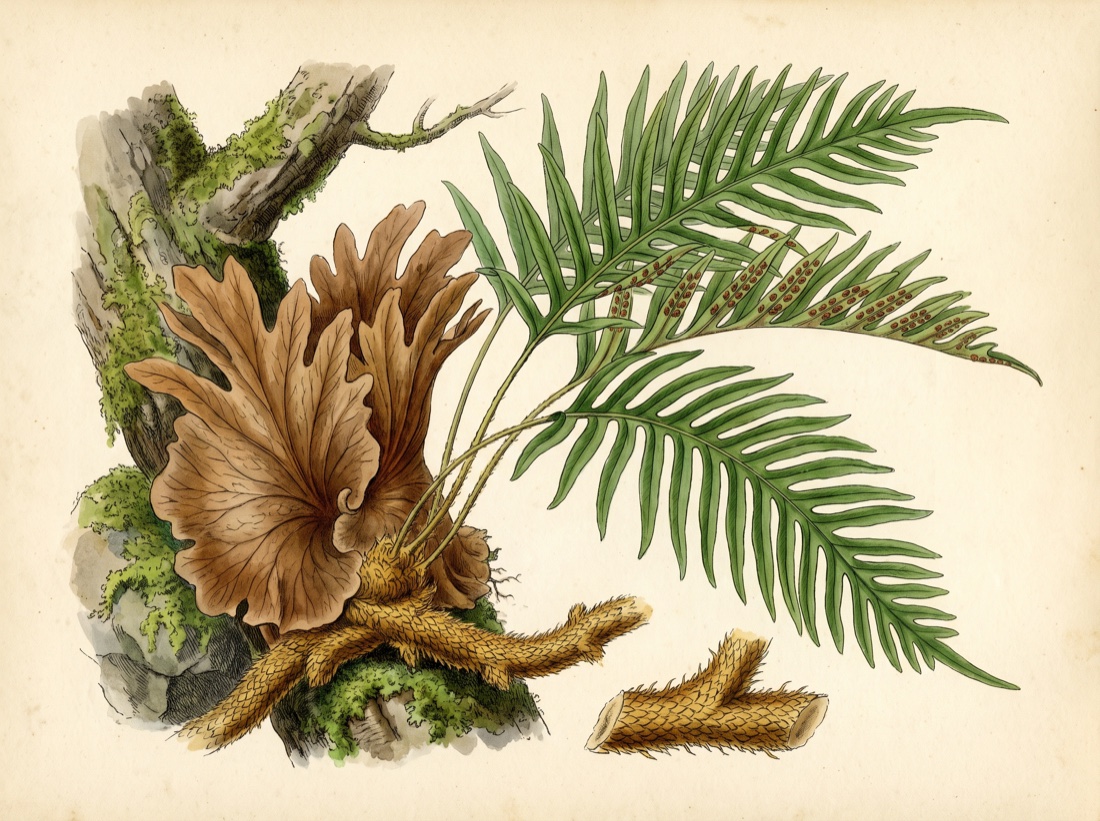
Gu sui bu is the thick, scaly, creeping rhizome of a fern that grows on rocks and tree trunks in the warm forests of southern China and Indochina. The name means mender of shattered bones and states its use exactly. The rhizome is cleaned of its scales by scorching in hot sand, sliced and dried. In Chinese medicine it is a warm kidney and liver tonic that also moves blood, which is why it serves through the whole course of a fracture rather than only in convalescence, and it is one of the most studied Chinese herbs for bone.

Ask Herbert about Drynaria rhizome. Herbert is the master herbalist inside Bountiful Herbs: he answers from this plate and eleven hundred others, with dosing, pairing and cautions. Your first ten questions are free.
Ask HerbertActions
Indications what the tradition reached for it in
- Fractures, during and after healing
- Sprains, contusions and soft tissue injury with pain
- Osteoporosis and age-related bone loss
- Chronic low back and knee pain from kidney deficiency
- Loose teeth, gum recession and toothache of kidney deficiency type
- Tinnitus and reduced hearing with kidney deficiency
- Chronic diarrhea from kidney yang deficiency
- Delayed union of fractures
- Alopecia areata and vitiligo (topical tincture)
- Aminoglycoside-related hearing damage (traditional adjunct)
Specific indications
A fracture or bad sprain that is past the acute swelling and needs bone and sinew to knit, in a patient with a background of low back ache and weak knees
Postmenopausal bone loss with sore lumbar spine, loose teeth and early tinnitus, where a warm kidney tonic that also acts on bone is wanted
Safety
The record lists 7 contraindications; open the plate in the library to read them in full.
In practice
In trauma, gu sui bu joins xu duan (Dipsacus), zi ran tong (pyrite), ru xiang, mo yao and dang gui to knit bone once the first days of swelling have settled; for chronic back and knee weakness it sits with du zhong, bu gu zhi, niu xi and shu di huang.
In Chinese medicine
Temperature: warm. Taste: bitter. Channels: Kidney, Liver. Actions: Tonifies the kidney and strengthens the bones; Heals injured sinews and bones and relieves the pain of trauma; Moves blood in the setting of fracture and bruising; Applied externally, disperses wind and clears patchy hair loss and skin depigmentation.
Dosing as the sources wrote it
| Preparation | As written | Metric |
|---|---|---|
| Decoction | 3-9 g dried rhizome daily in decoction | 3000-9000 mg |
| Fracture formulas | 9-15 g dried rhizome daily in decoction for 3-6 weeks | 9000-15000 mg |
| Tincture (1:5, 45%) | 2-4 mL three times daily | 2-4 mL |
| Topical tincture | strong 1:2 alcohol extract painted on bald or depigmented patches two to three times daily |
Doses are reproduced from the sources for practitioners and are not a recommendation for any person.
From the sources
Overview. Gu sui bu is the thick, scaly, creeping rhizome of a fern that grows on rocks and tree trunks in the warm forests of southern China and Indochina. The name means mender of shattered bones and states its use exactly. The rhizome is cleaned of its scales by scorching in hot sand, sliced and dried. In Chinese medicine it is a warm kidney and liver tonic that also moves blood, which is why it serves through the whole course of a fracture rather than only in convalescence, and it is one of the most studied Chinese herbs for bone.
Clinical Notes. In trauma, gu sui bu joins xu duan (Dipsacus), zi ran tong (pyrite), ru xiang, mo yao and dang gui to knit bone once the first days of swelling have settled; for chronic back and knee weakness it sits with du zhong, bu gu zhi, niu xi and shu di huang.
Chinese Medicine Profile. Temperature: warm. Taste: bitter. Channels: Kidney, Liver. Actions: Tonifies the kidney and strengthens the bones; Heals injured sinews and bones and relieves the pain of trauma; Moves blood in the setting of fracture and bruising; Applied externally, disperses wind and clears patchy hair loss and skin depigmentation.
Nearby on the shelf
 Dragon BoneFossilia Ossis Mastodi
 Dragon's BloodDaemonorops draco
 Dream HerbCalea zacatechichi
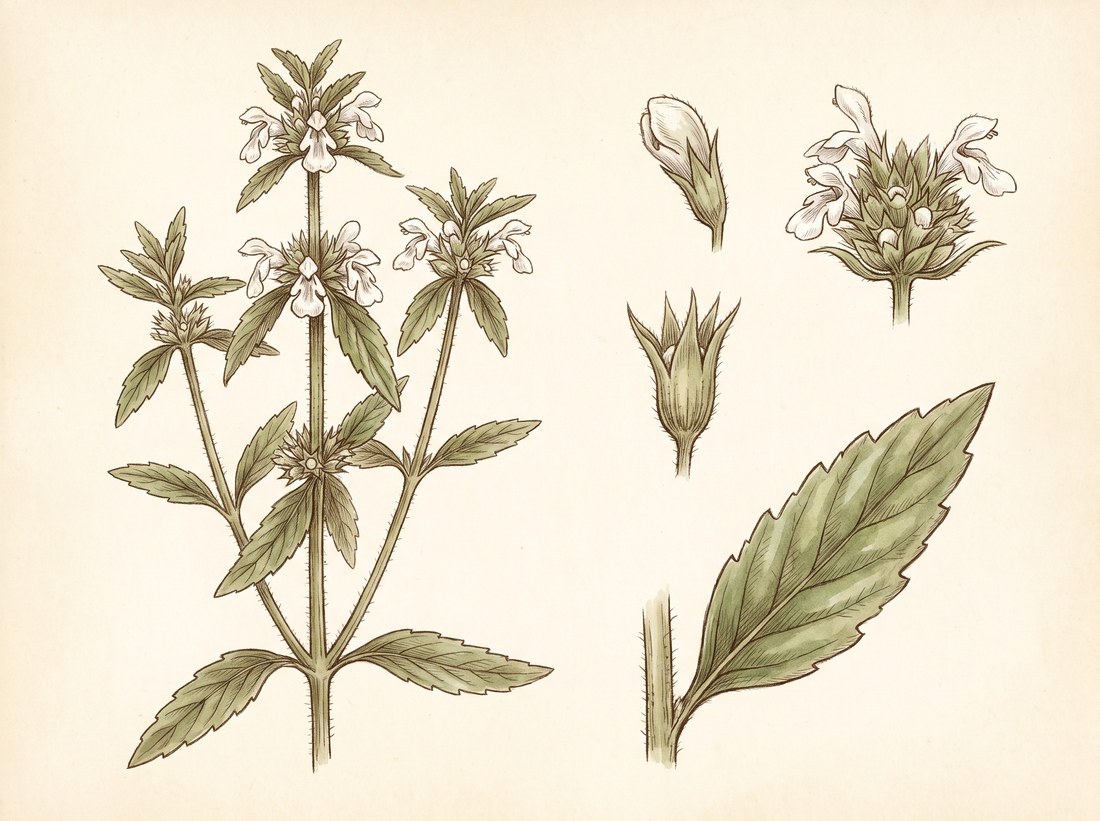 DronapushpiLeucas cephalotes
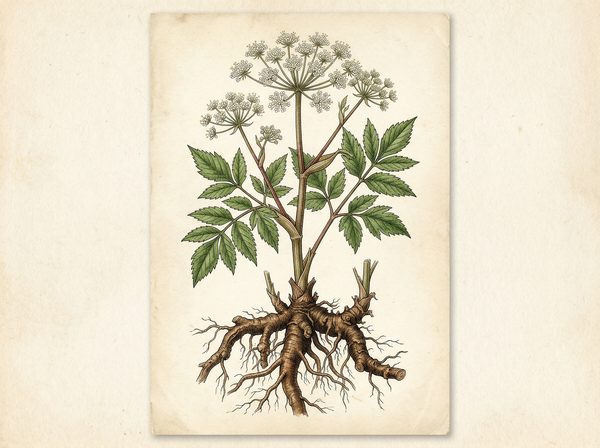 Du HuoAngelica pubescens
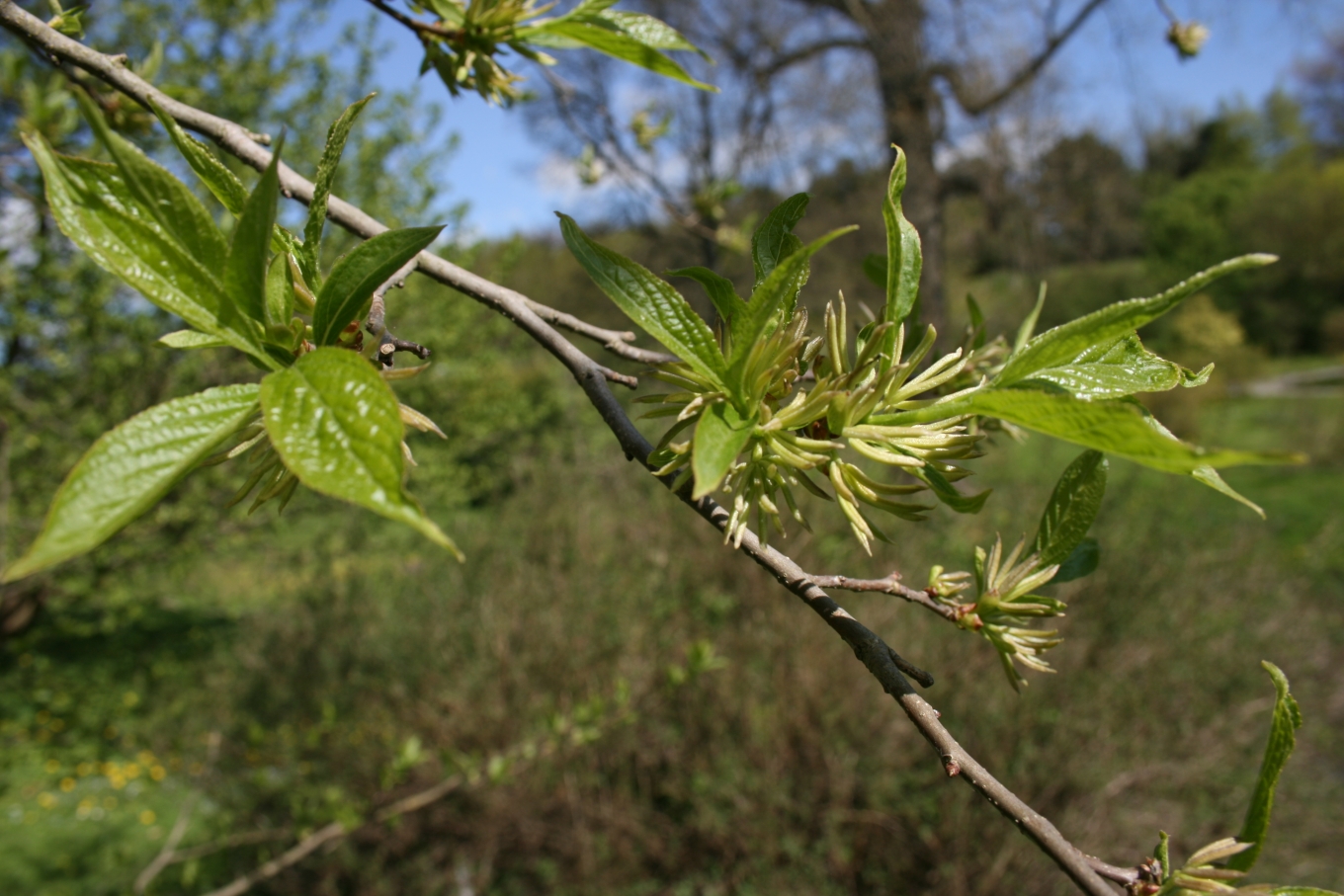 Du ZhongEucommia ulmoides
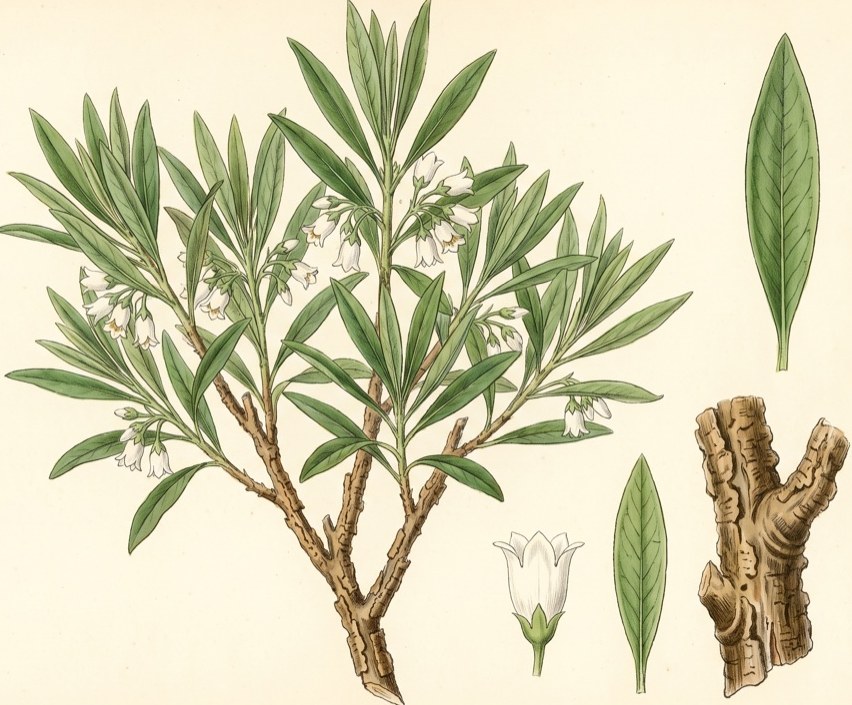 DuboisiaDuboisia myoporoides
 DulcamaraSolanum dulcamara
The whole plate is in the library. The compass, Compare, the Sky of eleven hundred plants and the formulary open with an email address and a password, free, with the formula builder and its safety engine. Herbert without limit, his formulating, clients, the handouts and the labels are the paid room.
Open the library, free