Western Herbalism
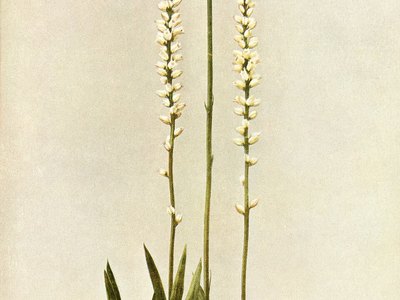
Blazing Star
Aletris farinosa
Also known as Star Grass, Starwort, False Unicorn root, Colic Root, Ague Root, Star Root, True Unicorn Root, Aletris.
Aletris farinosa is a herbaceous perennial native to sandy woods, meadows, and barrens of eastern North America, historically placed in Liliaceae or Haemodoraceae but now assigned to Nartheciaceae. The dried root, mealy and intensely bitter (the species name farinosa refers to this floury texture), was used by Native American peoples and later by Eclectic physicians as a bitter stomachic tonic. It also acquired a reputation as a tonic for female reproductive complaints, though nineteenth century physicians themselves noted that this latter reputation likely arose from confusion with Chamaelirium luteum, a different plant that shares the common name false unicorn root.

Ask Herbert about Blazing Star. Herbert is the master herbalist inside Bountiful Herbs: he answers from this plate and eleven hundred others, with dosing, pairing and cautions. Your first ten questions are free.
Ask HerbertActions
Indications what the tradition reached for it in
- Atonic dyspepsia
- Poor appetite in convalescence
- Flatulent colic
- Morning sickness (traditional)
- Threatened miscarriage (traditional, historically disputed)
- Dysmenorrhea (traditional)
- Amenorrhea (traditional)
- General debility with sluggish digestion
Specific indications
Weak, atonic digestion with a coated tongue and poor appetite, calling for a simple bitter tonic before meals
Traditional reputation for threatened miscarriage and habitual early pregnancy loss, an indication that likely derives from long-standing confusion with the unrelated Chamaelirium luteum
Safety
Low dose botanical. Used in drop doses in the classical practice; not a plant to dose freely.
The record lists 3 contraindications; open the plate in the library to read them in full.
In practice
In practice, Aletris farinosa is used mainly as a bitter to rouse a sluggish appetite and support digestion in convalescent or debilitated patients, taken as a small dose of tincture or powdered root before meals.
Dosing as the sources wrote it
| Preparation | As written | Metric |
|---|---|---|
| Dried root, powdered | 1-2 g dried root up to three times daily | 1000-2000 mg |
| Tincture (1:5, 45%) | 1-2 mL three times daily | 1-2 mL |
| Extractum Aletridis Fluidum , Fluid Extract of Aletris | Dose, from ten to fifteen minims. | 0.62-0.92 mL |
| Specific Medicine Aletris | Dose, from one to sixty minims. | 0.06-3.7 mL |
| Dose, from one-half to one grain. | 32.4-64.8 mg | |
| “Flatulent colic is quickly relieved with equal parts of the fluid extracts of aletris, and dioscorea; ten drops given every hour; if the first dose does not relieve, which it often does, repeat. | 0.2-0.2 mL |
Doses are reproduced from the sources for practitioners and are not a recommendation for any person.
From the sources
Overview. Aletris farinosa is a herbaceous perennial native to sandy woods, meadows, and barrens of eastern North America, historically placed in Liliaceae or Haemodoraceae but now assigned to Nartheciaceae. The dried root, mealy and intensely bitter (the species name farinosa refers to this floury texture), was used by Native American peoples and later by Eclectic physicians as a bitter stomachic tonic. It also acquired a reputation as a tonic for female reproductive complaints, though nineteenth century physicians themselves noted that this latter reputation likely arose from confusion with Chamaelirium luteum, a different plant that shares the common name false unicorn root.
Clinical Notes. In practice, Aletris farinosa is used mainly as a bitter to rouse a sluggish appetite and support digestion in convalescent or debilitated patients, taken as a small dose of tincture or powdered root before meals.
Action and Therapy. Owing to the confusion that has long existed resulting from the unwitting substitution of aletris, for Helonias (Chamaelirium) the virtues of the latter, as a remedy for various disorders of the female reproductive organs, have been ascribed also to the former. It is probably nothing more than a gentle stomachic and tonic, and as such may be employed to promote the appetite and aid digestion. It is accredited with value in atonic dyspepsia, with flatulence and borborygmus. Even the carminative effects thus ascribed would seem to belong to helonias rather than to aletris, which is neither bitter nor aromatic like the former.
Therapy. In the above named condition when iron or other tonics are used for their general influence, this remedy should be given for its specific effect. Its direct influence upon the pelvic organs is sometimes magical under such circumstances.
Drawn from Scudder's Specific Medication and Specific Medicines; King's American Dispensatory, 18th edition (Felter and Lloyd); Ellingwood's American Materia Medica, Therapeutics and Pharmacognosy; Felter's Eclectic Materia Medica, Pharmacology and Therapeutics, and the Bountiful Herbs editorial.
Often paired with
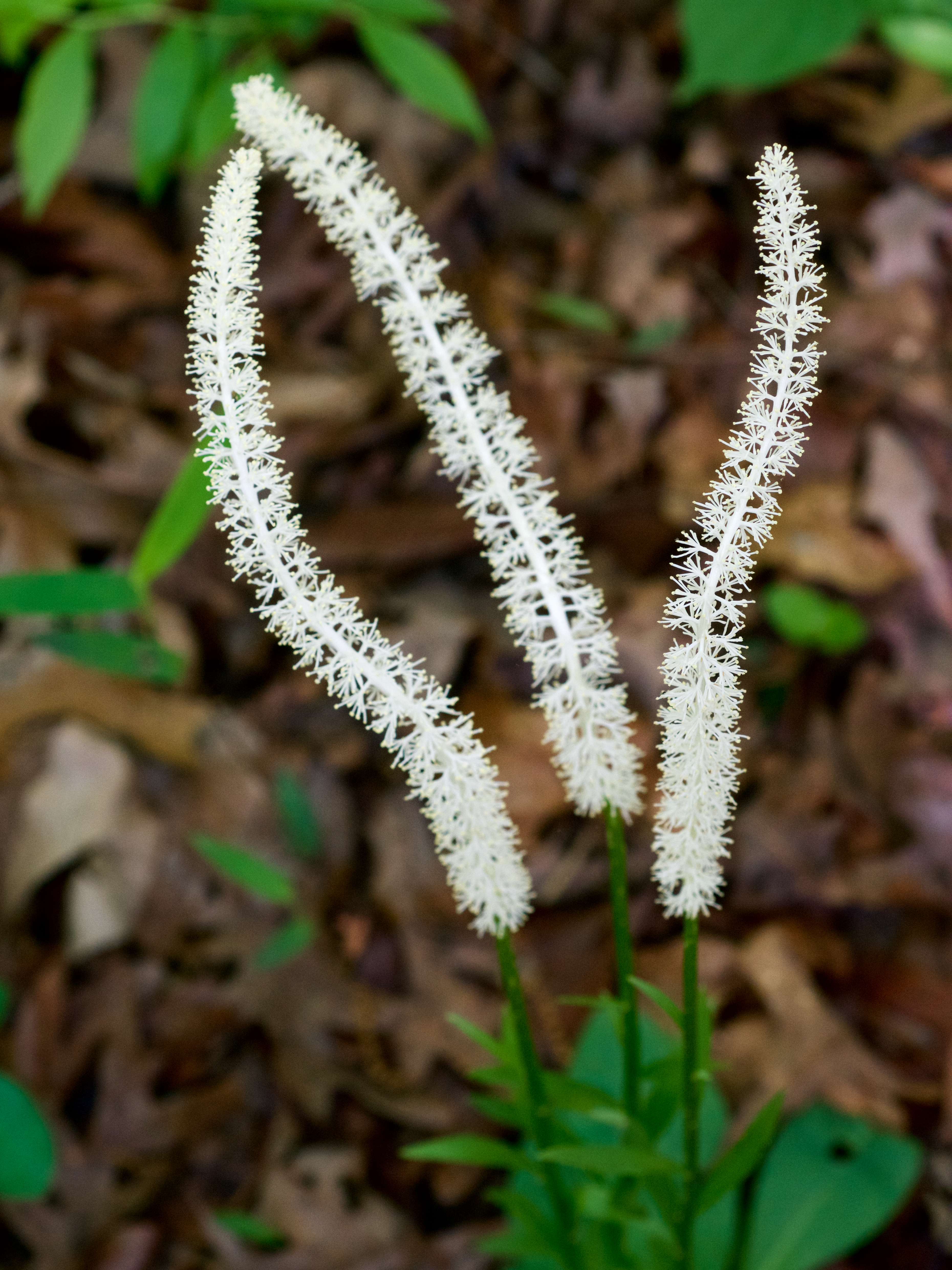 False unicornChamaelirium luteum
Nearby on the shelf
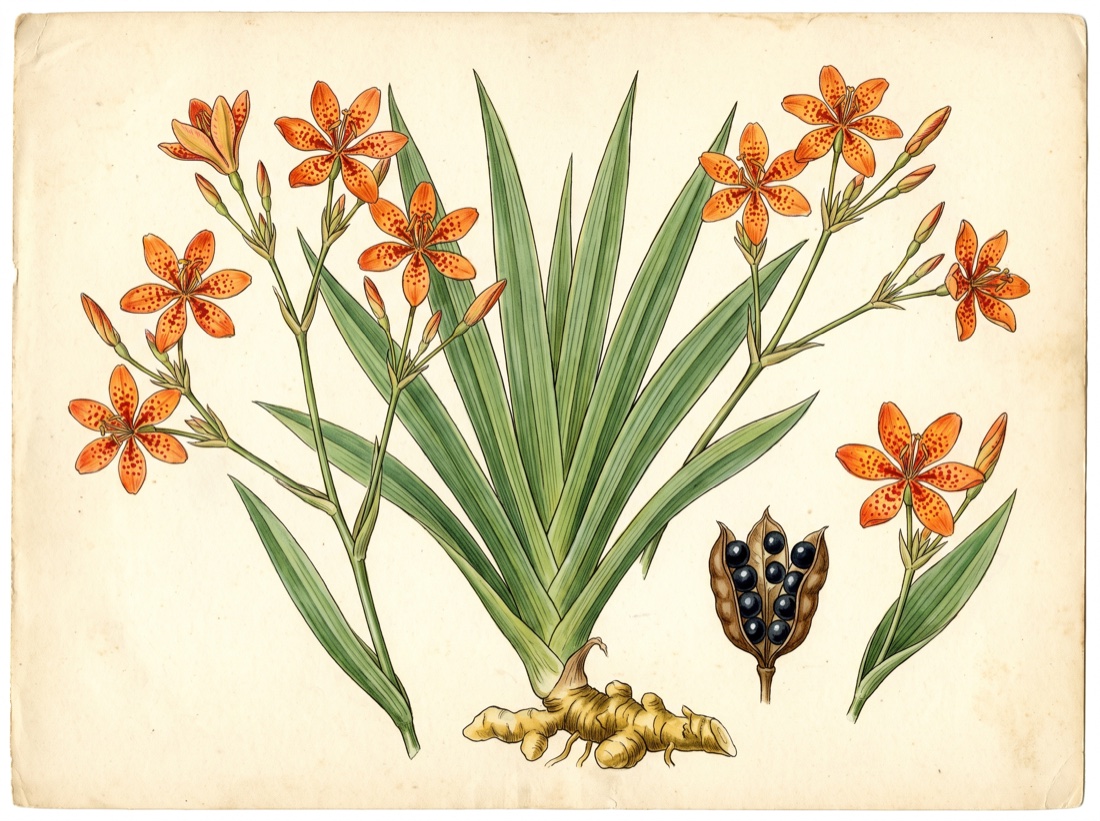 Blackberry lilyIris domestica
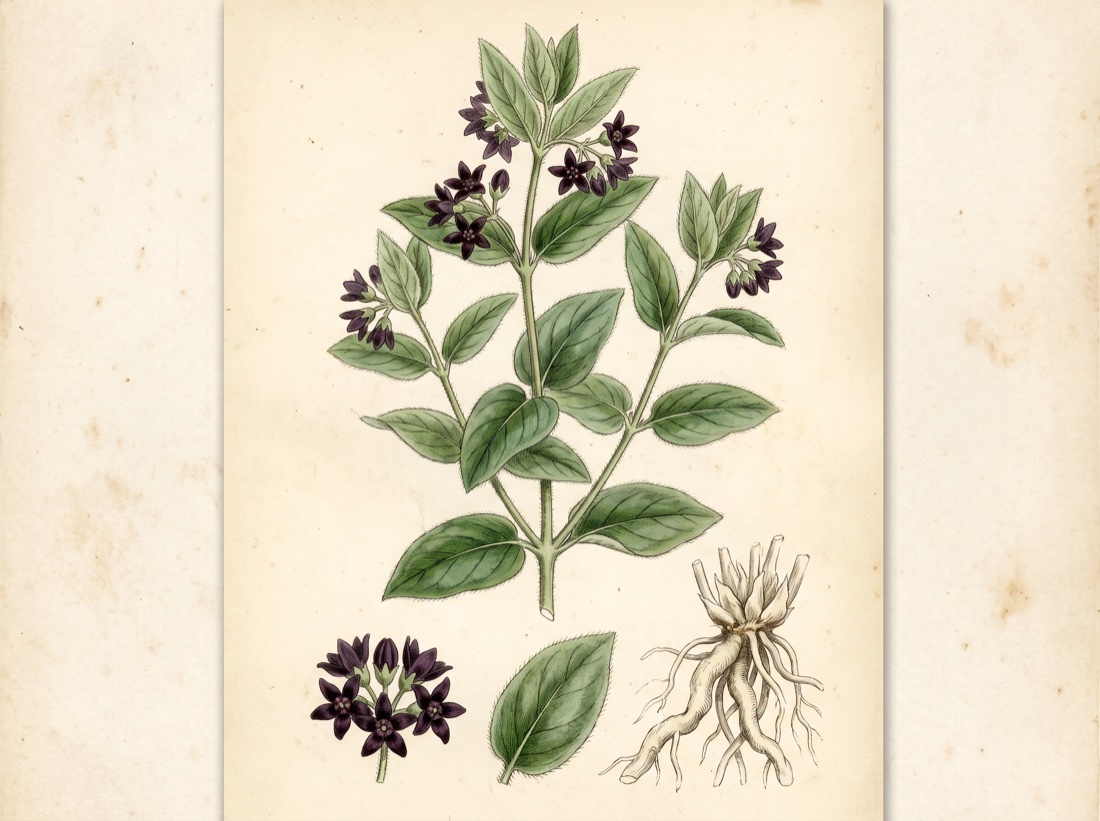 Blackend swallowwortVincetoxicum atratum
 Bladder nutStaphylea trifolia
 BladderwrackFucus vesiculosus
 Blessed ThistleCnicus benedictus
 BletillaBletilla striata
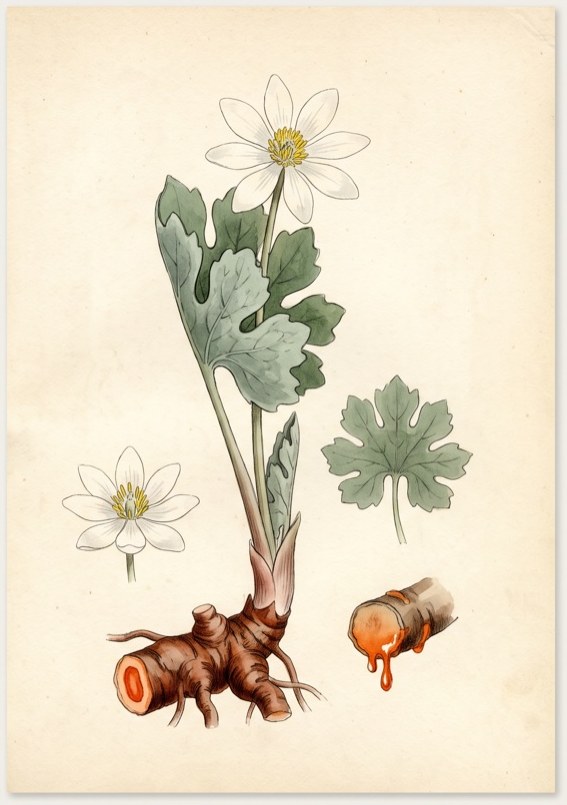 BloodrootSanguinaria canadensis
 Blue cohoshCaulophyllum thalictroides
The whole plate is in the library. The compass, Compare, the Sky of eleven hundred plants and the formulary open with an email address and a password, free, with the formula builder and its safety engine. Herbert without limit, his formulating, clients, the handouts and the labels are the paid room.
Open the library, free