Western Herbalism
Kousso
Brayera anthelmintica
Also known as Kosso, Cusso, Cosso, Brayera, African redwood, Hagenia.
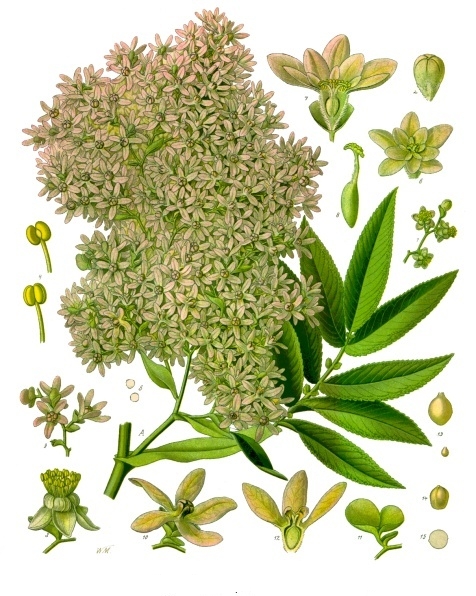
Kousso is the dried, unexpanded female flower of Hagenia abyssinica, a tall flowering tree native to the highland plateaus of Ethiopia and neighboring East African countries. For centuries it has held a central place in Ethiopian traditional medicine as the standard household remedy for tapeworm, a use that reached European and American eclectic and physiomedical practice in the nineteenth century as reports of its efficacy traveled with early explorers and physicians. The flowers, sold compressed into long strands, carry a bitter, resinous, faintly acrid character that reflects their active taeniacidal principles.

Ask Herbert about Kousso. Herbert is the master herbalist inside Bountiful Herbs: he answers from this plate and eleven hundred others, with dosing, pairing and cautions. Your first ten questions are free.
Ask HerbertActions
Indications what the tradition reached for it in
- Tapeworm infestation (Taenia species)
- Intestinal parasites generally
- Chronic gastrointestinal worm burden in traditional Ethiopian practice
- Sluggish bowel accompanying parasitism
- Historical use as a purge following anthelmintic dosing
- Adjunct where modern anthelmintics are unavailable
- Digestive atony with suspected helminthic cause
- Traditional treatment of pinworm (less reliably)
Specific indications
Confirmed or strongly suspected tapeworm segments passed in stool, calling for a single large dose followed by a purgative
Chronic unexplained abdominal discomfort with anemia in regions where beef or pork tapeworm is endemic
Safety
Low dose botanical. Used in drop doses in the classical practice; not a plant to dose freely.
Pregnancy: Avoid in pregnancy: no safety data exist and the plant is a strong gastrointestinal irritant with historical reports of significant nausea and cramping.
Breastfeeding: Avoid in lactation due to lack of safety data and the irritant, purgative nature of the drug.
The record lists 4 contraindications; open the plate in the library to read them in full.
In practice
Kousso was used almost exclusively as a single, large, deliberately dosed preparation aimed at expelling tapeworm, not as a tonic or long-term remedy. Eclectic and physiomedical writers were candid that its reputation in Abyssinia far outstripped the more mixed results seen when it was tried in Europe and America; nausea, cramping, and occasional vomiting were common, and the worm was not always killed outright, sometimes emerging alive after treatment.
Dosing as the sources wrote it
| Preparation | As written | Metric |
|---|---|---|
| Traditional single dose (flower infusion or powder) | 12-25 g dried flowers as a single dose, historically followed by a purgative | 12000-25000 mg |
| Tincture (historical, 1:5) | Not recommended for modern use given unreliable dosing and gastrointestinal toxicity | |
| Extractum Kousso Fluidum, Fluid Extracts of Kousso | Dose, from one to six drams. | 3888-23328 mg |
| An extractive is obtained from the plant, known as Koosin, which is given in doses of twenty grains. | 1296-1296 mg | |
| The fluid extract in two dram doses is also given. | 7776-7776 mg |
Doses are reproduced from the sources for practitioners and are not a recommendation for any person.
From the sources
Overview. Kousso is the dried, unexpanded female flower of Hagenia abyssinica, a tall flowering tree native to the highland plateaus of Ethiopia and neighboring East African countries. For centuries it has held a central place in Ethiopian traditional medicine as the standard household remedy for tapeworm, a use that reached European and American eclectic and physiomedical practice in the nineteenth century as reports of its efficacy traveled with early explorers and physicians. The flowers, sold compressed into long strands, carry a bitter, resinous, faintly acrid character that reflects their active taeniacidal principles.
Clinical Notes. Kousso was used almost exclusively as a single, large, deliberately dosed preparation aimed at expelling tapeworm, not as a tonic or long-term remedy. Eclectic and physiomedical writers were candid that its reputation in Abyssinia far outstripped the more mixed results seen when it was tried in Europe and America; nausea, cramping, and occasional vomiting were common, and the worm was not always killed outright, sometimes emerging alive after treatment.
Therapy. Kousso is given for the removal of the tapeworm. An infusion of half an ounce in a pint of water should be made and drunk on rising in the morning. The patient should take but little food during the day, and if the bowels do not move freely, a physic should be taken at night. An extractive is obtained from the plant, known as Koosin, which is given in doses of twenty grains. The fluid extract in two dram doses is also given. The, agent is said to possess abortive properties. All intestinal irritants should be given with care in pregnancy.
Uses. The flowers of this tree are the medicinal portion; and appear in commerce in compressed and broken bunches, a foot or more long. They contain a peculiar volatile oil, some bitter resin, and some tannin.
Drawn from Cook's Physio-Medical Dispensatory; Ellingwood's American Materia Medica, Therapeutics and Pharmacognosy, and the Bountiful Herbs editorial.
Often paired with
 KoussoCusso
 flaxLinum usitatissimum
Nearby on the shelf
 Kola NutCola acuminata
 KonjacAmorphophallus konjac
 Korean MintAgastache rugosa
 Korean pinePinus koraiensis
 KratomMitragyna speciosa
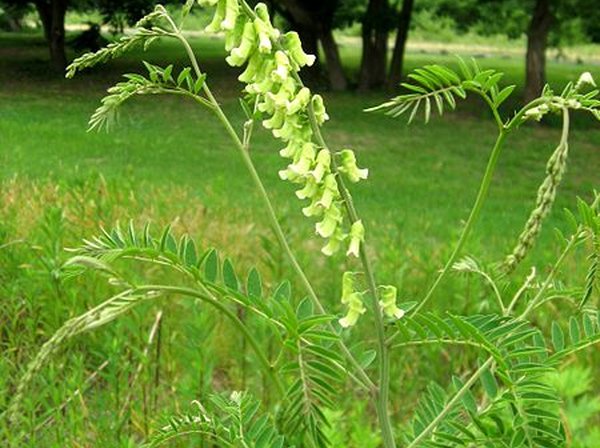 Ku ShenSophora flavescens
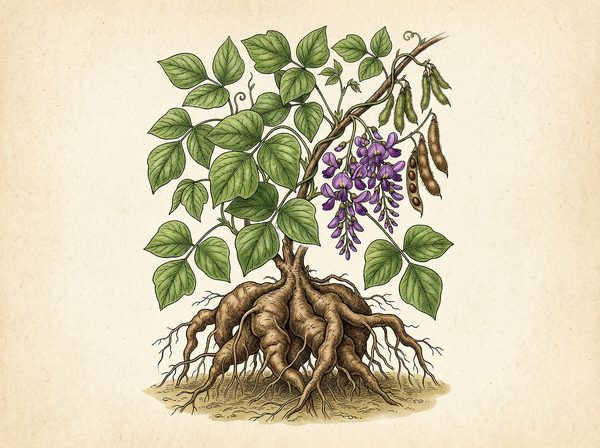 KudzuPueraria lobata
The whole plate is in the library. The compass, Compare, the Sky of eleven hundred plants and the formulary open with an email address and a password, free, with the formula builder and its safety engine. Herbert without limit, his formulating, clients, the handouts and the labels are the paid room.
Open the library, free